
Spout Pouches
Spout pouches combine flexible stand-up pouch packaging with a reclosable cap for filling, carrying and dispensing selected liquid products. Vivo Packaging’s food-grade range extends from 100ml portion packs to 10L formats, with clear, glossy white and aluminium silver foil options. Centre spouts, corner spouts and selected handles are available, so the best option depends on the liquid’s flow, the required capacity, the filling process and how customers will store and use the finished pack.
Showing 1–24 of 28 results
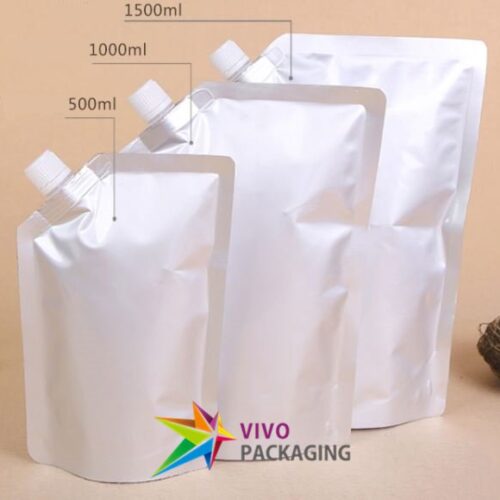
1.5L Aluminium Silver Foil Stand Up Spout Pouch for Liquid Packaging, Corner Spout (100 pcs)
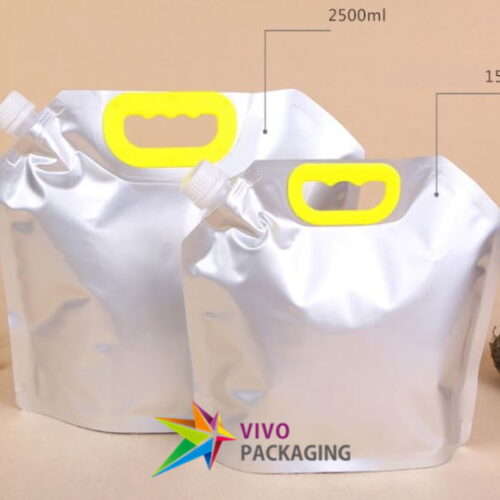
1.5L Aluminium Silver Foil Stand Up Spout Pouch for Liquid Packaging, with Handle (100 pcs)
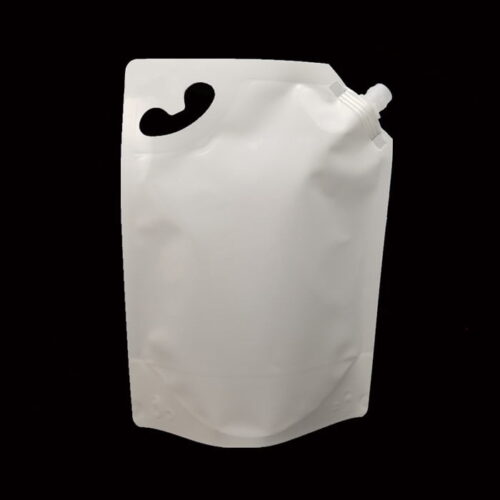
1.5L Glossy White Stand Up Spout Pouch, Liquid Packaging Pouch with Corner Spout (100 pcs)

100ml All Clear Stand Up Spout Pouch, Liquid Packaging Pouch (300 pcs)
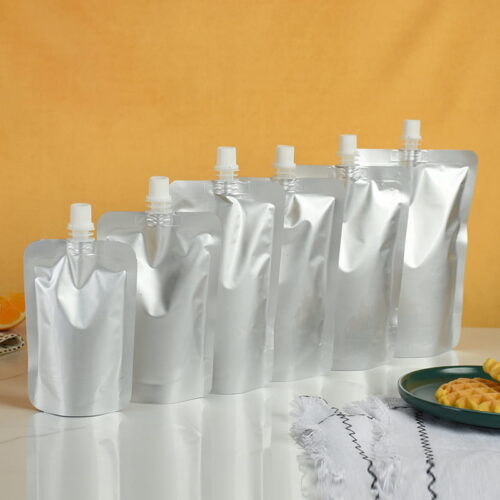
100ml Aluminium Silver Foil Stand Up Spout Pouch for Liquid Packaging, Centre Spout (300 pcs)
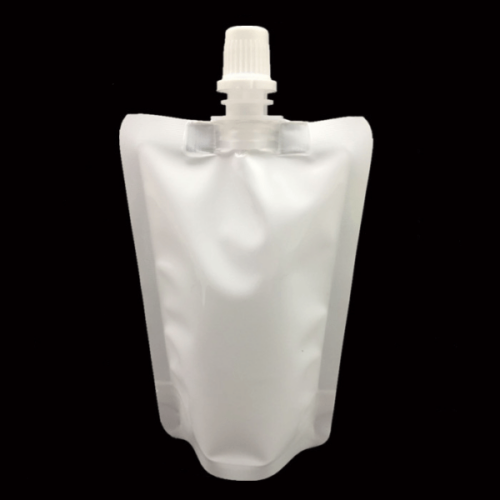
100ml Glossy White Stand Up Spout Pouch, Liquid Packaging Pouch (300 pcs)
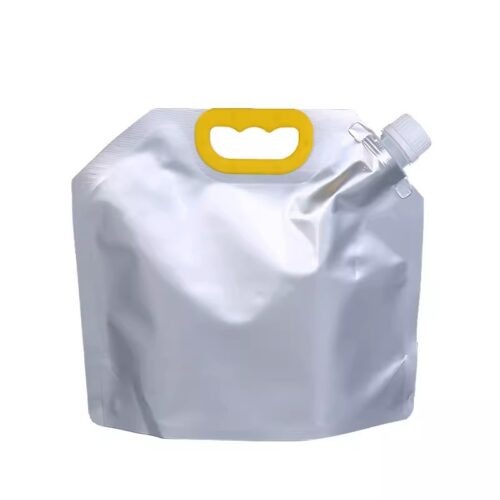
10L Aluminium Silver Foil Stand Up Spout Pouch, Liquid Packaging Pouch (100 pcs)
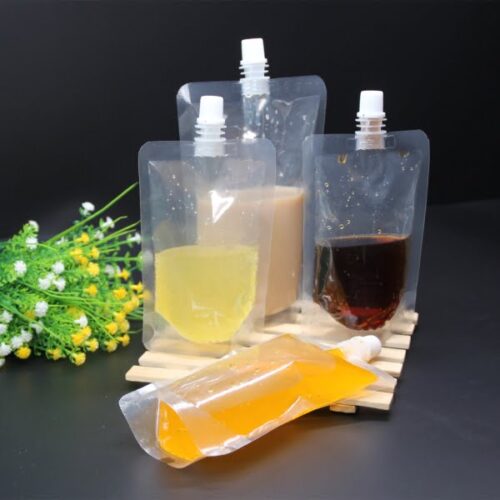
150ml All Clear Stand Up Spout Pouch, Liquid Packaging Pouch (300 pcs)
150ml Aluminium Silver Foil Stand Up Spout Pouch for Liquid Packaging, Centre Spout (300 pcs)
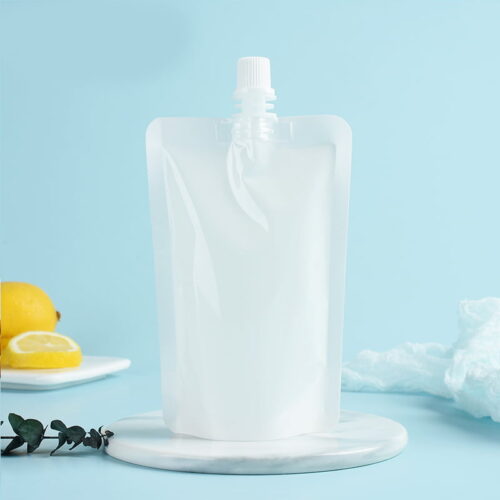
150ml Glossy White Stand Up Spout Pouch, Liquid Packaging Pouch (300 pcs)
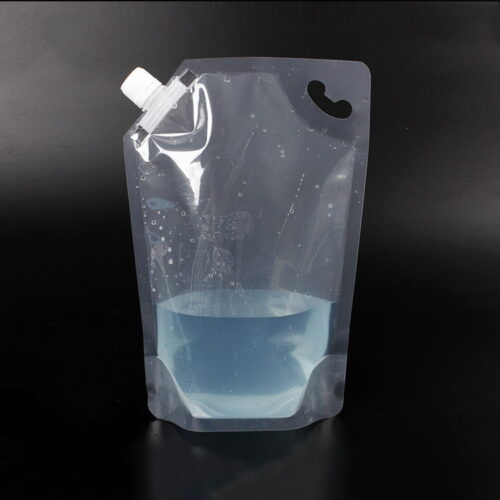
1L All Clear Stand Up Spout Pouch, Liquid Packaging Pouch (200 pcs)
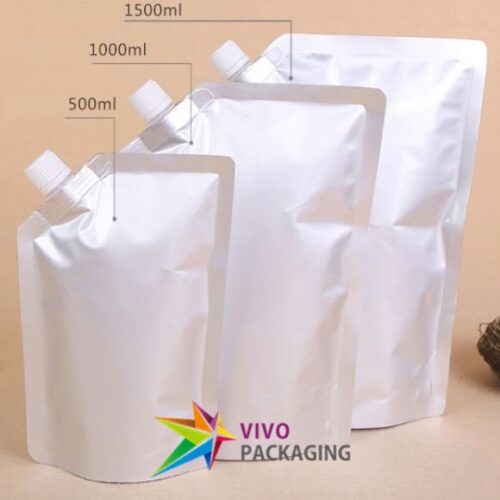
1L Aluminium Silver Foil Stand Up Spout Pouch for Liquid Packaging, Corner Spout (100 pcs)
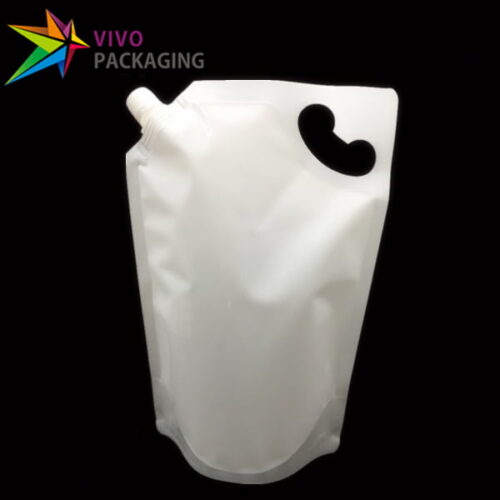
1L Glossy White Stand Up Spout Pouch, Liquid Packaging Pouch with Corner Spout (100 pcs)
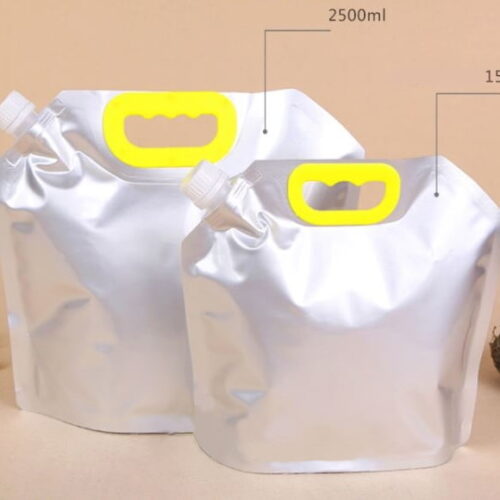
2.5L Aluminium Silver Foil Stand Up Spout Pouch for Liquid Packaging, with Handle (100 pcs)
200ml All Clear Stand Up Spout Pouch, Liquid Packaging Pouch (100 pcs)
250ml All Clear Stand Up Spout Pouch, Liquid Packaging Pouch (300 pcs)
250ml Aluminium Silver Foil Stand Up Spout Pouch for Liquid Packaging, Centre Spout (300 pcs)
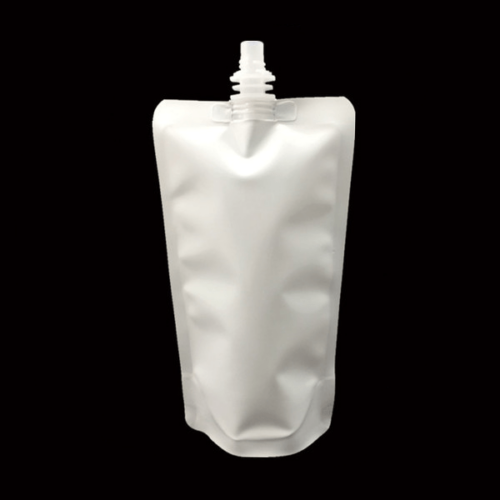
250ml Glossy White Stand Up Spout Pouch, Liquid Packaging Pouch (300 pcs)
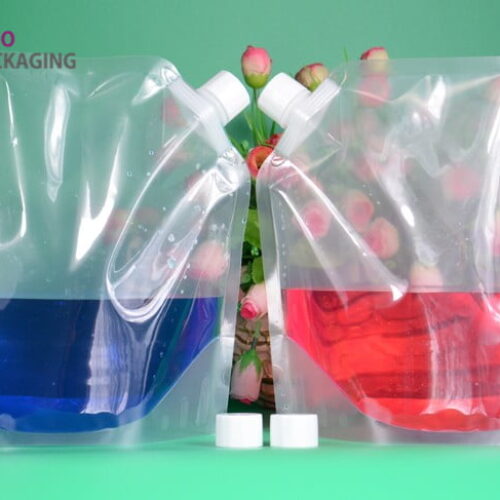
2L All Clear Stand Up Spout Pouch, Liquid Packaging Pouch (100 pcs)
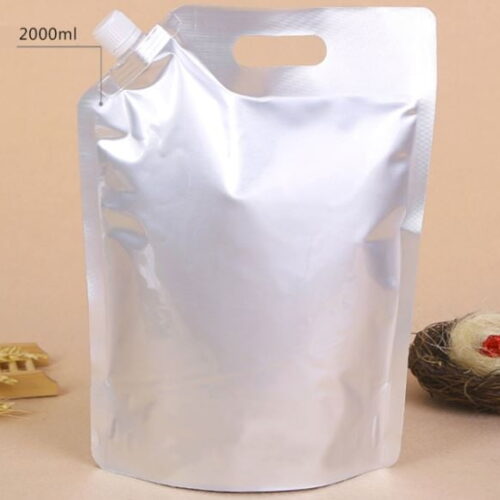
2L Aluminium Silver Foil Stand Up Spout Pouch for Liquid Packaging, Corner Spout (100 pcs)
300ml All Clear Stand Up Spout Pouch, Liquid Packaging Pouch (100 pcs)
400ml All Clear Stand Up Spout Pouch, Liquid Packaging Pouch (100 pcs)
500ml All Clear Stand Up Spout Pouch, Liquid Packaging Pouch (300 pcs)
500ml Aluminium Silver Foil Stand Up Spout Pouch for Liquid Packaging, Centre Spout (300 pcs)
Begin with the Liquid, Not Just the Capacity
The same pouch size can perform very differently with two liquids. Before selecting spout pouch packaging, consider viscosity, suspended particles, oil or acid content, storage temperature and whether the product will be consumed once or opened repeatedly. These factors affect filling efficiency, pouring control, residue around the spout and the amount of headspace needed.
Thin beverages and free-flowing sauces generally pass through a smaller opening more easily than gels, puree-style food products or products containing pulp, seeds or fibres. The pouch material, welded spout and cap must also be compatible with the actual formulation. Food-grade status alone does not establish suitability for every food or non-food product.
Spout Diameter Controls Filling and Pouring
Spout diameter influences both production and customer convenience. A smaller opening can provide more controlled dispensing for a thin liquid, while a wider opening may be more practical for dense sauces or larger packs. The stock range includes examples from approximately 10mm on selected small pouches to wider 15mm and 22mm openings on larger formats.
Capacity should not be used as a substitute for a flow test. A thick 250ml product may require more clearance than a free-flowing 1L beverage. Testing should cover filling speed, blockage, dripping, cap cleanliness and the amount of control consumers have when pouring.
Centre Spout or Corner Spout?
Centre Spout
A centre spout sits at the top of the pouch and creates a balanced opening position. It appears across smaller aluminium foil formats such as 100ml, 150ml, 250ml and 500ml. This form may suit portion packs and products that are held upright during filling or use.
Corner Spout
A corner spout places the opening at one side of the top seal. Tilting the pouch directs the liquid towards that corner, which can make pouring from a larger pack easier to control. Selected 500ml, 1L, 1.5L and 2L foil or white pouches use this arrangement.
Neither position is universally better. The practical choice depends on pack dimensions, liquid flow, filled weight and the way the pouch will be held and emptied.
Choose a Pack Size Around the Use Case
100ml to 500ml
Smaller flexible packaging can suit samples, sauces, dressings, selected beverages, puree-style products, oils and portion packs. These sizes are convenient to carry and dispense, but the available spout diameter still needs to match the product thickness.
1L to 2.5L
Mid-size pouches provide more packaging capacity while retaining a flexible form. They may suit refill packs, food-service quantities and selected household-size liquids. This part of the range includes corner spouts and selected designs with a handle.
5L to 10L
A filled 5L or 10L pouch is a heavy product package, so lifting, carrying, pouring and support inside outer boxes all require testing. The evaluation should include the handle or grip point, the area around the spout, stability during dispensing and performance after transportation.
Clear, White or Aluminium Foil
All Clear
Clear pouches show the product colour, liquid level and remaining quantity. This can support shelf appeal when the contents are visually attractive or when customers need to see how much remains. It will also reveal settling, separation, bubbles or colour changes, so the filled product should be reviewed under actual store and storage conditions.
Glossy White
Glossy white pouches conceal the contents and create a clean surface for a label and brand information. They can provide a distinctive alternative to clear bags without implying the same light or moisture performance as an aluminium foil structure.
Aluminium Silver Foil
Aluminium silver foil pouches provide an opaque finish and may be considered when product visibility is not required or when additional barrier performance needs to be assessed. Actual oxygen, moisture and light resistance should be checked against the individual material specification and intended shelf life rather than treated as a general freshness guarantee.
The Cap Is Part of the Packaging System
Every product in this category is filled through its fitted spout and supplied with a matching cap. The closure supports convenient repeated use, but it does not determine how long food remains suitable after opening. Storage instructions, refrigeration requirements and use-by guidance still depend on the product.
During testing, check how easily the cap starts on the thread, the torque needed to tighten it and whether residue affects the seal. The filled pouch should be checked upright, on its side and inverted, followed by repeated opening and closing under realistic usage conditions.
A Practical Filling and Testing Sequence
These stock pouches are filled through the spout rather than through an open top. A funnel or suitable filling nozzle can be used when it matches the opening and the liquid’s flow characteristics.
- Confirm that the product passes through the spout without excessive force, blockage or foaming.
- Use a funnel or filling nozzle that fits the opening without damaging the welded spout.
- Control the fill volume and leave enough headspace for clean closure and handling.
- Remove product residue from the spout neck, thread and cap contact surfaces.
- Fit and tighten the supplied cap consistently.
- Check the pouch upright, sideways and inverted for closure performance.
- Test pouring, reclosing, storage, label adhesion, carton fit and transport with the actual filled product.
Spout Pouches Compared with Rigid Bottles
Spout pouches are a flexible packaging format, while plastic bottles and other rigid bottles retain a fixed shape before and after filling. Empty pouches generally require less storage space than empty rigid containers, and their stand-up form can create a different shelf presentation. Rigid packaging may be easier to stack, handle on some filling lines or use with products that need a firm container.
Any comparison of transportation costs should use the complete filled pack, not the empty container alone. Carton dimensions, product density, secondary packaging, damage risk, filling efficiency and pallet configuration can change the result. The pouch format should therefore be selected for the full production and transport process rather than assumed to be the most economical option in every case.
Applications That Need Separate Validation
Hot-fill products, retort processing, carbonated beverages, many energy drinks, alcohol, highly acidic liquids, frozen products, baby food, pharmaceutical use and chemical products require separate compatibility and process validation. Food-grade pouches should not be treated as automatically suitable for these applications.
For non-food products such as soaps, detergents and household liquids, the formulation must be tested against the pouch film, spout and cap. Products containing chunks, seeds, pulp or fibres also need a practical flow test before production.
Packaging Performance and Product Waste
A correctly sized spout and controlled pouring action may help customers dispense the amount they need, but the package alone does not guarantee less food waste or product waste. Overfilling, poor flow, residue around the opening and an unsuitable cap can all make the product harder to use.
The complete package should be tested for filling accuracy, storage, dispensing and reclosing. Shelf life and freshness depend on the product formulation, barrier requirements, filling hygiene, closure performance and storage conditions.
When Another Pouch Format May Work Better
Choose Stand Up Pouches when a dry product needs a zipper rather than a pouring spout.
For a flat, single-opening pack, compare 3 Side Seal Pouches. For dry products that need a defined base and a more box-like shape, consider Flat Bottom Pouches.
To compare the complete range of flexible pouch packaging, visit Pouch Packaging. Projects requiring full-surface printing, a specific spout, dedicated dimensions or another custom structure can be assessed through Custom Pouches and Bags.
Test the Complete Filled Pack
An empty pouch cannot show how the final package will perform. Use the actual product to assess filling speed, cap closure, dispensing control, residue around the spout, pouch stability, storage, label adhesion and transportation. For larger sizes, also test lifting, carrying and pouring after the product has been stored for the expected period.
Vivo Packaging supplies spout pouches in a broad range of capacities, colours and opening positions at competitive prices, with Australia-wide delivery. A sample test can help confirm the most suitable capacity and spout arrangement before a production purchase.
Frequently Asked Questions
How do I choose the right spout pouch size?
Start with the required fill volume, then check product density, headspace, filled weight and how the pouch will be carried or poured. Test the actual liquid because two products with the same stated volume can behave differently inside the pouch.
What is the difference between a centre spout and a corner spout?
A centre spout creates a balanced opening at the top of the pouch. A corner spout directs the product towards one side as the pouch is tilted. The better option depends on pack size, liquid flow and customer usage.
Can spout pouches be filled with thick liquids?
Some thicker liquid products may be suitable, but the spout diameter, viscosity and any particles must be tested together. Dense products, pulp, seeds or fibres can slow filling or block a small opening.
Are these spout pouches suitable for hot fill or retort processing?
No hot-fill or retort suitability is claimed for this stock range. Those processes require packaging specifically rated for the required temperature, pressure and processing conditions.

Vivo Packaging Pty Ltd
Aussie Warehouse:
4 Tasman Ct, Keysborough VIC 3173, Australia
Monday – Friday: 9.30am – 5.30pm
Visitors By Appointment Only

Copyright 2026 © VIVO PACKAGING. ALL RIGHTS RESERVED.
