
Stand Up Pouches: A Practical Guide for Food, Coffee and Retail Packaging
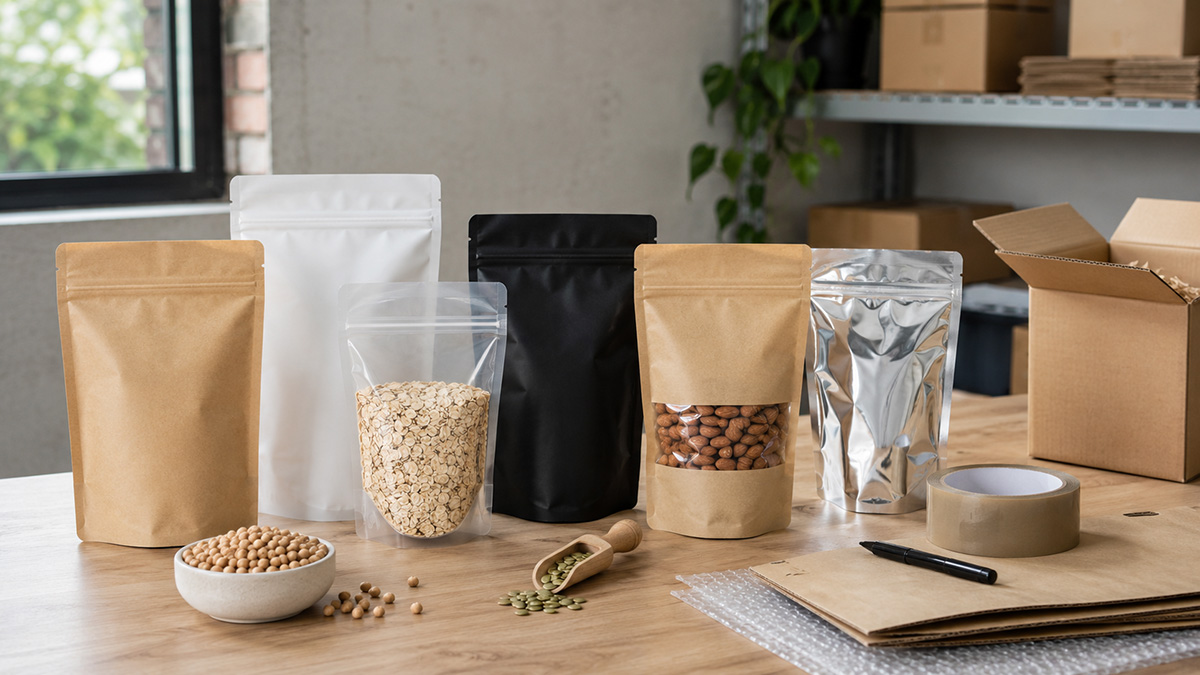
Stand up pouches are a practical packaging format for many food, coffee and retail products because they combine shelf presentation, product protection and packing efficiency in one flexible pack. The best pouch is not simply the one with the closest capacity. Businesses also need to think about the product inside, how it will be filled, whether customers need to reseal it, how it will look on a shelf and how it will move through packing and dispatch.
Vivo Packaging offers stand up pouch options across different sizes, finishes and functional features, but the right choice still depends on the product and sales channel. A pouch used for roasted coffee beans is judged differently from one used for tea, snacks, powders, samples, refill products or lightweight retail goods. This guide explains the practical factors to compare before choosing a pouch format.
What are stand up pouches?
A stand up pouch is a flexible pouch with a bottom gusset that allows the pack to stand upright when filled. This makes it useful for retail display, pantry storage, sampling packs and ecommerce orders where the packaging needs to look presentable without the bulk of a rigid container.
Within broader pouch packaging, stand up pouches sit between simple flat bags and more premium structured formats. They can be compact to store before filling, easy to pack in cartons and suitable for many product categories where visibility, resealability or shelf presence matters.
When stand up pouches are a good fit
Stand up pouches are often a good fit when the product is relatively lightweight, dry or semi-dry, and benefits from a flexible retail pack. They are commonly used for coffee, tea, snacks, confectionery, grains, powders, supplements, pet treats, samples and other retail-ready goods.
They are also useful when the pack needs to sit upright on a shelf, hang together neatly in cartons, or give customers a convenient way to open and close the product after purchase. For ecommerce businesses, pouches can help reduce bulky packaging compared with rigid jars or tins, depending on the product and shipping requirements.
They may be less suitable when a product needs rigid crush protection, a very formal gift presentation, heavy-duty liquid containment, or a container that holds its exact shape in transit. In those cases, a box, tin, bottle, jar or another pouch type may be a better starting point.
Choose by product behaviour, not just capacity
Capacity is a useful starting point, but it can be misleading if it is treated as the only selection rule. Two products with the same nominal weight can behave very differently inside a pouch. Whole coffee beans, fine powder, chunky snacks and light loose-leaf tea do not fill the same way, settle the same way or press against the pouch in the same way.
| Product factor | Why it matters | What to check |
| Product shape | Loose, chunky or irregular products may need more internal space than the weight suggests. | Test fill volume, pouch shape after filling and whether the pouch stands neatly. |
| Product sensitivity | Some goods need stronger barrier considerations than others. | Check whether light, moisture, aroma or oxygen exposure is a concern for the product. |
| Customer use | A product opened repeatedly may need resealability more than a single-use item. | Consider zipper, tear notch, opening width and ease of scooping or pouring. |
| Retail display | Shelf-facing products need a front panel that presents the product clearly. | Compare clear, window, kraft, matte, gloss or foil style options depending on brand positioning. |
| Packing method | A pouch that works visually still needs to work at the packing bench. | Check filling speed, seal area, label placement and carton packing. |
Key features to compare
Zipper and resealability
A zipper is useful when customers are expected to open the pouch more than once. Coffee, tea, snacks, powders and pet treats often benefit from a resealable feature because the product is normally consumed over time. For products that are emptied quickly or used as samples, resealability may be less important than presentation or low packing complexity.
Window or all-clear visibility
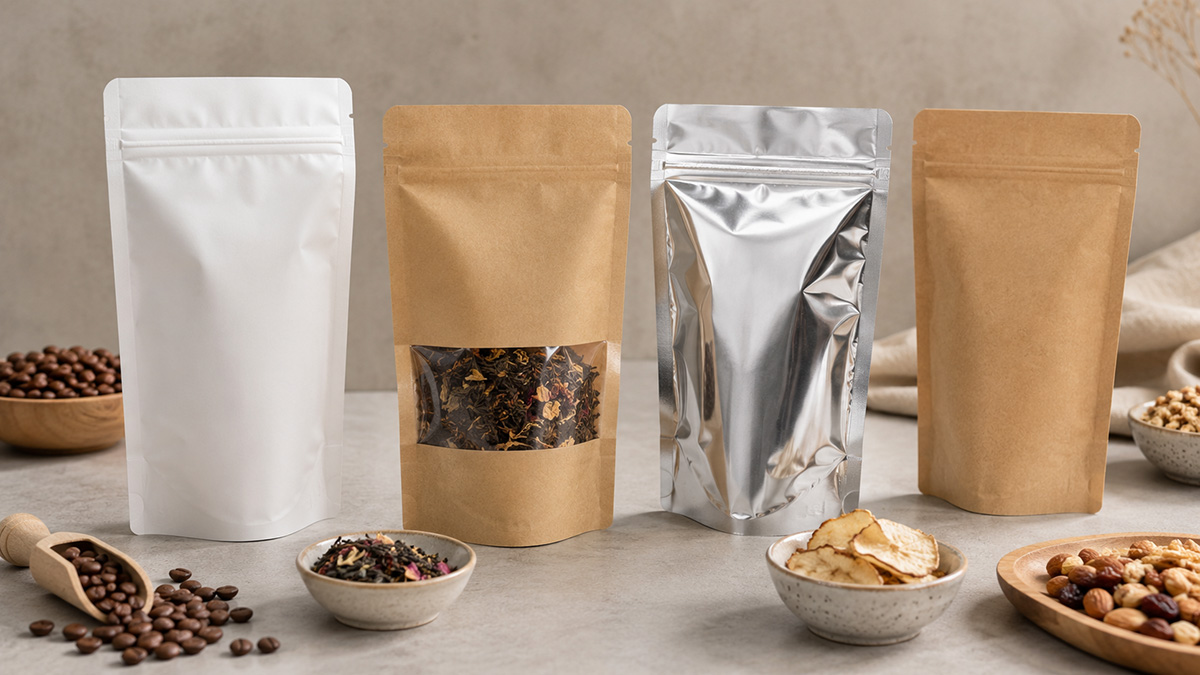
Clear and window pouch options help customers see the product before buying. This can work well for visually appealing goods such as tea blends, confectionery, snacks, dried fruit and colourful ingredients. However, visibility is not always the best choice. Some products are better suited to a more protective or opaque pack, especially where light exposure, product colour variation or a premium brand presentation is a concern.
Foil lining and barrier considerations
Barrier needs depend on the product. Coffee, aromatic foods, powders and some premium retail goods may require stronger protection from moisture, aroma loss or external odours than simple dry goods. Available pouch options can vary in material structure and barrier performance, so this is an area where businesses should match the pouch to the product rather than assume every pouch performs the same way.
Finish and shelf presentation
The surface finish affects how the product is perceived. Kraft can feel natural and simple, matte finishes can look more premium, clear options can emphasise product visibility, and foil-style finishes can create a stronger retail impact. The right choice depends on the brand position, the shelf environment and whether the customer needs to understand the product at a glance.
Stand up pouches for coffee, food and retail products
Coffee is a useful example because packaging needs to balance freshness, presentation and repeat use. For roasted beans, businesses often compare pouch size, valve options, foil lining, resealability and the way the bag sits on a shelf. A dedicated coffee bags with valve range may be more appropriate than a general-purpose pouch where degassing and coffee presentation are important.
For food products, the main considerations are product fit, practical handling and whether the pack supports the way the customer uses the product. A clear pouch may help sell visually appealing products, while an opaque or foil-lined pouch may be better for products where barrier and presentation matter more than visibility.
For retail products outside food, the pouch should be judged by how well it communicates the product, protects the contents and supports labelling or branding. A pouch for a refill product, sample kit or lightweight accessory may need different features from a pouch used for dry food or coffee.
Stand up pouches vs flat bottom pouches
Stand up pouches and flat bottom pouches can both sit upright, but they create a different shelf impression. Stand up pouches are generally a flexible and versatile format for many product types. Flat bottom pouches usually create a more structured box-like presentation, with a broader base and strong shelf presence.
For many products, stand up pouches are the practical starting point. For premium coffee, heavier dry goods, larger retail packs or products where front-facing shelf impact is especially important, flat bottom pouches may be worth comparing. The best decision depends on fill weight, product shape, shelf space, brand position and how the pack will be stored before and after filling.
Do not forget sealing and packing workflow
Packaging is not only judged after it reaches the customer. It also needs to work before dispatch. A pouch that looks suitable in isolation can still slow down a packing team if it is difficult to fill, hard to seal consistently or awkward to label.
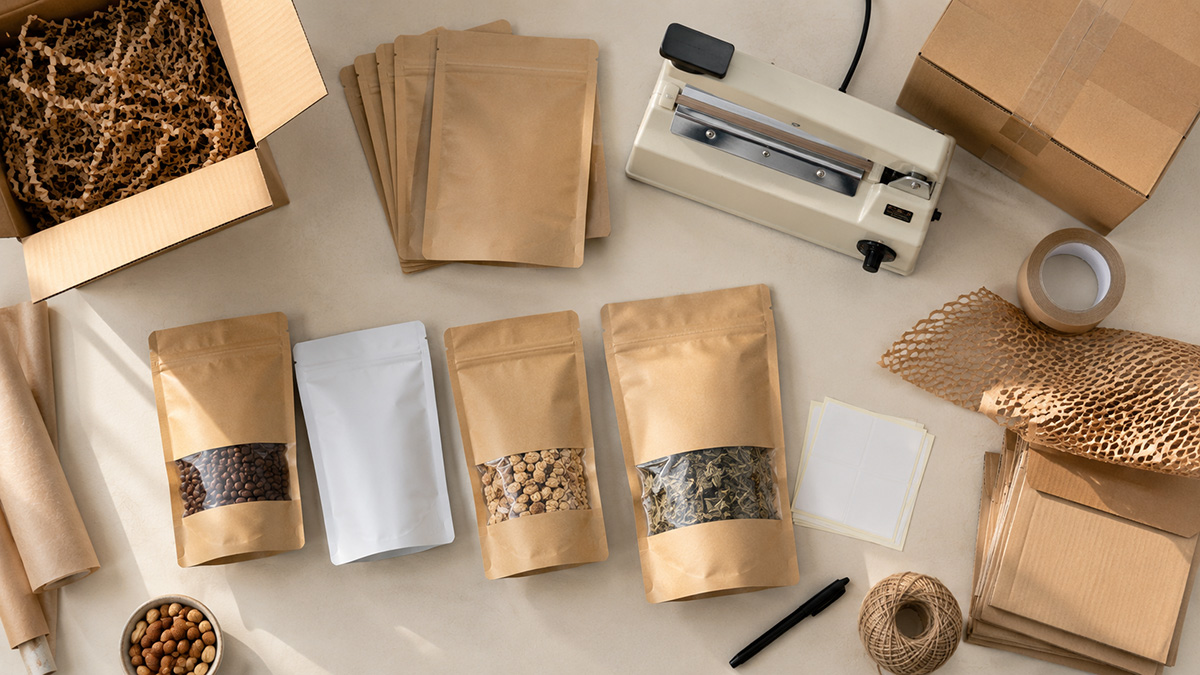
For businesses packing pouches in-house, heat sealers should be considered alongside the pouch selection. The seal area, bag material, fill level and operator process all affect the final pack quality. It is worth testing a filled pouch, not just an empty sample, before settling on a format for regular orders.
Quick checklist before choosing stand up pouches
- What product will go inside, and how does it behave when filled: powder, granules, beans, leaves, snacks or irregular pieces?
- Does the product need stronger barrier protection, or is product visibility more important?
- Will customers open and close the pouch multiple times?
- Should the pouch show the product through a clear panel or support a more opaque premium presentation?
- Will the pouch be sold on a shelf, packed into ecommerce orders, used for samples or supplied as part of a larger fulfilment workflow?
- Can the pouch be filled, sealed, labelled and packed efficiently by the team?
- Is the business likely to move from stock pouches to custom printed packaging later?
A good pouch choice usually comes from balancing all of these factors rather than optimising only one. For example, the most attractive pouch may not be the fastest to pack, while the simplest pouch may not give enough shelf impact for a premium retail product. Testing the pouch with the actual product is the most reliable way to confirm the right size, finish and workflow.
FAQ
What are stand up pouches used for?
Stand up pouches are used for a wide range of food, coffee, tea, snack, powder, pet treat, sample and retail products. They are useful when the pack needs to stand upright, present well on a shelf and remain compact before filling.
Are stand up pouches suitable for coffee?
They can be suitable for coffee, but coffee packaging should be chosen carefully. Roasted coffee may need features such as suitable barrier properties, resealability and a valve option, depending on the product and packing method.
Should I choose a clear pouch or an opaque pouch?
Choose clear or window pouches when product visibility helps customers buy with confidence. Choose opaque, kraft, matte or foil-style options when presentation, light protection or a stronger brand look is more important than seeing the contents.
Do stand up pouches need to be heat sealed?
Many stand up pouches are heat sealed after filling to improve pack presentation and closure consistency. The exact requirement depends on the pouch type, product and packing process, so businesses should test the filled pouch with their sealing equipment.
What is the difference between stand up pouches and flat bottom pouches?
Stand up pouches use a bottom gusset to stand upright and are a versatile format for many products. Flat bottom pouches have a more structured base and can create a stronger box-like shelf presentation, which may suit premium or heavier retail products.

Posts Widget
- 1

- 2

- 3

- 4

- 5


Vivo Packaging Pty Ltd
Aussie Warehouse:
4 Tasman Ct, Keysborough VIC 3173, Australia
Monday – Friday: 9.30am – 5.30pm
Visitors By Appointment Only

Copyright 2026 © VIVO PACKAGING. ALL RIGHTS RESERVED.
