
Disposable Trays & Lids
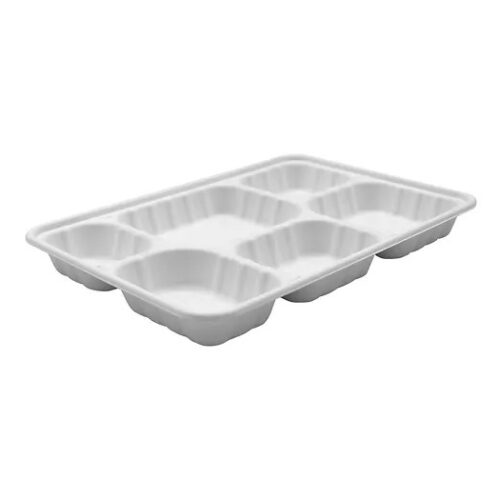
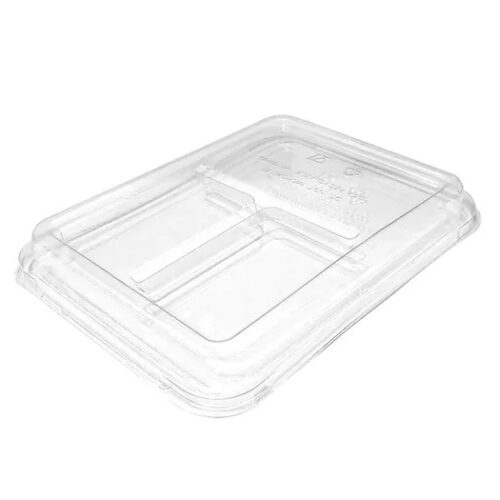
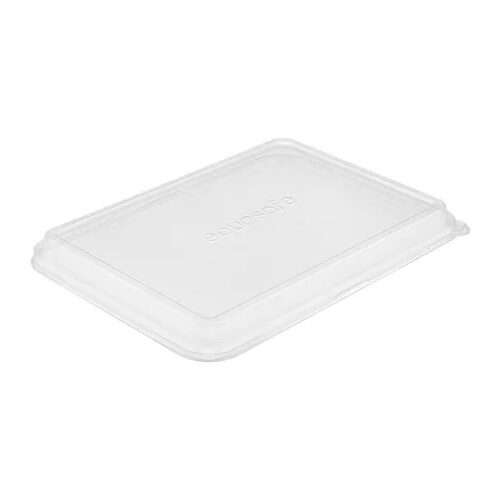
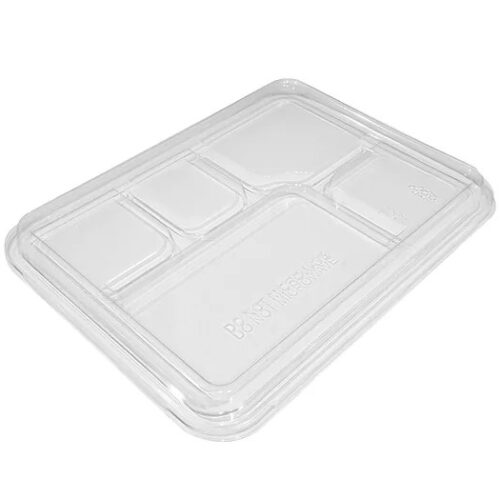
Disposable trays provide a convenient way to organise a complete meal when several foods need their own section. Vivo Packaging’s range includes white 3, 4, 5 and 6 compartment takeaway trays, plus matching PET lids for the 3 compartment tray, the 5 compartment tray, and a shared lid listed for the 4 and 6 compartment formats. Every product is supplied in cartons of 200 units, so the main decisions are the number of sections, portion layout, food height and correct lid pairing.
- The minimum allowed quantity for 200ml All Clear Stand Up Spout Pouch, Liquid Packaging Pouch (100 pcs) is 10 (you currently have 0 in your cart).
Showing all 7 results
Design the Meal Before Choosing the Tray
A compartment count only becomes useful when it matches the menu. Start by listing the main item, sides, sauces and any dessert or garnish that must remain separate. Then compare the shape, features and relative size of each section with the actual serving rather than assuming every compartment holds an equal portion.
Meals that do not need fixed separation may work better in Disposable Bowls or on open plates. Compartment trays are most useful when the layout itself supports portion control, presentation or service consistency.
How the Compartment Options Differ
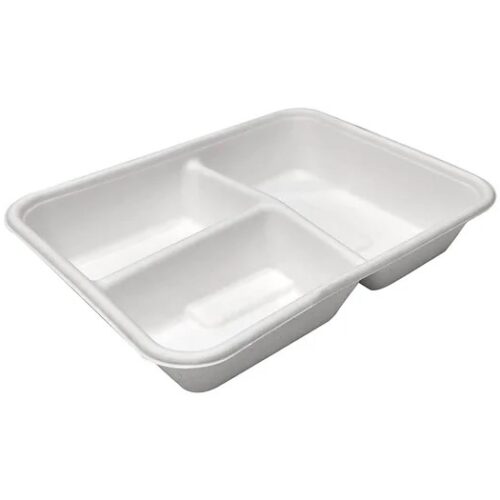
3 Compartment Trays
A 3 compartment tray can suit a main item with two sides, or another simple three-part meal. It provides fewer, generally larger sections than the higher-compartment formats, which may be useful when one part of the meal needs more space. Test bulky foods and generous mains to ensure they do not crowd the lid or spill into neighbouring sections.
4 Compartment Trays
A 4 compartment tray can organise a main with several smaller accompaniments, or a balanced set meal with four defined components. The added section increases organisation but reduces the flexible open area available for irregular or oversized food.
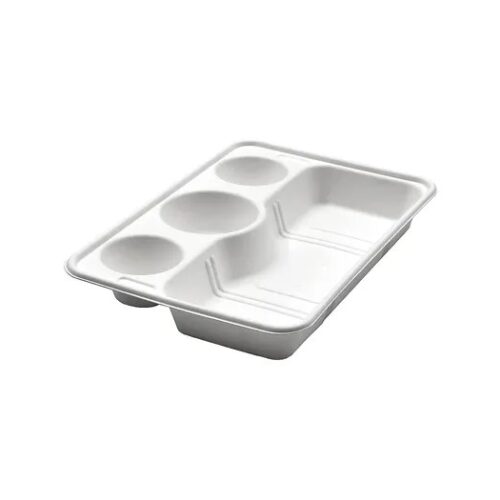
5 Compartment Trays
A 5 compartment tray may suit structured meal programs, catering sets, school-style meals, tastings or menus with several small sides. Because the lid for this tray is a separate matching product, container and lid stock should be forecast together.
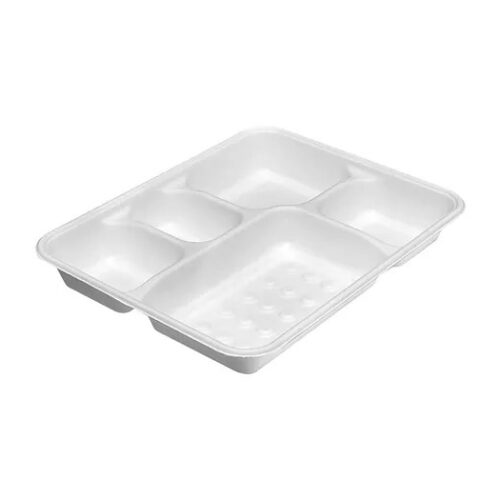
6 Compartment Trays
A 6 compartment tray offers the highest level of separation in the current range. It may suit tasting menus, event service or meals with multiple small portions, but it is less suitable when one item requires a large continuous space. The 4 and 6 compartment trays share the lid product listed for those two formats.
Match Each Tray with the Correct PET Lid
The lid pairing is specific: the 3 compartment tray has its own PET lid, the 5 compartment tray has a separate PET lid, and one PET lid is listed for both the 4 and 6 compartment trays. Select the lid from the corresponding product page rather than substituting one based on appearance alone.
- Use the PET lid listed for the 3 compartment takeaway tray.
- Use the combined 4 and 6 compartment PET lid only with those specified trays.
- Use the dedicated PET lid listed for the 5 compartment takeaway tray.
- Keep each tray and lid SKU clearly labelled in storage.
- Test the filled tray before treating a matching lid as spill-resistant or leak-resistant.
Where small sauces still need a separate sealed portion, add Disposable Sauce Cups & Plates instead of filling a shallow tray section to the rim.
Compartment Edges Do Not Replace Proper Containment
Tray dividers can reduce direct contact between meal components, but they are not liquid-tight barriers under every condition. Thin sauces, gravy, oil and condensation may move when the tray is tilted, stacked or transported. Food height can also allow one component to cross over a divider, so the lid helps cover and protect the meal but does not individually seal each section.
Use the actual meal to assess movement and keep free-flowing liquids in a suitable separate container where required. The PET lid covers the complete tray; it does not individually seal every compartment.
Tray Bases and PET Lids Use Different Materials
Current product information may describe the tray bases as sugarcane fibre or bagasse, while the matching lids are PET plastic. The tray bases should not automatically be called conventional paper trays, and the two materials should not be grouped under one universal compostable, biodegradable or recyclable claim.
Read the individual product page before relying on any environmental, quality or temperature-related feature. Where a specific tray is described as oven safe, microwave safe, freezer safe or suitable for another condition, confirm the stated limits and test the intended food. Food residue can affect disposal after use, and locally available recycling or composting services may treat the tray and lid differently.
Test Hot, Cold, Wet and Oily Meals Separately
A disposable tray used for a cold dry meal may perform differently with hot curry, oily food or a meal that releases steam. Temperature, moisture, food weight and holding time can affect tray rigidity, lid fit, condensation and overall packaging performance.
For food served without a lid or fixed separation, Disposable Plates may be more practical. For every tray application, rely on the specific product information and test the intended meal under the real service conditions.
A Practical Filled-Tray Test
- Place the normal serving into each compartment and check the food height.
- Confirm that wet or oily foods do not cross the dividers during normal handling.
- Clean the outer rim before fitting the matching PET lid.
- Press the lid evenly around the complete perimeter.
- Test the tray upright, tilted, stacked and inside the intended outer bag.
- Recheck lid fit after the food reaches its normal serving temperature.
- Assess whether the customer can carry and open the tray without excessive flexing.
Complete the meal with Disposable Cutlery selected for the food texture rather than adding the same utensil set to every tray.
Stacking and Transport Need Their Own Test
Empty trays stack neatly, but filled trays place weight on the lid and the food below. The practical stack height depends on the meal weight, temperature, lid application and transport time. Avoid assuming that increasing the number of trays in a delivery stack will protect the meals or improve efficiency without a filled-pack test.
For takeaway and delivery, the closed tray should be tested inside the intended Delivery Bags. The outer bag supports carrying, but it does not correct an overfilled tray or incorrectly fitted lid.
Plan Stock by Tray-and-Lid Pairs
All trays and lids in this category are supplied in cartons of 200 units, which simplifies the starting ratio. Usage can still become uneven when some meals are served without lids, staff damage lids during service or one tray format is used more often than expected.
- Record the tray and lid SKU as a pair in purchasing and storage systems.
- Count trays and lids separately during stock checks.
- Keep the shared 4 and 6 compartment lid near both tray formats without mixing it with the 3 or 5 compartment lids.
- Review weekly usage before increasing wholesale quantities.
- Allow enough storage space for both tray and lid cartons.
Disposable Trays for Food-Service Orders
Vivo Packaging supplies disposable takeaway trays and matching PET lids in business-size cartons for cafés, restaurants, caterers, meal-prep services, food trucks, market stalls and events. Before ordering, confirm the number of compartments, meal layout, matching lid, carton quantity, current stock and available storage. Compare the carton price with the number of complete tray-and-lid sets required rather than looking at the tray cost alone.
Competitive prices and Australia-wide delivery support routine replenishment and larger catering requirements. To compare trays with the complete range of containers, tableware and takeaway accessories, visit Food Packaging. A filled-meal test is the most reliable way to confirm the best tray and lid combination before a larger purchase.
Frequently Asked Questions
Which tray lid fits each compartment format?
The 3 compartment tray has its own PET lid, the 5 compartment tray has a separate PET lid, and one PET lid is listed for both the 4 and 6 compartment trays.
Are all compartments the same size?
Do not assume that every section has equal capacity. Check the actual tray layout, compartment sizes and food height, then test the intended portions before standardising the meal.
Are the trays and lids leakproof?
No unconditional leakproof claim should be made. Performance depends on food consistency, fill height, rim cleanliness, correct lid fitting, temperature and movement during transport.
Can the tray and PET lid be composted together?
The tray base and PET lid use different materials and should not be described as one compostable pack. Check the individual product information and locally available disposal pathways for each component.

Vivo Packaging Pty Ltd
Aussie Warehouse:
4 Tasman Ct, Keysborough VIC 3173, Australia
Monday – Friday: 9.30am – 5.30pm
Visitors By Appointment Only

Copyright 2026 © VIVO PACKAGING. ALL RIGHTS RESERVED.
