

Disposable Cutlery
Disposable cutlery should suit the food being served, the way customers eat it and the number of utensils required for each order. Vivo Packaging’s range includes disposable wooden cutlery such as forks, knives, spoons and sporks, two 140mm sugarcane spoon styles, and a Chinese cutlery set containing chopsticks, a soup spoon and napkin. For food businesses comparing alternatives to single-use plastic cutlery, the practical choice should consider the dish, serving temperature, carton quantity and product-specific material information.
Showing all 7 results
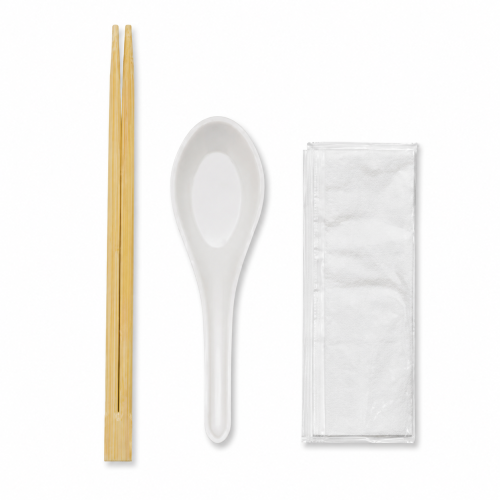
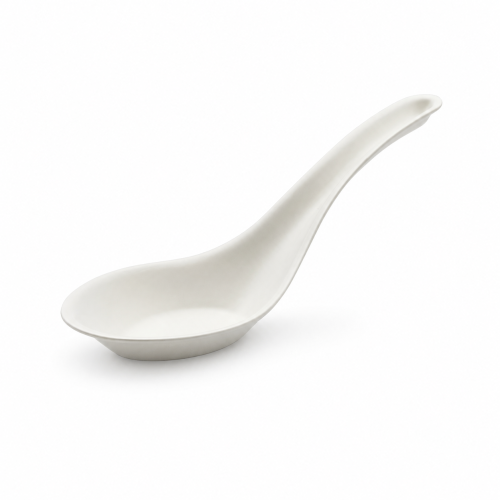
Sugarcane Chinese Soup Spoon 140mm (1000 units) – Disposable & Takeaway
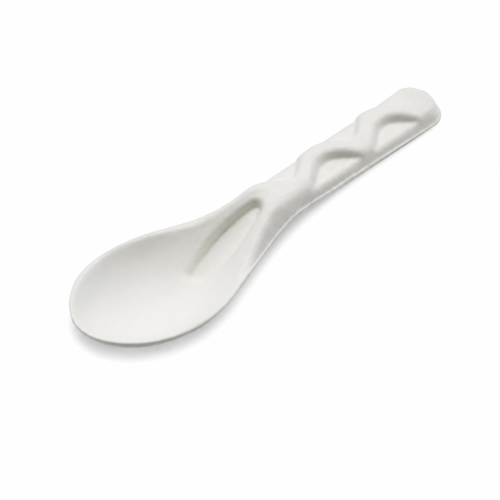
Sugarcane Curry Spoon 140mm (1000 units) – Disposable & Takeaway
Start with the Meal, Then Choose the Utensil
Forks for Solid and Mixed Meals
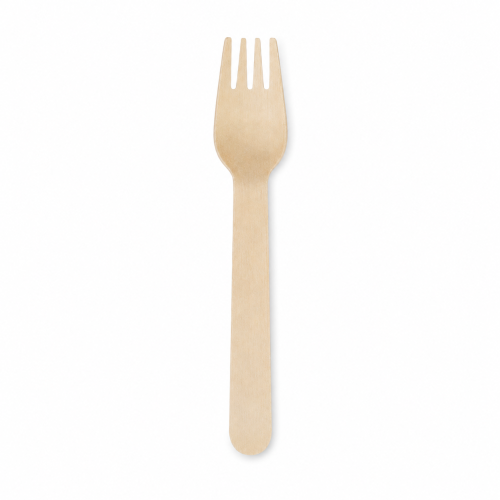
The 160mm wooden fork may suit salads, rice dishes, pasta, snacks and selected takeaway meals. Food texture matters: soft and mixed meals are usually easier to handle than dense, hard or heavily layered foods. Test the fork with the actual dish rather than assuming one utensil will suit every type of food.
Knives for Foods That Need Cutting
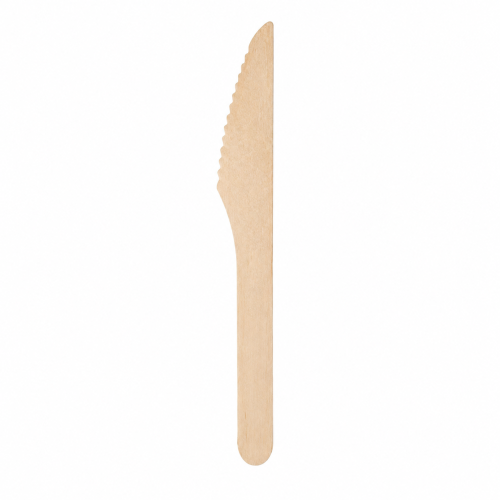
The 165mm wooden knife can be considered for softer foods that need simple portioning or cutting. Meals with a hard crust, dense texture or greater cutting resistance should be tested before service. It should not be promoted as suitable for every steak or other firm food, and performance should be assessed together with the matching fork.
Spoons for Soups, Curries and Sauces
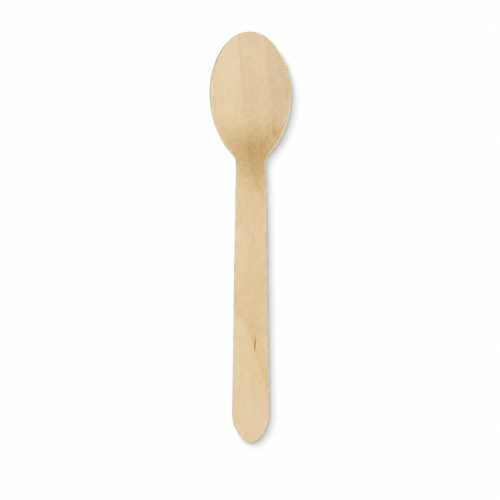
The range includes a general wooden spoon, a sugarcane Chinese soup spoon and a sugarcane curry spoon. The deeper soup spoons may suit selected broths, noodles, rice dishes and soups, while the curry spoon can be considered for curries, sauces and thicker meals. Bowl depth, food consistency and serving size should guide the choice.
Sporks for Compact Service
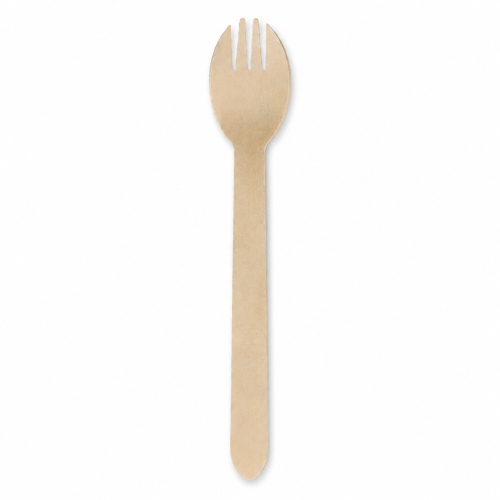
A wooden spork combines fork and spoon functions in one utensil. It may suit food trucks, markets, samples and takeaway meals where a single item can cover the menu. It may be less practical for long noodles, broth-based dishes or foods that require cutting.
Individual Cutlery or a Complete Set?
Individual Utensils
Separate forks, knives, spoons and sporks allow a food business to match the utensil to each menu item and control stock by type. This can be useful when only some orders need a knife, when customers select their own cutlery, or when different dining and takeaway services use different combinations.
Chinese Cutlery Set
The Chinese cutlery set includes chopsticks, a sugarcane Chinese soup spoon and a napkin, with 400 cutlery sets per carton. It may suit selected noodle, dumpling, rice and soup orders where these three components cover the intended meal.
The set does not include a knife or fork. Menus that require cutting or a Western-style fork may need an additional utensil rather than relying on the set alone.
Match Cutlery to Food Texture and Eating Style
The practical choice depends on how customers will pick up, cut or scoop the food. A spoon or spork may work for soft meals, rice and curry; a fork may be more useful for salads or pasta; and chopsticks can suit noodles, dumplings and selected rice dishes. Broth and other liquids need a spoon deep enough to hold the serving, while foods requiring cutting need a knife-and-fork combination tested with the actual texture.
Container depth also matters. A short utensil may be awkward with a deep bowl, while a wide spoon may not suit a small sauce cup. Consider the complete meal and container rather than choosing cutlery in isolation.
Wooden and Sugarcane Cutlery Are Different Products
Wooden Cutlery
Wooden forks, knives, spoons and sporks provide a natural-coloured alternative to conventional plastic cutlery. Food businesses looking for an eco friendly alternative to single-use plastic cutlery should still review the individual product information rather than relying on the material name alone. Selected disposable wooden cutlery may be described as biodegradable, compostable or suitable for hot and cold foods, but these claims should not be applied automatically to the complete range.
Sugarcane Spoons
The 140mm Chinese soup spoon and curry spoon use a sugarcane-based format. Selected product information may include food-contact, water-resistance, oil-resistance or temperature-related details. Check the individual product before using it with very hot, oily, frozen or reheated food, even where the spoon is described as suitable for hot and cold foods.
Where a product is described as compostable, local collection and processing conditions still matter. Compostable material should not be assumed to break down appropriately in landfill, and the spoon, chopsticks, napkin and food container may each require a different disposal route. Check the available collection service before describing the complete dining pack as compostable.
Hot and Cold Food Claims Need Product-Level Checking
Some disposable cutlery products may be specified for hot and cold foods, but suitability still depends on food temperature, contact time and texture. Wooden cutlery can feel different after extended contact with liquids, while hot soup, oily curry and frozen desserts place different demands on a utensil.
Microwave, oven or freezer claims should only be used where they are stated for the individual product. Do not assume that every utensil can remain with the food during heating, cooling or storage.
Plan Cutlery Quantities Per Order
Carton quantities vary across the range: the Chinese cutlery set is supplied in 400 sets, most individual forks, spoons and sporks are supplied in 1,000 units, and the wooden knife is supplied in 2,000 units. A purchase should therefore be based on the mix of utensils used rather than on a single carton count.
- Count how many orders need a fork, spoon, knife, spork or complete set.
- Separate meals that need a knife-and-fork combination from those needing only one utensil.
- Check whether the Chinese cutlery set already covers chopsticks, spoon and napkin for the order.
- Compare dine-in, takeaway, delivery and catering usage separately.
- Match weekly consumption with carton quantities and available storage space.
- Reorder individual utensil types according to actual usage rather than replacing the entire range at once.
Reduce Unnecessary Cutlery in Each Order
Because these are single-use products, cutlery should be configured by menu item instead of placing a full set into every order. A spoon-only meal, fork-only salad or spork-based menu may not need additional utensils. Businesses can also allow customers to indicate whether disposable cutlery is required.
This approach can help control purchasing, stock and unnecessary single-use items without claiming a guaranteed environmental outcome. The Chinese cutlery set should be reserved for meals that genuinely need chopsticks, a soup spoon and napkin.
Complete the Takeaway or Catering Setup
Pair spoons and other utensils with Disposable Bowls for selected soups, curries, noodles and rice dishes. For event meals or food served without a deep container, compare Disposable Plates.
When meal components need to remain separated, Disposable Trays & Lids may be more practical. Additional paper goods are available under Napkins & Hand Towels.
Use Delivery Bags to carry food already packed in suitable containers, or return to Food Packaging to compare the wider food-service range.
Disposable Cutlery for Business Orders
Disposable cutlery is supplied in carton quantities suited to food businesses, cafés, takeaway shops, caterers, commercial kitchens, parties and events. Before ordering, confirm the utensil type, length, carton quantity, current stock and how many pieces are required for each regular menu item.
Vivo Packaging offers competitive prices and Australia-wide delivery. Review the product page information and test each utensil with the actual food and container before adding larger quantities to an order.
Frequently Asked Questions
Should I choose a spoon, spork or fork for takeaway meals?
Choose according to the way the food is eaten. Spoons suit liquids and many rice or curry dishes, forks suit salads and pasta, and sporks can cover selected mixed meals with one utensil. Test the actual dish before standardising the choice.
What is included in the Chinese cutlery set?
The set contains chopsticks, a sugarcane Chinese soup spoon and a napkin. It does not include a knife or fork.
Are wooden and sugarcane cutlery compostable?
Selected wooden and sugarcane products may be described as biodegradable or compostable in their individual specifications. Check each product, the available collection service and the intended disposal pathway rather than applying one claim to the complete range or assuming compostable cutlery is suitable for landfill.
Can disposable cutlery be used with hot food?
Selected products may be suitable for hot and cold foods, but temperature, contact time and food type should be checked at product level. Test the utensil with the actual meal before using it across regular service.

Vivo Packaging Pty Ltd
Aussie Warehouse:
4 Tasman Ct, Keysborough VIC 3173, Australia
Monday – Friday: 9.30am – 5.30pm
Visitors By Appointment Only

Copyright 2026 © VIVO PACKAGING. ALL RIGHTS RESERVED.
