
Custom Pouches and Bags: How to Plan Packaging for a Product Launch
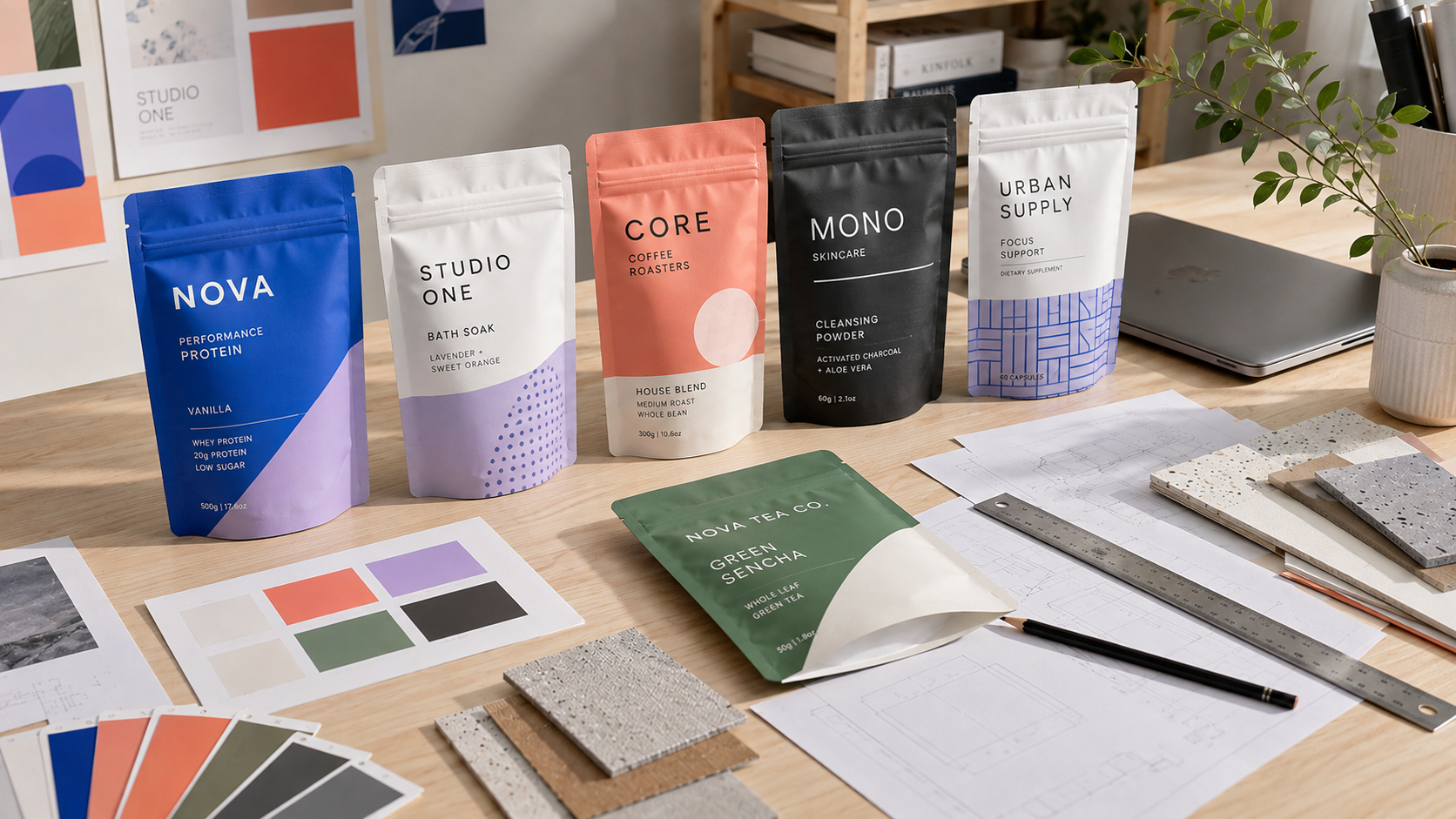
Custom pouches and bags can make a product launch look more polished, but the best packaging decisions usually start before the artwork stage. A pouch has to fit the product, protect it during handling, support the way it will be filled and sealed, and still look right when it reaches a retail shelf, ecommerce parcel or customer pantry.
That is why launch packaging should be planned as both a branding decision and an operational decision. The visual design matters, but so do the pouch shape, fill weight, closure style, sealing method, surface finish and the information your packaging supplier needs before quoting.
Begin with the product, not the artwork
A strong design concept can make a pouch look impressive on screen, but the product inside determines many of the practical choices. A dry powder, roasted coffee, snack, pet treat, refill product and skincare sample do not behave the same way in flexible packaging. Their weight, texture, sensitivity and intended use all affect the pouch format.
Before choosing colours or finishes, define the product clearly: what it is, how much goes into each pack, whether it settles or moves during transport, whether the customer will open and close it repeatedly, and whether the pack needs to stand upright after filling. These details help narrow the choice between custom pouches and bags, stock-style pouch formats and other custom packaging options.
For example, a lightweight snack may need strong shelf visibility and easy resealing, while a dense powder may need more attention to headspace, filling cleanliness and seal consistency. A liquid or refill product may need a different pouch structure again. The better the product brief, the easier it is to avoid choosing packaging only because it looks good in a mock-up.
Decide what the pouch needs to do
A custom pouch is rarely doing one job. For a launch, it may need to protect the product, present the brand, fit a production process and survive shipping. Listing those jobs early makes it easier to compare options without getting distracted by surface finish alone.
- Product protection: consider whether the product is sensitive to moisture, light, air exposure, aroma loss or crushing during handling.
- Shelf presentation: decide whether the pack needs a strong front panel, a clear window, a premium matte finish or a simple labelled surface.
- Customer use: check whether a zipper, tear notch, spout, valve or other feature will make the product easier to open, store or reuse.
- Packing workflow: think about filling speed, heat sealing, label application, carton packing and whether staff can handle the pouch consistently.
- Sales channel: ecommerce, retail shelf, markets, wholesale cartons and sample packs can all place different demands on the same pouch design.
This step is useful because it turns a broad request such as “we need a branded pouch” into a more precise packaging brief. It also helps your supplier suggest a format that suits the product and the launch channel, rather than treating every design as the same type of bag.
Choose a pouch format that matches the launch
Once the product requirements are clear, the pouch format becomes easier to evaluate. The right choice depends on how the product will sit, how it will be displayed, how much space the artwork needs and how the packaging will be filled.
Stand up pouches
Stand up pouches are often a flexible starting point for food, coffee, tea, health, pet and general retail products. They can work well when the brand needs a pouch that stands on shelf, allows a front label or printed panel, and can support features such as a zipper or window depending on the specification.
They are especially useful when a launch still needs some flexibility. If the final product range is still being refined, testing a similar stock pouch size can help confirm whether the planned format feels right once filled.
Flat bottom pouches
Flat bottom pouches are often considered when shelf presence is a priority. Their box-like base and defined panels can give the product a more structured look, which can suit coffee, premium dry goods and retail products that need to stand neatly in rows.
They can also provide more visual surfaces for branding, but they should still be checked against product weight, carton fit and packing workflow. A more premium format is only useful if it also works in real handling conditions.
Spout and specialty pouch formats
Some products need more than a standard zipper pouch. Refill packs, liquid products, sauces, gels or sample formats may need a spout, shaped pouch or other specialty feature. These options should be discussed early because they can affect artwork layout, filling method, closure choice and how the finished product is shipped or displayed.
Plan artwork and finish around the real pouch shape
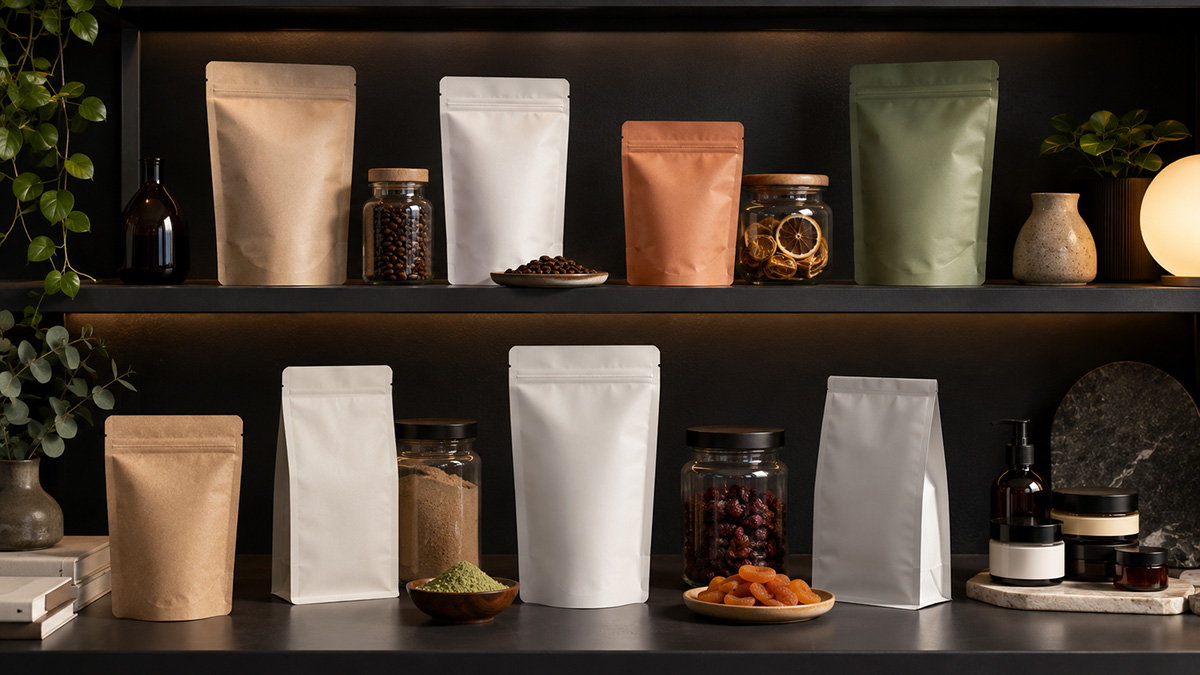
Pouch artwork should be planned around the filled pack, not only around a flat design file. A front panel may look spacious in a dieline, but the usable visual area can change once the pouch is filled, sealed and standing upright. Gussets, zipper position, seal areas and curves can all affect where important design elements should sit.
For a launch, it is worth deciding which parts of the design are essential and which are flexible. Essential elements may include the brand mark, product name, flavour or variant, key product information and barcode placement. Flexible elements may include background pattern, secondary claims, photography style or decorative details.
Finish choices also need practical thinking. Matte, gloss, kraft-look, clear window, metallic or soft-touch style finishes can all change how the pack feels, but they also affect how much the product is visible, how premium the pack appears and how labels or printed details are perceived.
Use stock samples to test the physical details
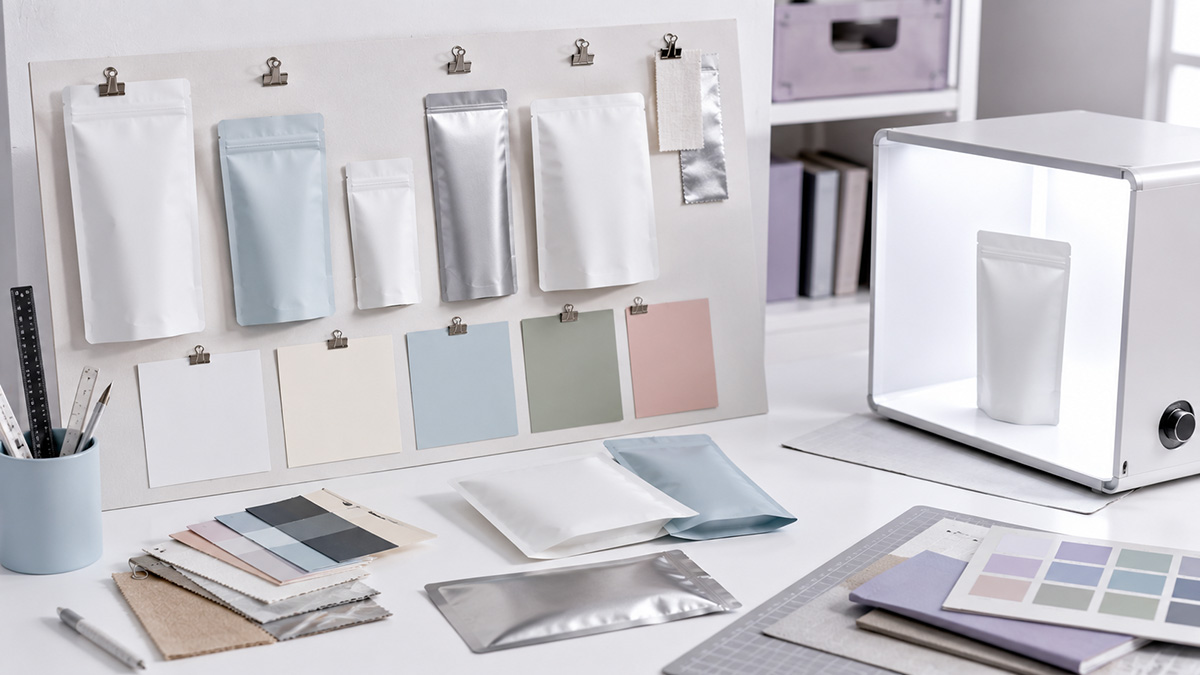
A custom pouch project is easier to plan when the team has handled similar packaging in real life. Stock pouch samples can help test fill weight, headspace, shelf position, label area, zipper feel and the amount of room needed for heat sealing.
This is especially useful before committing to a final custom format. A sample may reveal that the product needs a taller pouch, a wider base, a different window position or more room above the zipper. These details are easier to adjust during planning than after artwork and production decisions have already been locked in.
Testing also helps internal teams align. Marketing may focus on the shelf look, while operations may notice filling or sealing issues. A simple physical test lets both sides assess the same packaging before the launch moves forward.
Where digital printing can fit into launch planning
For some launches, digital printing can be useful when a brand needs custom printed packaging for product testing, seasonal campaigns, multiple SKUs or artwork that may still evolve. It can also help businesses explore printed packaging before they settle into a long-term packaging system.
The main planning point is not just print method. It is whether the packaging approach gives the business enough flexibility for the launch stage. If the product line has several flavours, sizes or variants, the artwork system should be planned so the range looks consistent without making every SKU feel identical.
A good custom packaging brief should therefore include both the first launch design and any likely future variations. That helps the supplier understand whether the project is a single pack, a family of products or the start of a broader packaging range.
What to send when requesting a custom pouch quote
The more specific the quote request, the easier it is for a packaging supplier to recommend a practical option. A very short enquiry can still begin the conversation, but a clearer brief usually reduces back-and-forth and helps avoid unsuitable suggestions.
- Product type and product form, such as beans, powder, granules, snacks, liquid, refill product or retail sample.
- Target fill weight or volume, plus any known product dimensions or density considerations.
- Preferred pouch format, or examples of packaging styles you like.
- Features required, such as zipper, valve, window, spout, tear notch or hang hole, if relevant.
- Sales channel, such as retail shelf, ecommerce, wholesale cartons, events, subscription boxes or sample packs.
- Artwork status, including whether files are ready, still being designed or only at concept stage.
- Preferred finish direction, such as kraft-look, matte, gloss, clear window, metallic or minimalist plain finish.
- Packing method, including whether the pouch will be filled manually, semi-automatically or by a co-packer.
- Whether the project is part of a broader custom packaging range with future sizes, flavours or product variants.
Not every detail has to be final before the first conversation, but these points help turn a general packaging idea into a practical discussion. They also make it easier to compare stock pouch testing, digital print options and longer-term custom packaging plans.
Common planning mistakes to avoid
One common mistake is treating custom packaging as a design-only project. A pouch can look excellent in a render but still be awkward to fill, seal, label or ship. Another mistake is choosing a format based only on a competitor’s packaging without checking whether the product, weight, sales channel and packing process are actually similar.
It is also easy to underestimate the importance of physical samples. A pouch that looks right online may feel too small once filled, may not stand as expected, or may leave less room for branding than planned. For launch packaging, a small amount of practical testing can prevent larger problems later.
The best approach is to treat the packaging as part of the launch system. The pouch should support the product, brand, packing process and customer experience together. When those pieces align, custom pouches and bags become easier to brief, easier to quote and more likely to work once the product is actually on sale.
FAQ
Are custom pouches and custom bags the same thing?
In many packaging conversations, custom pouches and custom bags are used to describe the same general flexible packaging category. The exact format may vary, such as stand up pouches, flat bottom pouches, spout pouches or other specialty bag styles.
Should I choose the pouch format before designing the artwork?
Yes. The pouch shape, gusset, zipper, seal area and finished pack size can all affect artwork placement. It is usually better to confirm the intended format before final artwork is prepared.
Can stock pouches help before custom packaging is finalised?
Yes. Stock pouch samples can help test product fit, fill weight, shelf appearance, labelling area and sealing workflow before a custom pouch project moves further.
When should a product launch consider digital printing?
Digital printing can be worth considering when the launch involves custom printed packaging, multiple designs, seasonal products, product testing or artwork that may need more flexibility than a long-term packaging run.

Posts Widget
- 1
- 2
- 3
- 4
- 5

Vivo Packaging Pty Ltd
Aussie Warehouse:
4 Tasman Ct, Keysborough VIC 3173, Australia
Monday – Friday: 9.30am – 5.30pm
Visitors By Appointment Only

Copyright 2026 © VIVO PACKAGING. ALL RIGHTS RESERVED.
