
Custom Pet Food & Treats Boxes
Pet food and treats are the largest segment of the pet products market and the most regulated. Unlike pet toys or accessories, pet food products in Australia are subject to specific manufacturing and labelling standards that affect the content, format, and placement of information on every package. Getting this right is not optional – it’s a legal obligation that applies to every pet food product sold in the Australian market, from a bag of supermarket kibble to an artisan hand-baked dog treat from a farmers market.
At the same time, the pet food and treats market has undergone a significant quality shift. A decade ago, the premium pet food category was small and niche. Today, grain-free, raw, organic, locally sourced, and human-grade ingredient pet food products are a substantial and rapidly growing segment. The consumers buying these products are applying the same scrutiny to their pet’s food as they apply to their own – reading ingredient lists, questioning processing methods, and making purchasing decisions based on brand values and ingredient transparency.
This combination of regulatory obligation and consumer sophistication creates a packaging brief that’s more complex than most other retail food categories. The packaging needs to comply precisely with legal requirements, communicate ingredient quality and brand values with authenticity, and connect emotionally with a consumer who cares deeply about what their pet eats.
Our custom pet food and treats boxes are manufactured to suit the specific product format, regulatory requirements, and brand positioning of your pet food business. We’ve been supplying pet food packaging to Australian businesses since 2017.
Get in touch today to discuss your requirements or request a quote.

Order Process
We quote on the box style of your choice
We receive your final design on a die line template
We send you an invoice to pay
We send you 3D mockups to confirm and start production
We ship the order to you by air or by sea
Request a Quote
To request an accurate quote from us, please fill out the form below. If you have any questions about using this form, please send an email to [email protected]
Pet Food & Treats Categories
We manufacture custom packaging across the full range of pet food and treat formats. Each category has its own dedicated page with detailed product-specific information.
Dog Treat Boxes
Custom packaging for dog treats, training rewards, chews, biscuits, and functional treats. Dog treats are the fastest-growing segment in the pet food category, driven by the growth of premium and artisan treat brands. The packaging needs to communicate ingredient quality, meet labelling requirements, and connect with dog owners who increasingly regard treat quality as important as main meal quality.
Cat Treat Boxes
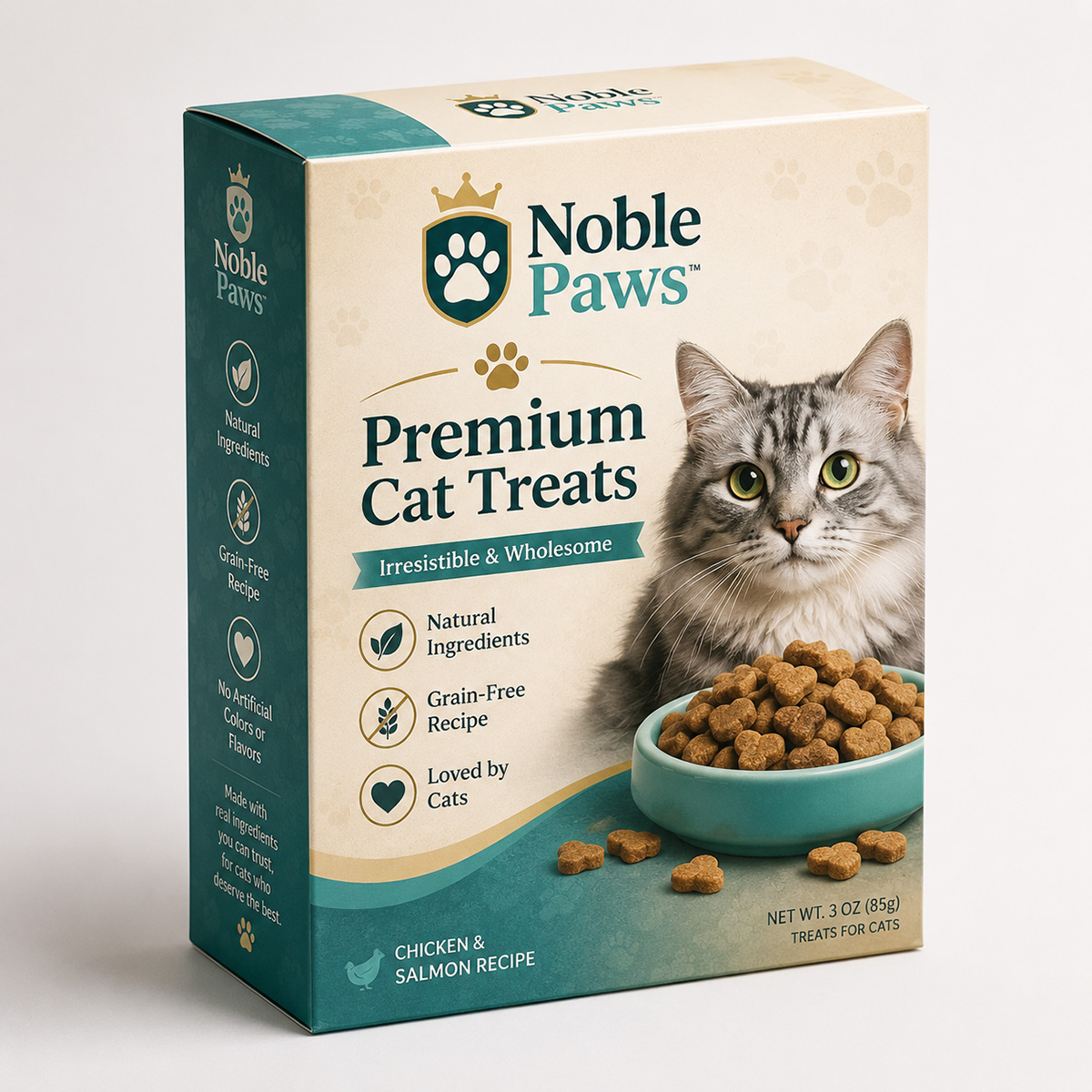
Custom packaging for cat treats, chews, and reward products. The cat treat market has its own specific consumer dynamics – cat owners have strong preferences about ingredients, textures, and formulations, and the packaging needs to communicate the product’s specific attributes clearly. Cat treat packaging has a distinct visual language from dog treat packaging, reflecting the different personality of the species and the different sensibility of cat owners.
Pet Food Boxes
Custom packaging for dry pet food, carton-format wet food, and specialty dietary pet food products. Pet food packaging has the most demanding labelling requirements in the pet products category and competes in one of the most visually competitive retail shelf environments. The packaging needs to balance mandatory compliance information with brand communication in a format that’s legible and engaging at retail shelf distance.
Choosing the Right Pet Food & Treats Box Configuration
The configuration decisions for pet food and treats packaging depend on the product format, the shelf life requirements, and the sales channel.
Dry treats vs wet treats vs raw products have different packaging requirements. Dry treats – biscuits, jerky, dehydrated products – need moisture-resistant packaging that prevents the product from absorbing ambient humidity and becoming soft or developing mould. Wet treats and functional treats with higher moisture content may need sealed formats with more robust moisture barriers. Raw and minimally processed treats have the most demanding packaging requirements – temperature management, food safety material specification, and shelf life considerations that don’t apply to shelf-stable dry products. The product format should be the first input into the packaging specification, not an afterthought.
Shelf life and freshness requirements affect material specification. Pet treats and pet food have defined shelf lives that the packaging needs to support. A treat with a six-month shelf life needs a moisture barrier that maintains its performance over the full shelf life period – not just at the point of packing. The packaging material and any inner barrier layer need to be specified for the full shelf life duration in the expected storage environment. For products with shorter shelf lives or products sold through DTC channels where freshness is a primary selling point, the packaging specification needs to account for the entire supply chain from production to the pet’s bowl.
Retail shelf vs DTC vs gifting require different approaches. A pet treat sold through a supermarket needs to compete on a crowded shelf – shelf legibility, brand differentiation, and competitive visual impact are the primary design priorities. A pet treat sold direct-to-consumer through a brand’s own website needs to create a positive unboxing experience and communicate the brand story to a consumer who made a deliberate choice to seek out the product. A pet treat presented as a gift needs the premium construction and finish that the gifting occasion demands. Each channel warrants its own packaging specification.
Inner packaging and secondary packaging relationship. Many pet treats are sold in inner resealable bags or pouches within an outer box. The inner packaging handles the primary food safety, moisture barrier, and resealability functions. The outer box provides retail structure, a larger print surface, and brand presence. The box needs to be specified to accommodate the inner packaging at its filled dimensions, with adequate clearance for the closure to function and for the inner package to be removed and resealed easily after opening.
Pet Food & Treats-Specific Considerations
A few properties of the pet food and treats category that create specific packaging requirements.
Australian Standard AS 5812 and FSANZ requirements are mandatory. Pet food products sold in Australia are subject to the Australian Standard for the Manufacturing and Marketing of Pet Food (AS 5812:2017) and relevant FSANZ standards. These set mandatory requirements for labelling that include: a statement of the animal species the product is intended for, a guaranteed analysis (minimum crude protein and crude fat, maximum moisture and crude fibre), an ingredient list in descending order by weight, a best before or use by date, a net weight declaration, and manufacturer name and contact information. These requirements are not negotiable and cannot be modified for aesthetic reasons. The packaging design needs to accommodate all mandatory information accurately and in compliance with the standard before the artwork is finalised.
Premium pet food consumers scrutinise ingredient lists as carefully as human food consumers. The growth of premium, artisan, and functional pet food products has been driven by a consumer group that reads ingredient lists carefully, knows the difference between named meat proteins and generic meat meals, and makes purchasing decisions based on what they find. Packaging that communicates ingredient transparency – named protein sources, country of origin, processing method – resonates with this consumer and builds brand credibility. Packaging that obscures ingredient quality behind marketing claims without substantiation does the opposite.
Moisture is the primary quality risk for dry pet treats. A dry dog biscuit or a dehydrated treat that has absorbed ambient moisture becomes soft, sticky, and potentially unsafe within a relatively short period. The moisture barrier performance of the packaging material needs to be specified for the product’s shelf life in the expected retail and storage environment. For products sold through retail channels where the packaging may sit on a shelf for weeks or months, the moisture barrier needs to maintain its performance over the full display period. For products sold through DTC channels where the packaging may spend time in a postal environment, the moisture performance needs to account for the variable humidity conditions of transit.
Food safety material specification applies to all pet food contact surfaces. The materials used in packaging that comes into direct or indirect contact with pet food need to meet food safety standards – the same requirement that applies to human food packaging. This includes the inner bag or liner, the base of the box if the product sits directly on it, and any interior coatings or linings. Pet food products that don’t meet food safety material requirements are a regulatory and product liability risk. The material specification for pet food packaging should always confirm food safety compliance for the specific food contact application.
The premium pet food market has specific visual and communication expectations. A consumer buying a premium grain-free dog treat made from single-source protein has specific expectations for how that product should be communicated. The packaging should lead with the key ingredient quality claims – protein source, processing method, absence of specific ingredients – in a design that communicates the brand’s values clearly and credibly. The visual aesthetic should feel consistent with the premium food category more broadly – clean design, considered typography, natural materials, and a design approach that communicates quality without relying on generic “pet” iconography.
Certification and third-party validation add credibility. For premium pet food brands with specific quality credentials – organic certification, AAFCO nutritional adequacy statement, veterinary endorsement, free-range or pasture-raised protein sources – communicating these credentials on the packaging builds consumer trust. Each certification has specific requirements for how it’s displayed – minimum logo size, placement restrictions, and associated claim requirements. The packaging design needs to accommodate all certification logos accurately and in compliance with each certification body’s display requirements.
Print & Finishing for Pet Food & Treats Boxes
Pet food packaging spans from mass-market retail formats to premium artisan brands, and the design approach varies significantly across this range.
Mass-market retail pet food packaging is designed for shelf impact and brand recognition in a highly competitive retail environment. Bold colour, large product photography of happy, healthy pets, prominent nutritional claim communication, and a design that reads clearly at shelf distance are the priorities. The shelf environment for pet food in a supermarket is visually intense – the packaging needs to differentiate clearly while communicating all mandatory label information within the available design space. Full colour printing on a gloss laminate is standard.
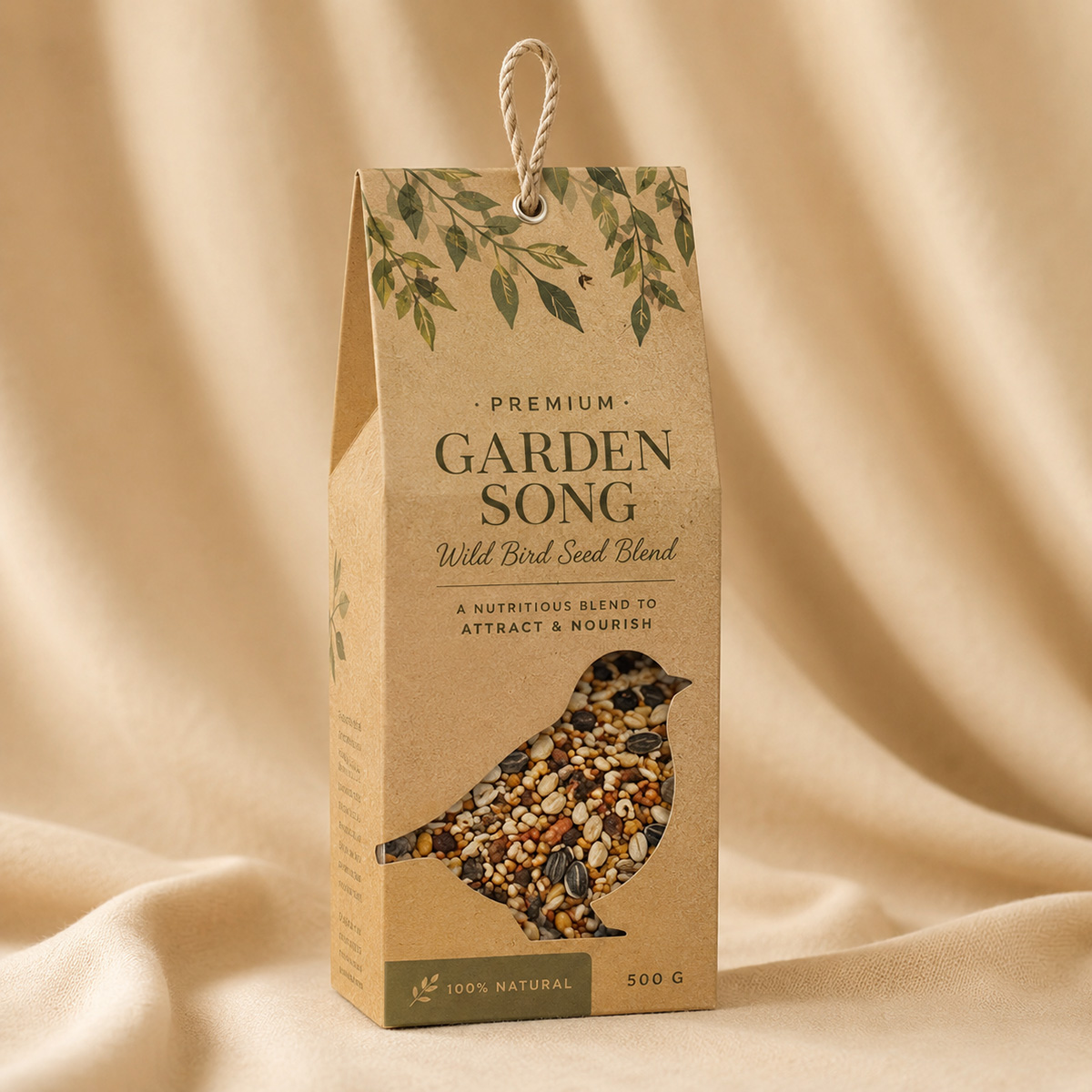
Premium artisan pet treat packaging mirrors the visual language of premium human food – clean design, ingredient-forward communication, natural materials, and a considered aesthetic that communicates quality without loudness. Kraft paper stock, matte laminate, and minimal print coverage are common. The front panel typically leads with the key ingredient quality claims – specific protein source, processing method, natural ingredients – rather than lifestyle photography. The back panel communicates the full ingredient list, guaranteed analysis, and brand story to a consumer who will read it carefully.
Dog vs cat visual language. Dog treat packaging tends toward warmer, more energetic design – illustrations of active, happy dogs, bold typography, and colour palettes that communicate play and vitality. Cat treat packaging tends toward more independent, refined, or ironic design – reflecting the cat’s personality and the specific sensibility of cat owners. For brands that serve both species, maintaining separate design treatments for each is worth the investment.
Functional and veterinary pet food packaging has a third visual register – more clinical, more information-dense, and more focused on communicating the specific health benefit of the product than on emotional connection. For products sold through veterinary channels or positioned on specific health functions – joint health, dental care, weight management – the packaging design should communicate health credentials and veterinary endorsement clearly and credibly.
All boxes are printed using full colour printing in CMYK. Files should be supplied as Adobe Illustrator (.ai) or high-resolution print-ready PDF, with fonts outlined and graphics embedded. Free design support is included – we’ll produce a free 3D mockup for your approval before production begins, and handle minor artwork adjustments at no extra charge. Free dieline templates are available if you’re building your artwork from scratch.
Materials & Specifications
We manufacture pet food and treats boxes in a full range of cardboard and paperboard materials, with food-safe and food-grade options for all direct and indirect food contact applications. Moisture-resistant options are available for dry treat products, and eco friendly and recyclable options are available across the range.
- Single copper paper
- White kraft
- Brown kraft
- Black kraft
- Gold foil paper
- Silver foil paper
- Corrugated board
Minimum order quantity is 1,000 units. Air freight runs approximately 3 – 4 weeks from production sign-off; sea freight is approximately 8 weeks. We supply pet food businesses across Australia including Sydney, Melbourne, and Brisbane. For more detail on the full order process, artwork requirements, and lead times, get in touch and we’ll walk you through it.
Join our newsletter for 10% off your first order
Get our emails for info on new items, sales and much more.

Vivo Packaging Pty Ltd
Aussie Warehouse:
4 Tasman Ct, Keysborough VIC 3173, Australia
Monday – Friday: 9.30am – 5.30pm
Visitors By Appointment Only

Need Help?
Copyright 2026 © VIVO CUSTOM BOXES. ALL RIGHTS RESERVED.