
Custom Supplement Boxes
The supplement category is one of the most complex regulatory environments in Australian retail. A product marketed as a dietary supplement may be a TGA-listed medicine with an AUST L number, a food product regulated under FSANZ standards, or – if the marketing claims aren’t carefully managed – a therapeutic good that requires registration rather than listing. The regulatory status of a supplement is determined not just by its ingredients but by the claims made for it, which means the packaging content is a determinant of regulatory status, not just a reflection of it.
This creates a packaging brief with a distinctly unusual characteristic: the words on the box can change the regulatory category of the product. A supplement that makes a specific therapeutic claim – treating, curing, or preventing a named condition – becomes a registered therapeutic good with a different and more demanding compliance pathway. A supplement that makes a general health maintenance claim within the permitted range remains a listed medicine or a food product. The precise language of every claim on the packaging needs to be reviewed for regulatory accuracy before the artwork is finalised.
Beyond compliance, the supplement market is intensely competitive. The Australian supplement industry has grown significantly, and the difference between a premium supplement brand and a generic alternative is communicated primarily through the packaging – the design, the quality of the materials, the clarity of the ingredient communication, and the overall brand presentation. For supplement brands competing on quality, the packaging is a primary commercial asset.
Our custom supplement boxes are manufactured to suit the specific product format, regulatory status, and brand positioning of your supplement business. We’ve been supplying supplement packaging to Australian businesses since 2017.
Get in touch today to discuss your requirements or request a quote.





Order Process
We quote on the box style of your choice
We receive your final design on a die line template
We send you an invoice to pay
We send you 3D mockups to confirm and start production
We ship the order to you by air or by sea
Request a Quote
To request an accurate quote from us, please fill out the form below. If you have any questions about using this form, please send an email to [email protected]
Supplement Box Styles We Offer
We manufacture custom supplement boxes across a range of formats to suit different product types and market positions. All styles are available in custom sizes, materials, and finishes.
Capsule and Tablet Supplement Boxes
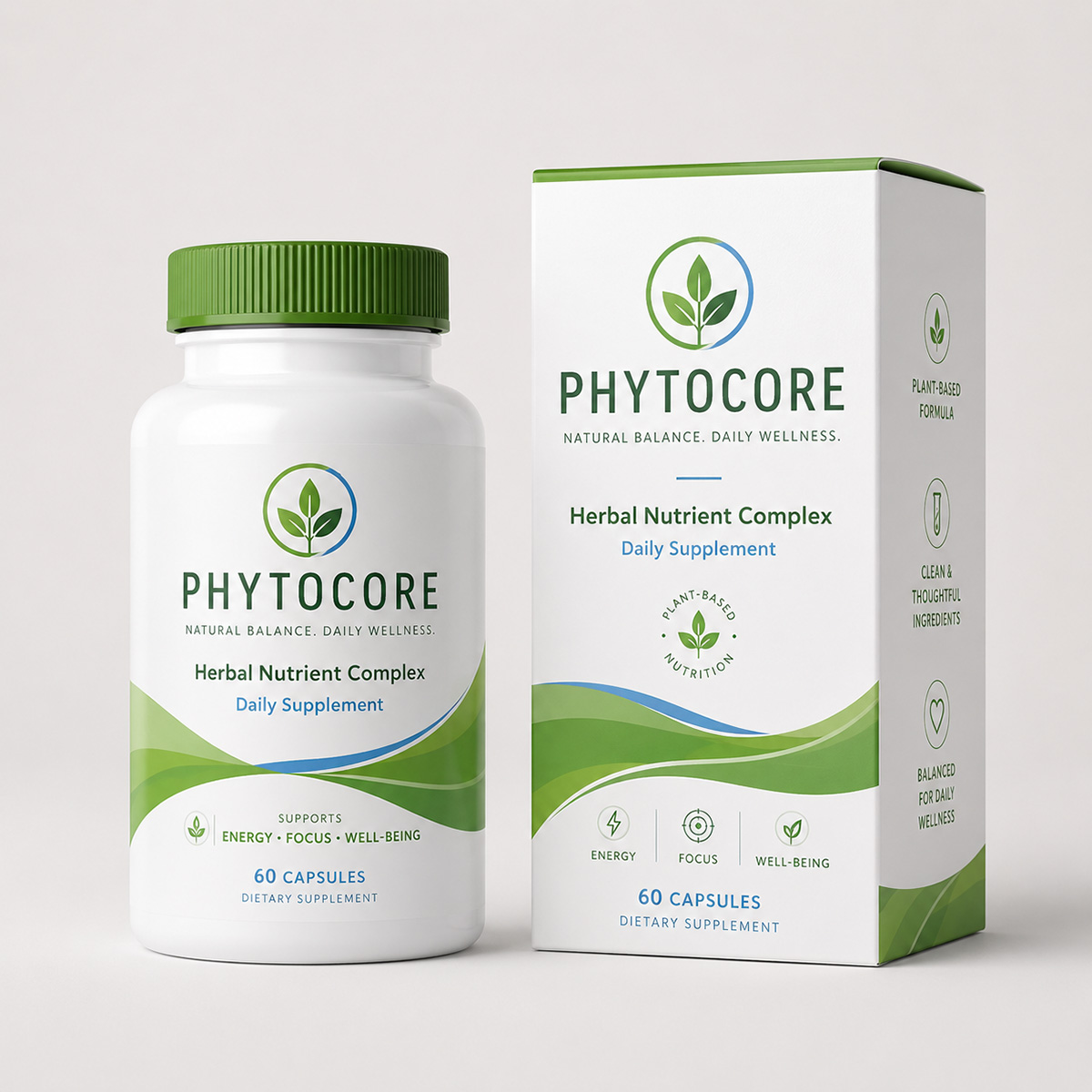
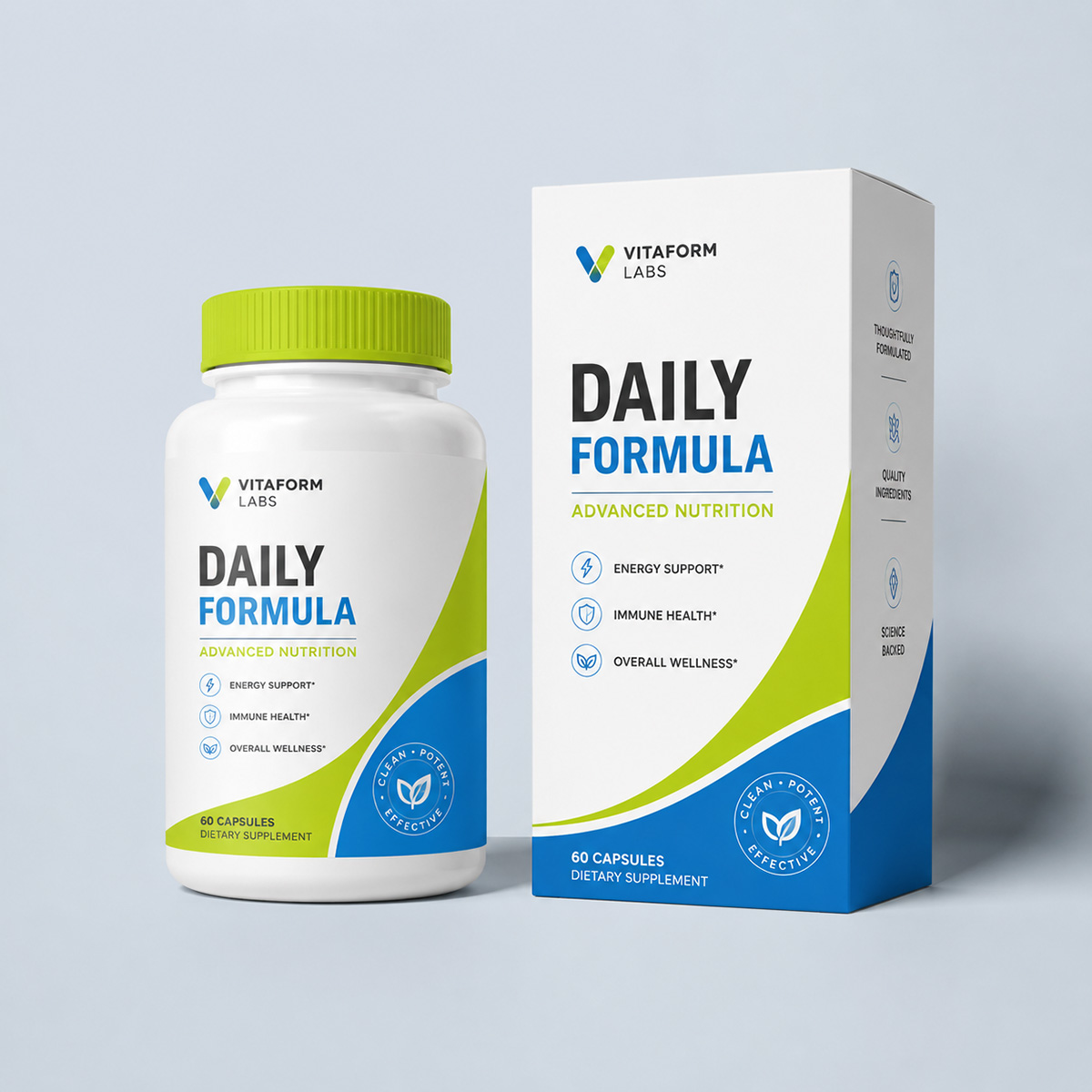
The primary format for supplements sold in capsule and tablet form – the most common supplement delivery format in the Australian market. A capsule or tablet supplement box is typically a secondary carton around a bottle or blister pack, providing a larger print surface for brand communication, health claims, and mandatory regulatory information.
Available in sizes to suit standard bottle dimensions from 30-capsule through to 120-capsule and larger formats. The front panel design is the primary competitive surface in a category where multiple brands are displayed together on a pharmacy or health food store shelf. For brands with a strong visual identity, the carton is a significant brand impression that the bottle alone can’t achieve.
Powder Supplement Boxes
A secondary carton format for protein powders, collagen supplements, greens powders, and other bulk supplement powders sold in tubs or pouches. Powder supplement boxes typically serve as retail shelf presentation around a tub or as a DTC delivery box for products sold online.
For protein and sports nutrition powders sold through gym retail and sports nutrition stores, the box needs to communicate performance credentials and nutritional specifications clearly in a competitive environment where multiple brands are displayed at close range. The size of powder supplement boxes varies significantly – from single-serve sachets through to 1-kilogram and larger tub formats.
Liquid Supplement Boxes
A format for liquid supplements – liquid vitamins, colloidal minerals, liquid probiotics, and other supplement formulations in bottle or dropper formats. Liquid supplement packaging needs to communicate the product clearly, accommodate the specific bottle or dropper format securely, and provide adequate product protection during transit and retail handling.
For premium liquid supplements sold at high price points, a rigid box format that presents the bottle in a considered arrangement – with the bottle visible through a window or secured in a custom insert – communicates premium positioning more effectively than a standard folding carton.
Gummy Supplement Boxes
A format for gummy and chewable supplement products – one of the fastest-growing formats in the Australian supplement market. Gummy supplements appeal to consumers who find capsules difficult to swallow and to those who want a more enjoyable supplement experience, and the category has grown particularly strongly in children’s vitamins, adult multivitamins, and beauty supplements.
Gummy supplement packaging faces a specific challenge: the product looks like confectionery, and the packaging needs to communicate that it’s a health supplement – with appropriate dosage instructions and any applicable warnings – while maintaining the appeal that makes the gummy format attractive in the first place.
Herbal and Botanical Supplement Boxes
A format for herbal preparations, botanical extracts, traditional medicine formulations, and plant-based supplements. Herbal supplements occupy a distinct space in the TGA framework – many traditional herbal products have AUST L listings under the listed medicines pathway, and the packaging needs to reflect the specific permitted indications for each ingredient.
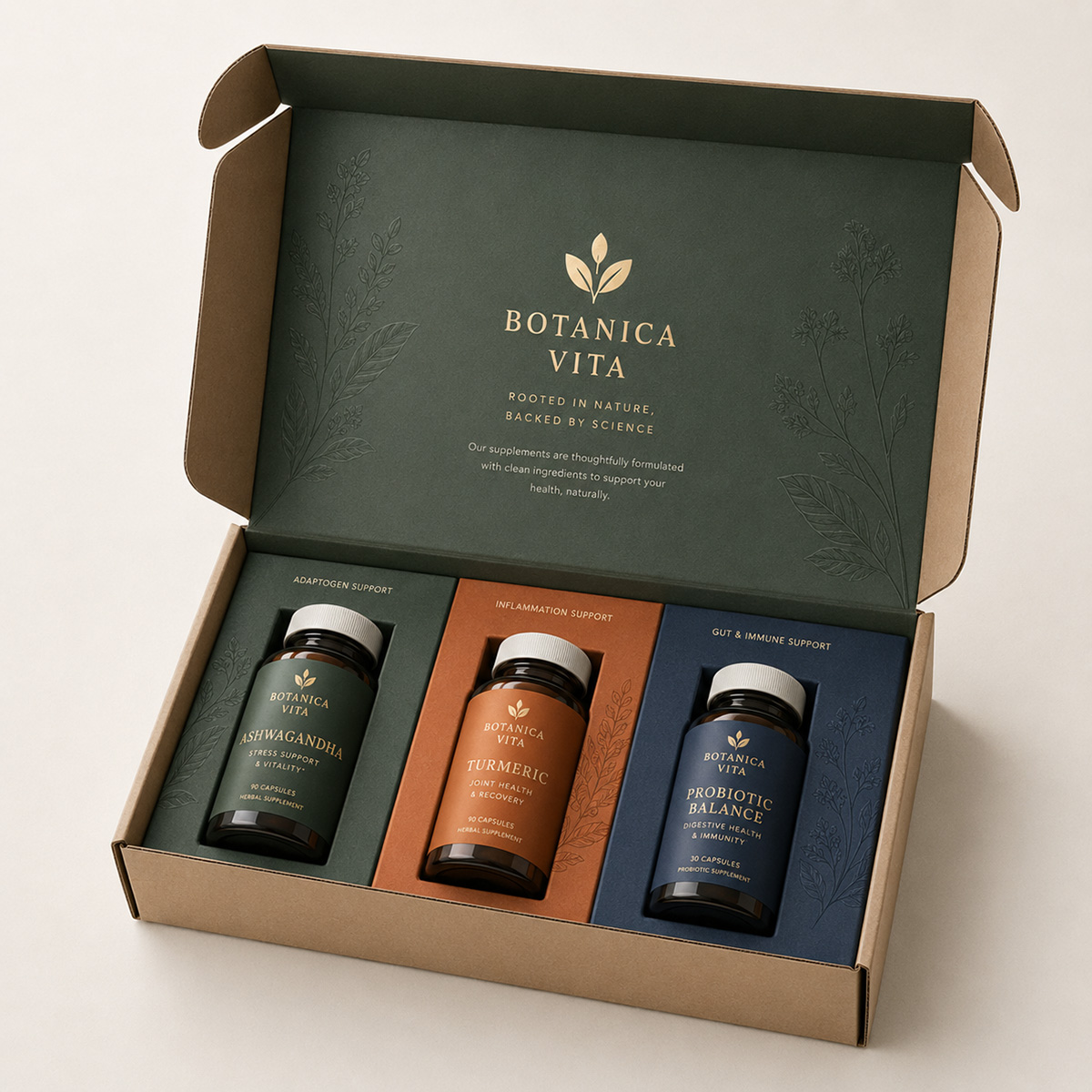
The visual language of herbal supplement packaging typically references the natural origin of the ingredients – botanical illustration, natural colour palettes, and design elements that communicate the provenance and authenticity of the herbal tradition from which the product derives.
Choosing the Right Supplement Box Configuration
The configuration decisions for supplement packaging are driven by the product format, the regulatory status, and the target market.
Regulatory status must be confirmed before the packaging brief is developed. A supplement that’s a TGA-listed medicine (AUST L) has mandatory labelling requirements that differ from a supplement that’s a food product. An AUST L product must carry the AUST L number on the label, must only make claims within the permitted indications for its listed ingredients, and must meet the presentation requirements for listed medicines. A food supplement must meet FSANZ labelling requirements including a nutrition information panel. Determining the product’s regulatory status – and confirming the permitted claims for each ingredient – before developing the packaging artwork prevents the common and costly problem of non-compliant packaging that must be redesigned before the product can be sold.
Permitted health claims must be used precisely. The TGA maintains a database of permitted indications for listed medicine ingredients, and claims made on supplement packaging must match the permitted indications for the ingredients present. A claim that goes beyond the permitted indication for an ingredient – claiming to treat a specific condition when the permitted indication is maintenance of general health, for example – may push the product into the registered medicine category or constitute misleading labelling. Every health claim on the packaging should be mapped to the specific permitted indication for the corresponding ingredient and confirmed as compliant before the artwork is finalised.
Product form determines the primary packaging and the secondary carton relationship. A capsule supplement has a primary container (bottle or blister pack) and a secondary carton (the box). A powder supplement has a primary container (tub or pouch) and possibly a secondary carton. A gummy supplement may be in a foil-sealed bottle or a resealable pouch. The secondary carton box needs to be specified for the actual dimensions of the primary container at its filled volume, not an estimated or generic size. The relationship between the primary container and the secondary carton – how tightly the carton fits around the bottle, whether the bottle is visible through a window, how the carton opens – all affect the consumer experience and the overall brand impression.
Sports nutrition and general health supplements are different markets with different packaging briefs. A sports nutrition supplement – a protein powder, a pre-workout formula, a performance amino acid product – is purchased by a different consumer with different motivations to a general health supplement – a daily multivitamin, a digestive support formula, a sleep supplement. The sports nutrition consumer responds to performance credentials, macronutrient specifics, and an energetic visual language. The general health consumer responds to wellbeing communication, ingredient transparency, and a calm, trustworthy aesthetic. These are different design briefs, and the packaging should reflect the specific market rather than trying to serve both simultaneously.
Supplement-Specific Considerations
A few properties of supplements that create specific packaging requirements.
AUST L mandatory labelling creates a significant information load. A TGA-listed medicine with an AUST L number must carry a substantial amount of mandatory information – the AUST L number, the product name and description, the active ingredients with their quantities, the indications (uses), the directions for use, the warnings and precautions, the storage conditions, the expiry date designation, the lot number designation, and the sponsor’s name and address. For a supplement with multiple active ingredients and several permitted indications, this information can be extensive. The packaging design needs to accommodate all of this information clearly and legibly while maintaining brand communication on the front panel. The back and side panels carry most of the mandatory detail; the front panel is where brand identity and the primary benefit claim communicate.
Ingredient transparency is a primary commercial differentiator in the premium segment. Supplement consumers – particularly those buying premium products – are attentive to ingredient quality, dosage levels, and the presence or absence of excipients. A supplement that declares full ingredient quantities for every active component, identifies the specific form of each ingredient (methylfolate rather than folic acid, for example), and communicates the absence of common allergens and unnecessary fillers is communicating transparency that builds consumer trust. For premium supplement brands, full ingredient disclosure – beyond the minimum required – is a commercial differentiator as well as a regulatory compliance matter.
Proprietary blends obscure individual ingredient dosages. Some supplement products declare a “proprietary blend” with a total weight but without disclosing the individual quantities of each ingredient in the blend. This approach is legally permitted in some contexts but is increasingly scrutinised by engaged supplement consumers who want to know the specific dosage of each ingredient they’re taking. For premium brands targeting the informed supplement consumer, moving away from proprietary blend labelling toward full ingredient disclosure communicates transparency and confidence in the formula.
The sports nutrition aesthetic has its own distinct visual culture. Sports nutrition packaging – protein powders, pre-workouts, BCAAs, creatine – has developed a visual language that’s distinct from both pharmaceutical packaging and general health packaging. Bold, high-energy design with strong colour, performance-oriented typography, and imagery that references athletic performance and physical achievement is the standard aesthetic in this segment. For sports nutrition brands, packaging that doesn’t communicate performance credentials visually is at a competitive disadvantage in gym retail and sports nutrition stores where the category aesthetic is well established.
Sustainability is a growing expectation in the premium supplement market. Premium supplement consumers are typically health-conscious and environmentally aware, and they extend that environmental consciousness to the packaging they receive. Recyclable, FSC-certified, and reduced-plastic packaging options are increasingly important in the premium segment. For supplement brands with sustainability commitments, the packaging materials should be consistent with those commitments – and communicating the sustainability credentials of the packaging on the box is worth doing for a consumer who will notice and respond to it.
Print & Finishing for Supplement Boxes
Supplement packaging has one of the widest visual ranges of any health product category – from the energetic boldness of sports nutrition to the calm minimalism of premium wellness supplements to the botanical richness of herbal preparations.
Premium wellness supplement packaging has moved toward a clean, considered aesthetic that mirrors premium human food packaging. Matte laminate on white or natural stock, clear ingredient communication, considered typography, and a design approach that communicates quality and transparency without clinical coldness. The packaging should feel as premium as the supplement inside it – which for a $60 to $100 bottle of collagen or a high-dose omega-3, means a level of finish that matches the price point.
Sports nutrition packaging uses the full energy of the performance aesthetic – bold colour, strong typography, high-contrast design, and visual elements that communicate strength, energy, and athletic achievement. Full colour printing on a gloss base stock is the standard approach. For sports nutrition brands competing in gym retail, the packaging needs to communicate instantly and compellingly at a distance in a competitive display environment.
Herbal and botanical supplement packaging typically references natural origins – botanical illustration, warm natural colour palettes, and design elements that communicate the provenance and tradition of the herbal ingredients. The visual language should communicate authenticity and natural quality without sacrificing the regulatory information clarity that the category requires.
Gummy supplement packaging benefits from a more playful, approachable design that references the enjoyable, non-clinical experience of the product format, while clearly communicating the health benefit and the appropriate dosage. The design challenge is communicating “this is a health product with specific dosage requirements” and “this is an enjoyable product you’ll want to take every day” simultaneously.
All boxes are printed using full colour printing in CMYK. Files should be supplied as Adobe Illustrator (.ai) or high-resolution print-ready PDF, with fonts outlined and graphics embedded. Free design support is included – we’ll produce a free 3D mockup for your approval before production begins, and handle minor artwork adjustments at no extra charge. Free dieline templates are available if you’re building your artwork from scratch.
Materials & Specifications
We manufacture supplement boxes in a full range of cardboard and paperboard materials to suit different product formats and market positions. Eco friendly and recyclable options are available across the range. All materials are appropriate for secondary packaging of therapeutic goods and food supplement applications.
- Single copper paper
- White kraft
- Brown kraft
- Black kraft
- Gold foil paper
- Silver foil paper
- Corrugated board
Minimum order quantity is 1,000 units. Air freight runs approximately 3 – 4 weeks from production sign-off; sea freight is approximately 8 weeks. We supply supplement businesses across Australia including Sydney, Melbourne, and Brisbane. For more detail on the full order process, artwork requirements, and lead times, get in touch and we’ll walk you through it.
Join our newsletter for 10% off your first order
Get our emails for info on new items, sales and much more.

Vivo Packaging Pty Ltd
Aussie Warehouse:
4 Tasman Ct, Keysborough VIC 3173, Australia
Monday – Friday: 9.30am – 5.30pm
Visitors By Appointment Only

Need Help?
Copyright 2026 © VIVO CUSTOM BOXES. ALL RIGHTS RESERVED.