
Custom Cat Food Boxes
Cat food is one of the most scrutinised product categories in Australian retail. Cat owners – as a demographic – are among the most ingredient-conscious pet food consumers in the market. They read labels carefully, research brands online, participate actively in cat owner communities, and hold brands to a high standard of ingredient quality and transparency. The growth of premium cat food in Australia has been driven almost entirely by this consumer scrutiny – brands that communicate ingredient quality credibly have grown significantly; brands that don’t have lost market share.
The product itself presents packaging challenges that dog food doesn’t. Cats are obligate carnivores with specific nutritional requirements – most notably taurine – that aren’t negotiable in the way that some dog dietary requirements are. And cats are famously selective about what they eat. A cat food product that the cat won’t eat is a failed product regardless of its nutritional profile, and packaging that communicates palatability and appeal to both the cat owner and, indirectly, the cat is a specific communication challenge in this category.
Our custom cat food boxes are manufactured to suit the specific product format, regulatory requirements, and brand positioning of your cat food business. We’ve been supplying pet food packaging to Australian businesses since 2017.
Get in touch today to discuss your requirements or request a quote.
Order Process
We quote on the box style of your choice
We receive your final design on a die line template
We send you an invoice to pay
We send you 3D mockups to confirm and start production
We ship the order to you by air or by sea
Request a Quote
To request an accurate quote from us, please fill out the form below. If you have any questions about using this form, please send an email to [email protected]
Cat Food Box Styles We Offer
We manufacture custom cat food boxes across a range of styles to suit different product formats and market contexts. All styles are available in custom sizes, materials, and finishes.
Dry Cat Food Boxes
A secondary box format for dry cat food kibble – a box around a sealed inner bag that holds the product. Dry cat food boxes are the primary retail format for cat food sold through supermarkets, pet stores, and online retail. The box provides retail shelf structure, a larger print surface for brand and product communication, and protection during distribution.
Available in sizes to suit common retail formats – 500g, 1kg, 2kg, and larger – with custom dimensions for specialty or non-standard products. The front panel is the primary competitive surface in a highly competitive retail shelf environment where multiple cat food brands are displayed together.
Wet Cat Food Cartons
A format for wet cat food sold in carton formats rather than pouches or cans. Carton-format wet cat food is a growing segment – it’s more environmentally friendly than canned formats and more convenient than multi-pouch formats for some consumers. The carton needs to communicate the product clearly, accommodate mandatory labelling, and differentiate on a shelf where pouch and can formats dominate.
Available in single-serve and multi-serve configurations. For premium wet cat food brands entering the market or expanding beyond pouch formats, a carton configuration that communicates clearly and competes effectively on shelf is a packaging brief worth investing in.
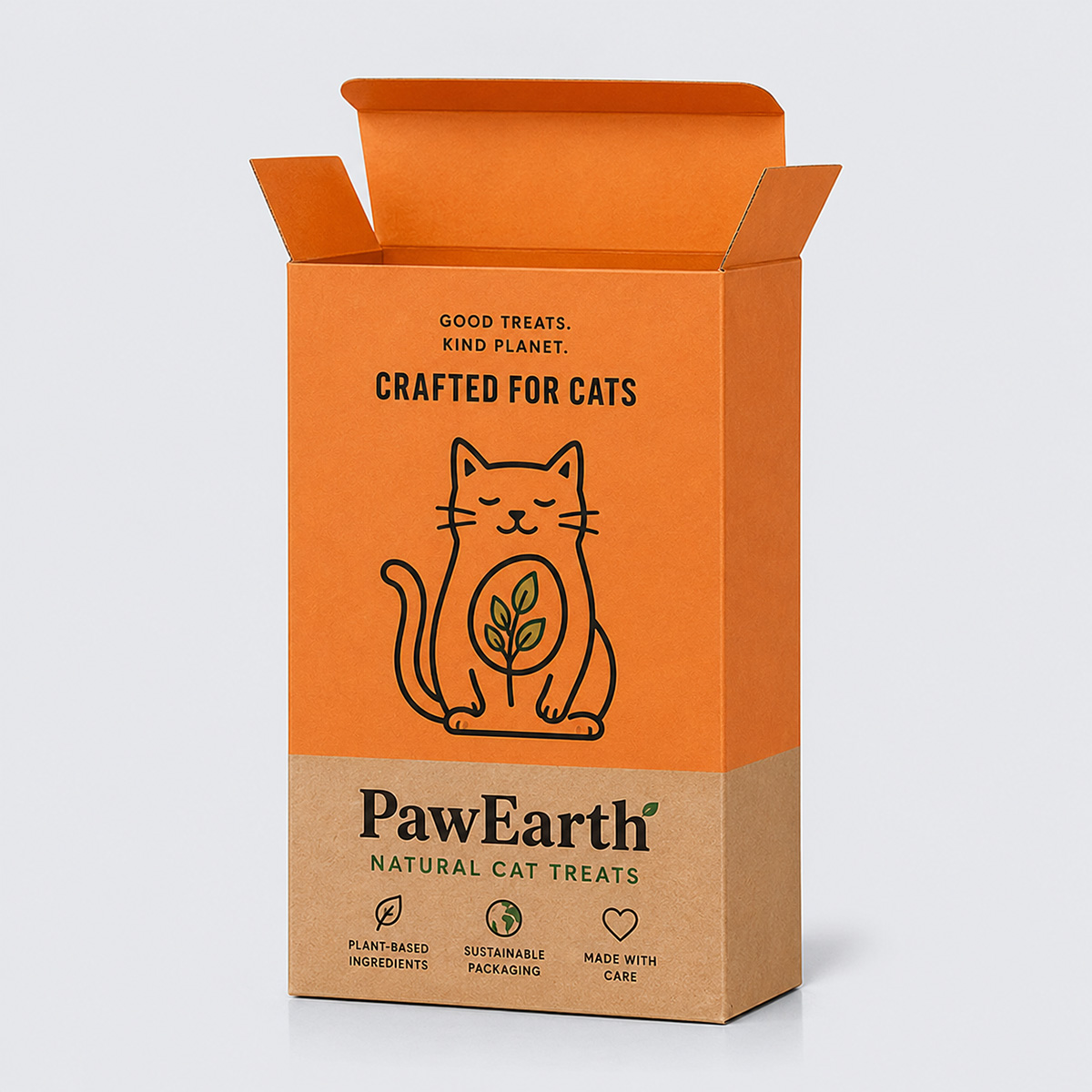
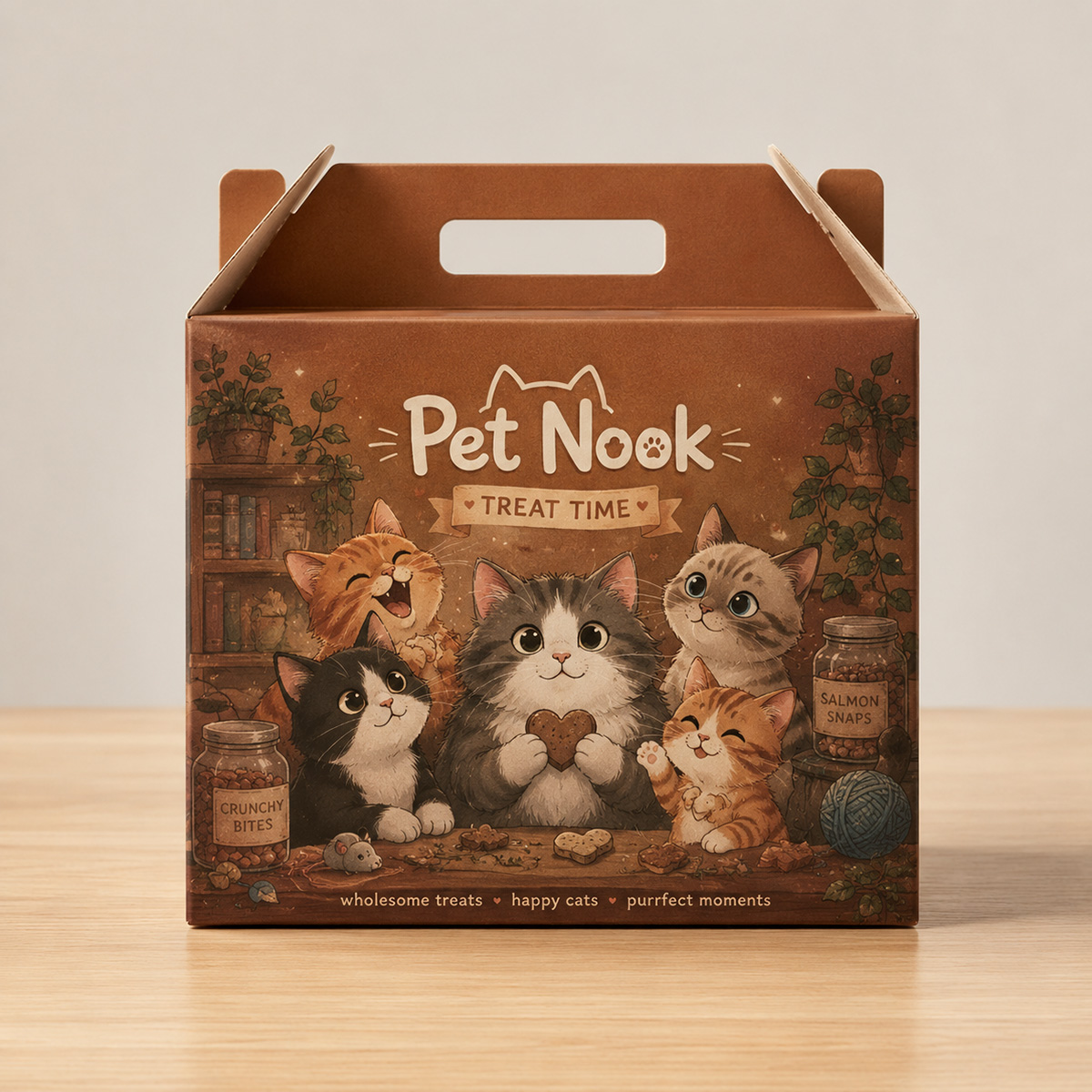
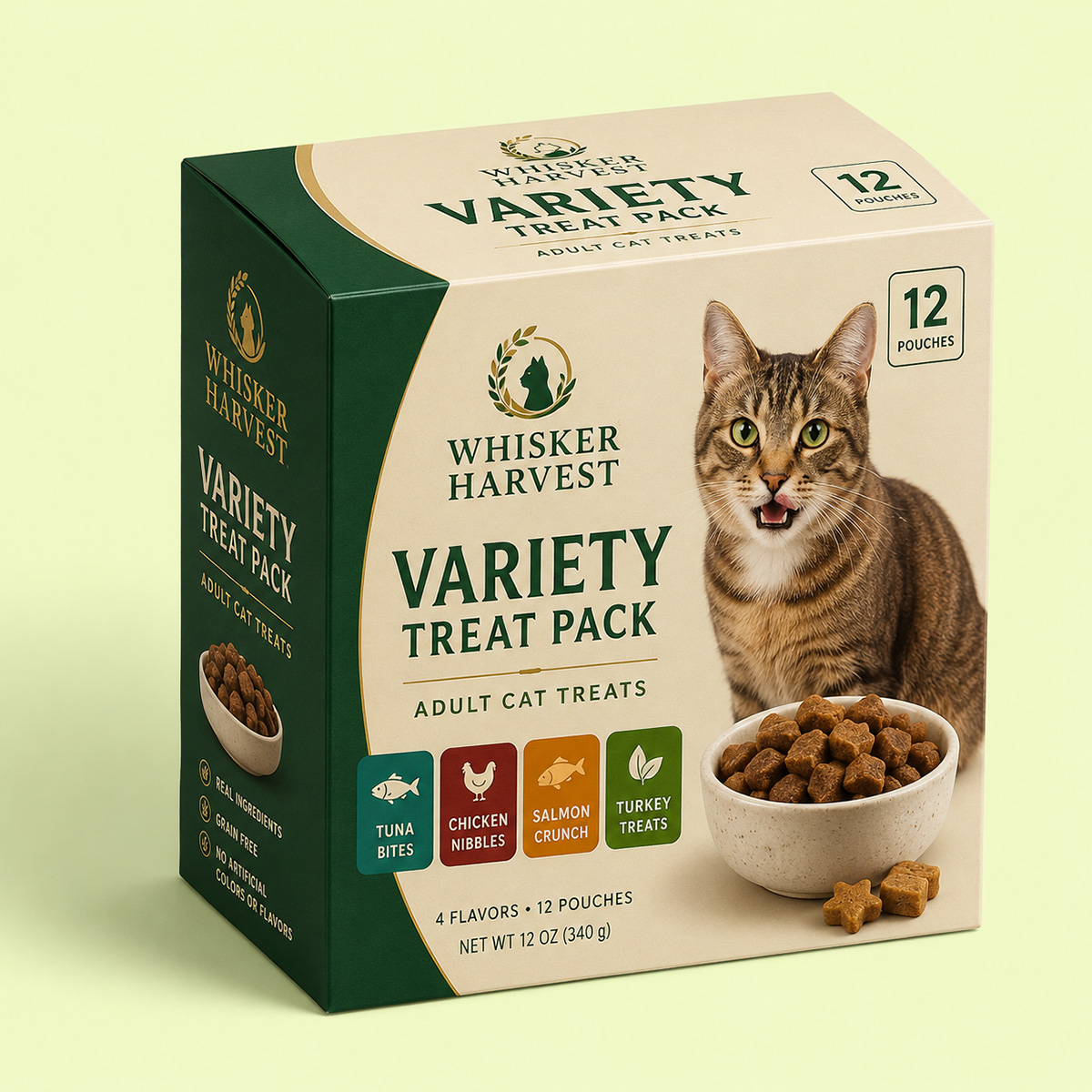
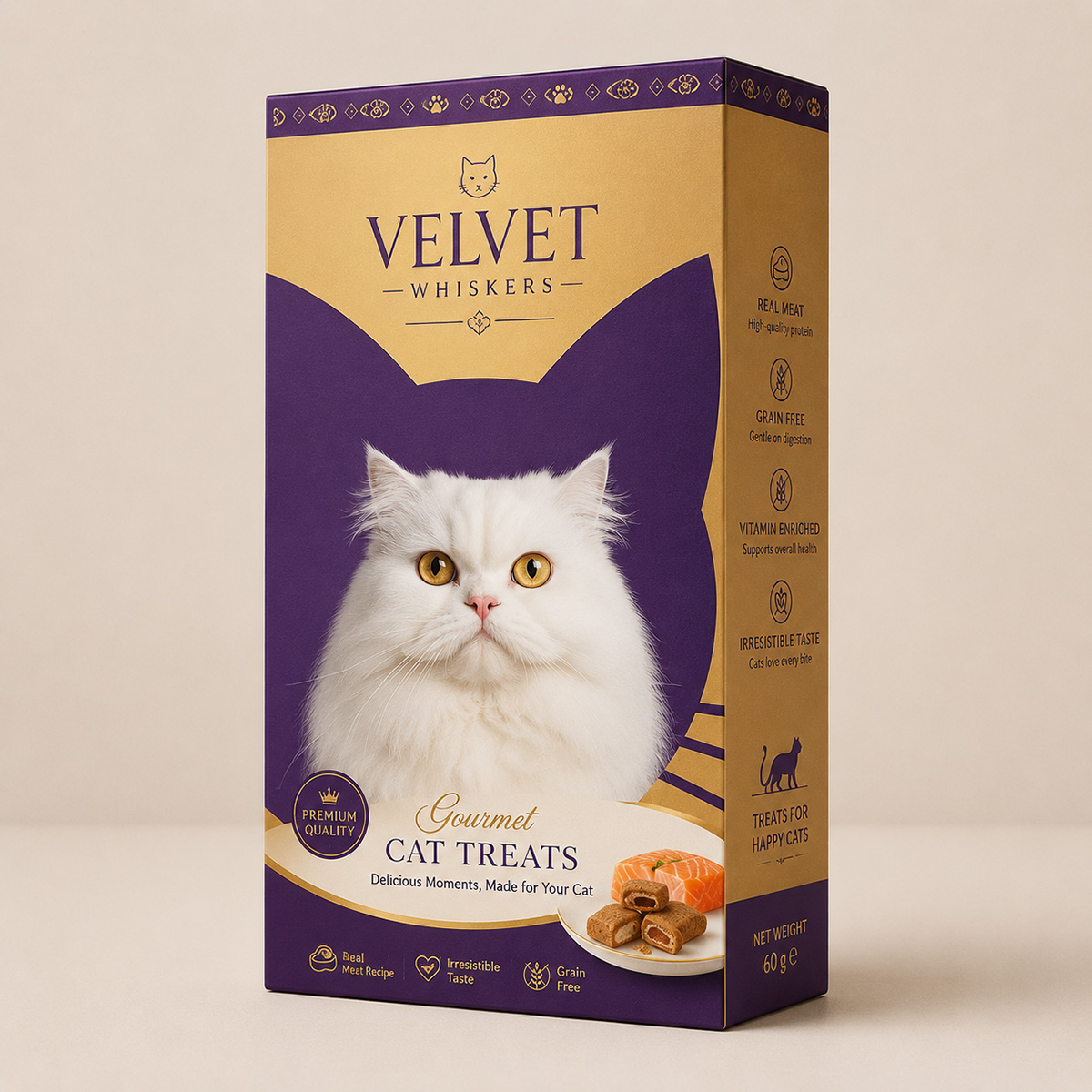
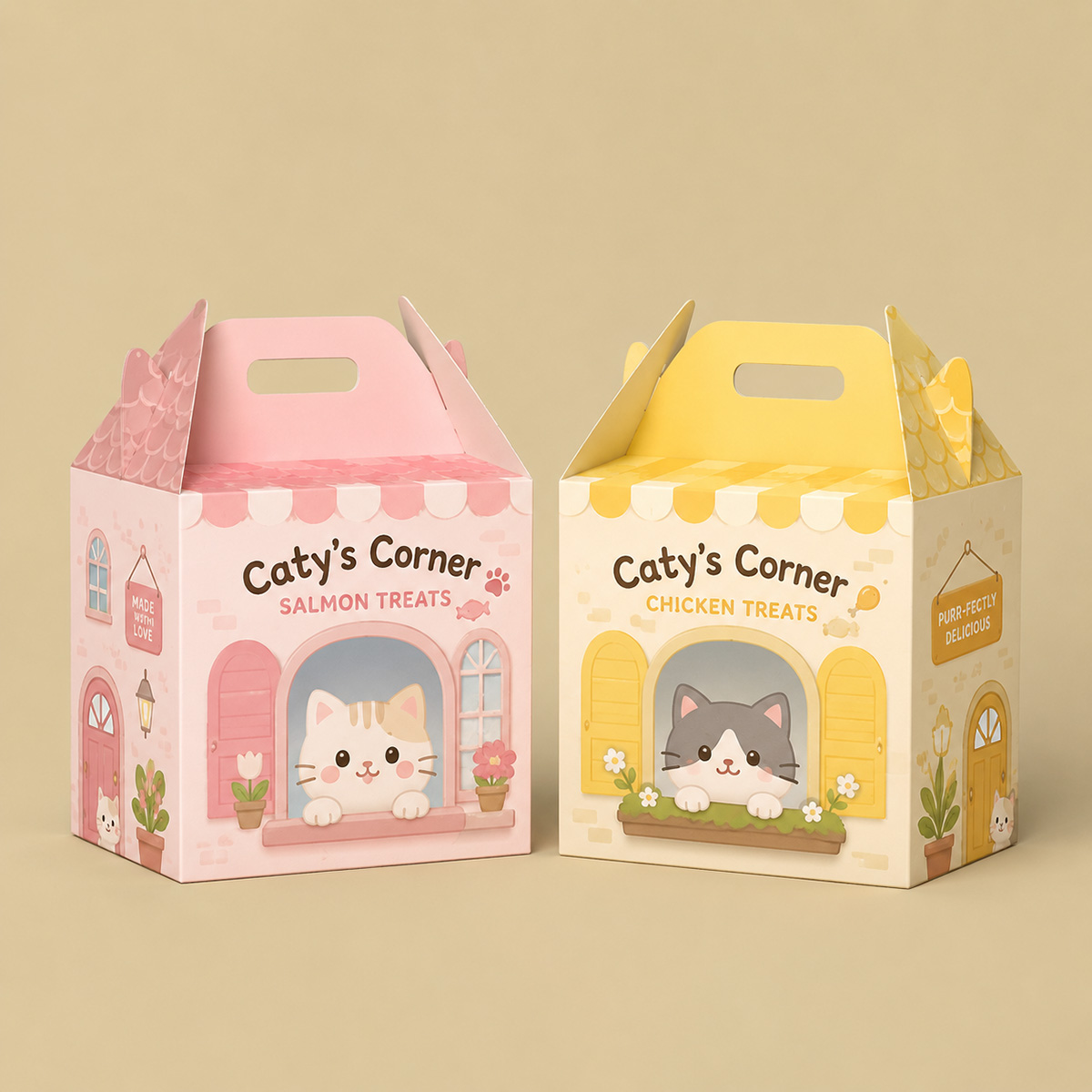
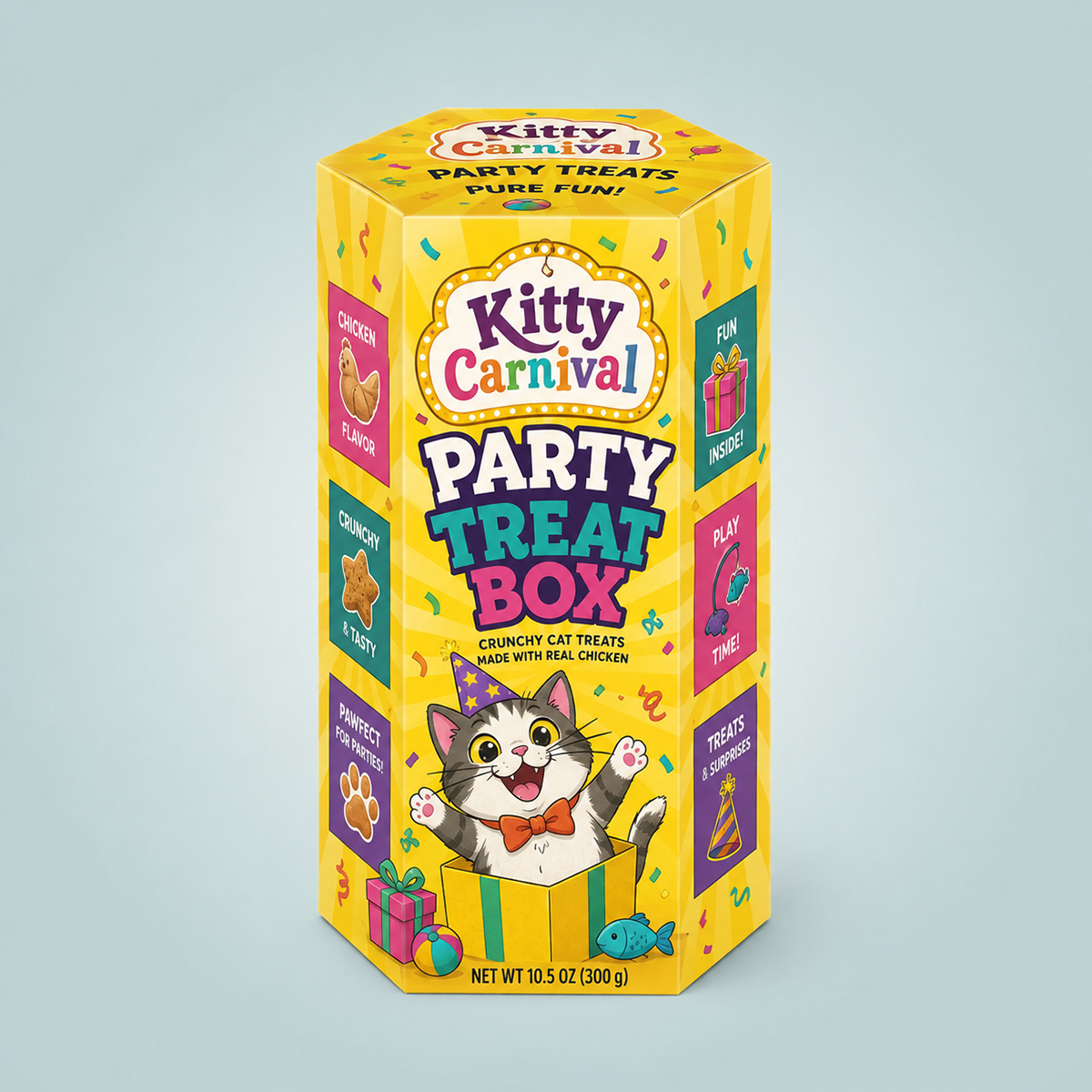
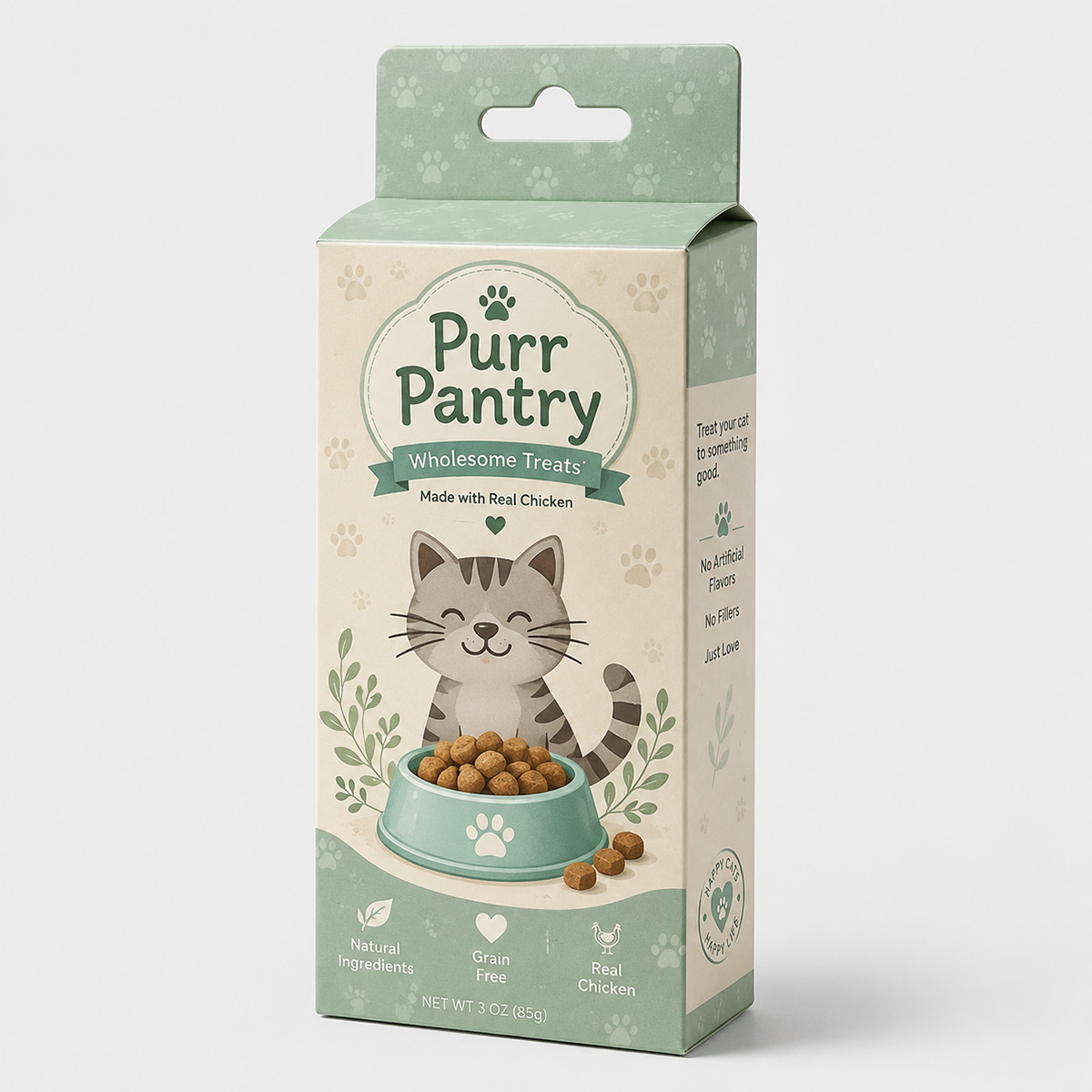
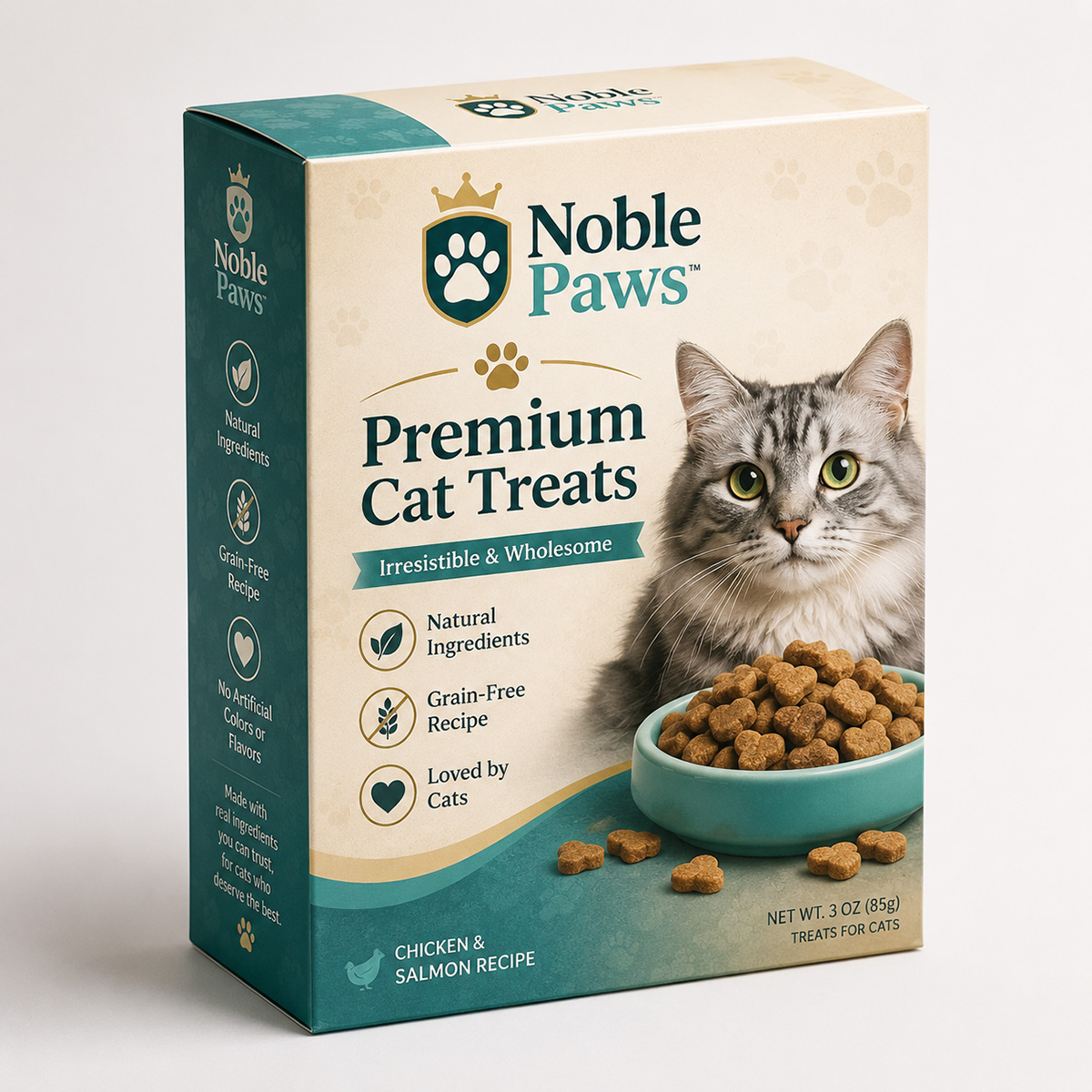
Cat Treat Boxes
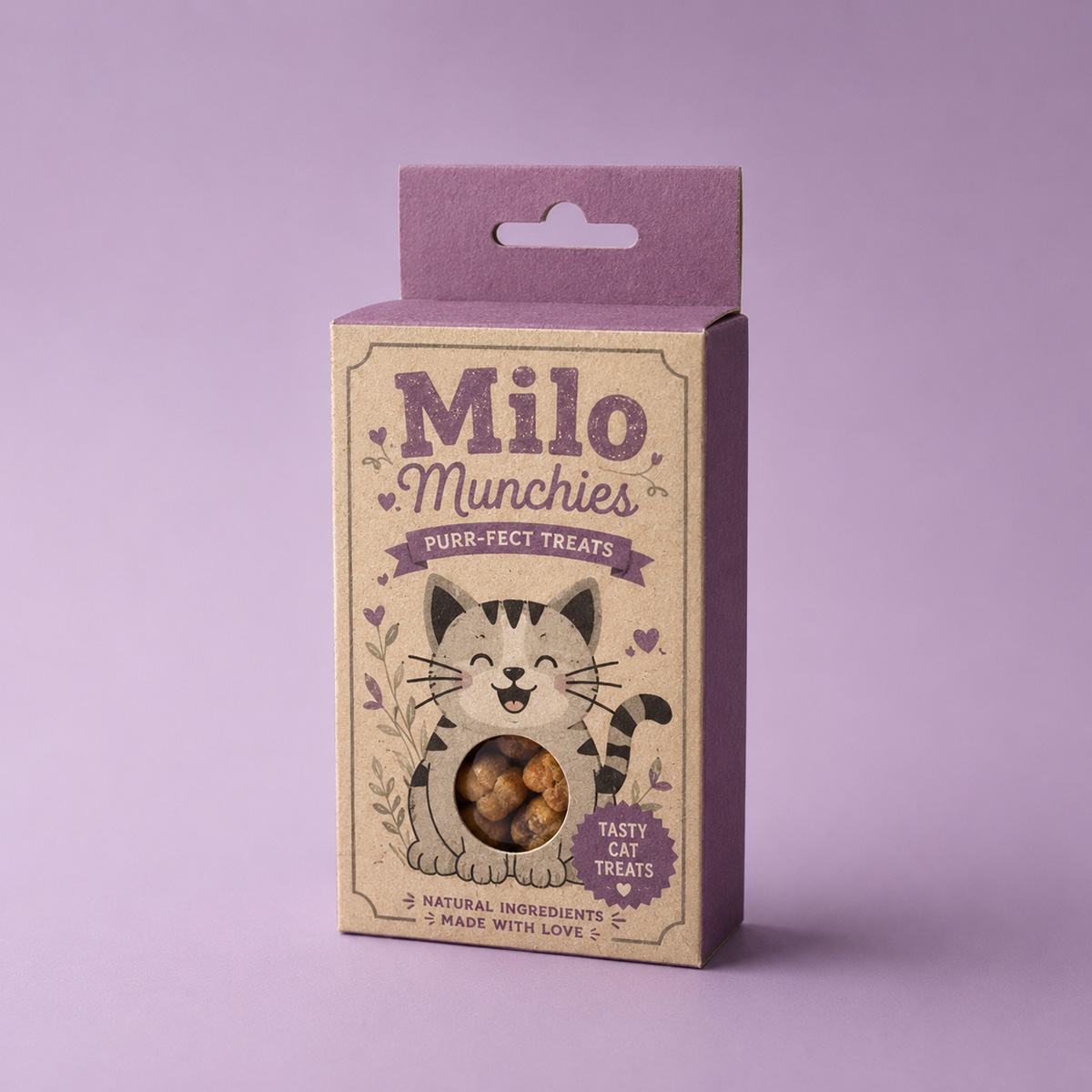
A format for cat treats, dental treats, and functional treats. Cat treat packaging needs to communicate the treat’s appeal – the flavour, the texture, the palatability – in a way that addresses the cat owner’s knowledge that cats are selective eaters. For functional treats with a specific health benefit – dental care, hairball control, joint support – the functional benefit needs to be communicated clearly alongside the palatability appeal.
Available in a range of sizes and formats. For premium and artisan cat treat brands competing with mass-market products, the packaging design and quality is a primary differentiator in a category where ingredient quality is the primary purchasing driver.
Raw and Fresh Cat Food Boxes
A format for raw, minimally processed, and fresh cat food products – a fast-growing segment driven by the same consumer trends that have grown the raw dog food market. Raw cat food packaging has specific material requirements for the cold or frozen storage conditions of the product, and specific communication requirements for a consumer who has made a deliberate choice to feed raw and expects the packaging to reflect the product’s values.
Available with food-safe materials specified for refrigerated or frozen applications. The visual language for raw and fresh cat food is typically clean, minimal, and ingredient-forward – communicating the naturalness and quality of the product rather than the convenience benefits of processed alternatives.
Prescription and Veterinary Diet Boxes
A format for veterinary prescription cat food – products formulated to manage specific health conditions and sold through veterinary clinics. Prescription diet packaging has a distinct communication requirement: it needs to communicate medical credibility and the specific health benefit of the diet, while also meeting the labelling requirements for pet food products in Australia.
The design approach for prescription diet packaging is typically more clinical and information-dense than for standard cat food – the packaging is communicating to both the veterinarian who recommends the product and the cat owner who purchases and feeds it. Professional credibility is the primary communication objective.
Choosing the Right Cat Food Box Configuration
The configuration decisions for cat food packaging depend on the product format, the health claims being made, and the sales channel.
Dry, wet, and raw formats have completely different packaging specifications. Dry cat food in a sealed inner bag has a moisture barrier requirement but no refrigeration requirement. Wet cat food needs to communicate its moisture content and palatability – the high moisture content of wet food is itself a selling point for a species that often doesn’t drink enough water. Raw and fresh cat food is a refrigerated or frozen product with the full cold chain packaging requirements that apply to any refrigerated food product. These three formats should not share a packaging specification – each needs its own material and construction brief.
Ingredient communication is the primary purchasing driver for premium cat food. Cat food consumers read ingredient lists and evaluate them critically. Named protein sources – “chicken,” “salmon,” “duck” – communicate quality; generic terms – “poultry by-product,” “meat meal” – raise questions. The front panel of a premium cat food box should lead with the key ingredient quality claims that the target consumer is looking for: named protein, the absence of specific ingredients they avoid, the presence of ingredients they seek. The ingredient list on the back or side panel needs to be accurate, complete, and compliant with AS 5812 requirements.
Palatability communication is a specific challenge in cat food. Cats are more selective eaters than dogs, and a cat food that the cat won’t eat is a product that the owner won’t repurchase. Packaging that communicates palatability – through photography that conveys the appearance and appeal of the food, through flavour descriptors that the cat owner can evaluate, through claims about taste testing or palatability studies – addresses the cat owner’s primary purchase anxiety in this category. For brands with genuine palatability advantages, communicating this credibly on the packaging is commercially important.
Prescription diet communication requires a professional register. Prescription cat food is recommended by veterinarians for specific medical conditions – kidney disease, diabetes, urinary tract issues, obesity, food allergies. The packaging communication needs to be accurate and credible to both the veterinarian who’s prescribing the diet and the cat owner who’s implementing the dietary change. Medical claims need to be substantiated, and the packaging should not make claims that exceed what the product can deliver. The tone should be professional and informative rather than emotionally appealing.
Cat Food-Specific Considerations
A few properties of cat food as a category that create specific packaging requirements.
Taurine is a non-negotiable nutritional requirement for cats. Unlike dogs, cats cannot synthesise taurine and must obtain it from their diet. Taurine deficiency causes serious health problems including blindness and heart disease. This is a nutritional fact that’s widely known among engaged cat owners, and packaging that clearly confirms taurine content – whether through the guaranteed analysis, an explicit claim, or the ingredient list – is a credibility signal for premium cat food brands. Brands that don’t address taurine on the packaging are missing a communication opportunity with a knowledgeable consumer.
Moisture content is a key nutritional consideration for cats. Cats evolved as desert animals and historically obtained most of their water from prey rather than drinking. Domestic cats on dry food diets often don’t drink enough water, which can contribute to urinary tract problems. The high moisture content of wet food – typically 70-80% compared to 10% for dry kibble – is a genuine nutritional advantage that many cat owners are aware of. For wet and raw cat food brands, communicating the moisture content as a nutritional benefit addresses a real concern of informed cat food buyers.
The cat food consumer is among the most informed pet food consumers in the market. Australian cat owners who seek out premium cat food products have often done significant research. They understand the difference between AAFCO nutritional adequacy statements and nutritional testing. They know which ingredients are controversially used in pet food – artificial preservatives, specific by-products, high carbohydrate content. They follow cat nutrition research and are influenced by veterinary nutritionists and online cat communities. For premium cat food brands, the packaging needs to withstand the scrutiny of this consumer and communicate accurately and credibly about what’s in the product.
Raw and minimally processed cat food has specific cold chain communication requirements. Raw cat food products need to communicate their storage and handling requirements clearly – refrigeration or freezing, thawing instructions, safe handling practices. For a product that contains raw meat, the food safety communication on the packaging is both a regulatory requirement and a consumer education necessity. Clear storage instructions, a prominent best before date, and handling guidance should all be prominent on raw cat food packaging.
AS 5812 labelling is mandatory for all companion cat food products. The Australian Standard for the Manufacturing and Marketing of Pet Food applies to cat food products and requires: a statement identifying the product as cat food, a guaranteed analysis (minimum crude protein and fat, maximum moisture and crude fibre), an ingredient list in descending order by weight, a best before or use by date, a net weight declaration, and manufacturer contact information. The packaging design needs to accommodate all mandatory information accurately within the available label area. For imported cat food products, additional country of origin labelling requirements also apply.
Print & Finishing for Cat Food Boxes
Cat food packaging has a distinct visual register that reflects both the product category and the specific culture of cat ownership in Australia.
Premium cat food packaging has developed a sophisticated visual language – clean design, quality food photography or illustration, ingredient-forward communication, and a considered aesthetic that communicates premium positioning without loudness. The cat owner who’s paying a premium for quality cat food expects the packaging to reflect that quality. Matte laminate, considered typography, and photography or illustration that communicates the quality of the ingredients are all common in the premium segment. The back panel is as important as the front – it’s where the ingredient list and nutritional information are presented, and for a consumer who reads labels carefully, the clarity and completeness of that information is a credibility signal.
Cat owner culture has a specific aesthetic sensibility. Cat owners – and particularly the online cat communities that influence premium cat food purchasing – have developed a distinctive aesthetic culture. Design that acknowledges and connects with this culture – illustration styles that capture the personality of cats, typography and colour choices that resonate with the aesthetic sensibilities of cat owners – performs better than generic pet food design in the premium cat food market.
Mass-market cat food packaging competes on shelf impact and brand recognition in a highly competitive supermarket environment. Bold colour, large product photography, prominent brand identity, and clear product differentiation across a range of SKUs are the design priorities. Full colour printing on a gloss laminate is standard.
Prescription and veterinary diet packaging has a clinical register – clean, professional design that communicates medical credibility. The design should facilitate the information that both the veterinarian and the cat owner need to make and implement the dietary recommendation. Clutter and unnecessary visual elements are counterproductive in this context.
All boxes are printed using full colour printing in CMYK. Files should be supplied as Adobe Illustrator (.ai) or high-resolution print-ready PDF, with fonts outlined and graphics embedded. Free design support is included – we’ll produce a free 3D mockup for your approval before production begins, and handle minor artwork adjustments at no extra charge. Free dieline templates are available if you’re building your artwork from scratch.
Materials & Specifications
We manufacture cat food boxes in a full range of cardboard and paperboard materials, with food-safe and food-grade options for all food contact applications. Moisture-resistant options are available for dry food products, and cold-chain-compatible options for raw and fresh formats. Eco friendly and recyclable options are available across the range.
- Single copper paper
- White kraft
- Brown kraft
- Black kraft
- Gold foil paper
- Silver foil paper
- Corrugated board
Minimum order quantity is 1,000 units. Air freight runs approximately 3 – 4 weeks from production sign-off; sea freight is approximately 8 weeks. We supply cat food businesses across Australia including Sydney, Melbourne, and Brisbane. For more detail on the full order process, artwork requirements, and lead times, get in touch and we’ll walk you through it.
Join our newsletter for 10% off your first order
Get our emails for info on new items, sales and much more.

Vivo Packaging Pty Ltd
Aussie Warehouse:
4 Tasman Ct, Keysborough VIC 3173, Australia
Monday – Friday: 9.30am – 5.30pm
Visitors By Appointment Only

Need Help?
Copyright 2026 © VIVO CUSTOM BOXES. ALL RIGHTS RESERVED.