
Custom Asian Food Boxes
Asian food is one of the largest and most diverse categories in Australian food delivery and takeaway. Chinese food packaging and Chinese takeout boxes are among the most commonly ordered packaging formats in the country, but the category extends far beyond Chinese cuisine – Japanese, Thai, Vietnamese, Korean, Malaysian, and Indian cuisines all have significant presence in the Australian market, together representing the largest single cuisine category on food delivery platforms. The diversity of the category – from cold sushi rolls to hot ramen broth to dry fried rice to steamed dumplings – creates a corresponding diversity in packaging requirements that no single format can address.
What Asian food packaging shares across most of its formats is a higher-than-average liquid content. Soups, broths, curries, and sauced dishes produce liquid that needs to be contained reliably through the delivery or takeaway journey. Leak prevention is not a nice-to-have in this category – it’s the baseline requirement that everything else is built on.
The cultural dimension matters as well. Australian consumers of Asian food are increasingly culturally literate – they can distinguish between authentic and generic, between a restaurant that understands its cuisine and one that doesn’t. The packaging is part of that cultural signal, and packaging that’s inconsistent with the brand’s cultural positioning is a credibility mismatch that engaged consumers notice.
Our custom Asian food boxes are manufactured to suit the specific product format, cuisine, and brand positioning of your food business. We’ve been supplying Asian food packaging to Australian restaurants and food businesses since 2017.
Get in touch today to discuss your requirements or request a quote.

Order Process
We quote on the box style of your choice
We receive your final design on a die line template
We send you an invoice to pay
We send you 3D mockups to confirm and start production
We ship the order to you by air or by sea
Request a Quote
To request an accurate quote from us, please fill out the form below. If you have any questions about using this form, please send an email to [email protected]
Asian Food Categories We Package
We manufacture custom packaging across the full range of Asian food formats. Each category has its own dedicated page with detailed product-specific information.
Noodle Boxes
Custom packaging for ramen, udon, soba, pad thai, pho, and other noodle dishes. Noodle packaging faces the most demanding liquid containment requirements of any Asian food format – a bowl of ramen broth is almost entirely liquid, and a box that leaks during delivery is a complete product failure. Available in formats suited to both broth-heavy soups and dry noodle dishes.
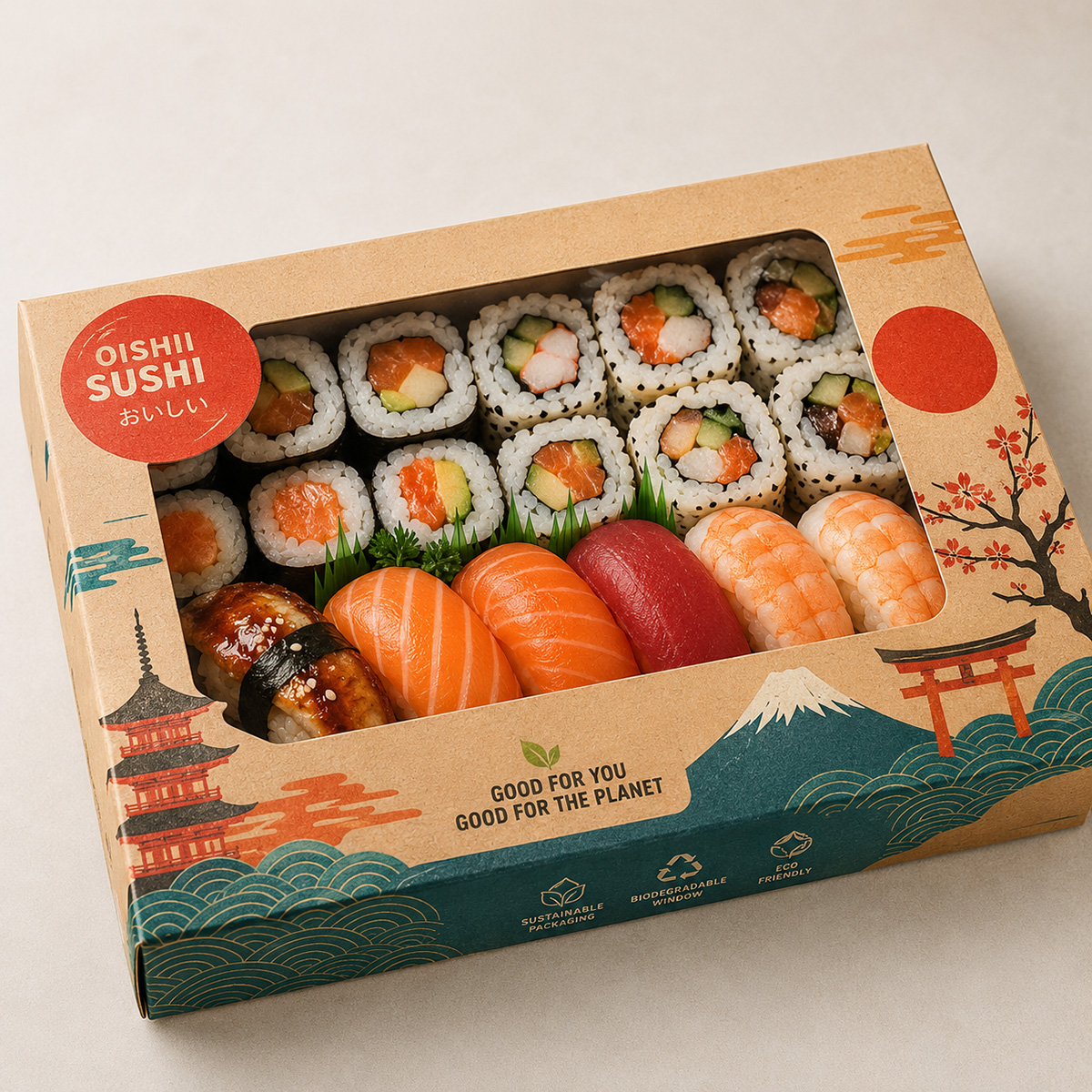
Sushi Boxes
Custom packaging for sushi rolls, nigiri, sashimi, and bento combinations. Sushi packaging has different requirements to hot food packaging – the product is cold, presentation is critical, and the packaging needs to showcase the visual artistry of the sushi arrangement. Available in single-row and multi-row configurations with transparent or windowed lids.
Bao Boxes
Custom packaging for steamed bao buns and bao sandwiches. Bao packaging needs to maintain the heat and steam of the product without making the bun soggy, in a format that’s easy to eat from on the go. Available in single and multi-bao configurations.
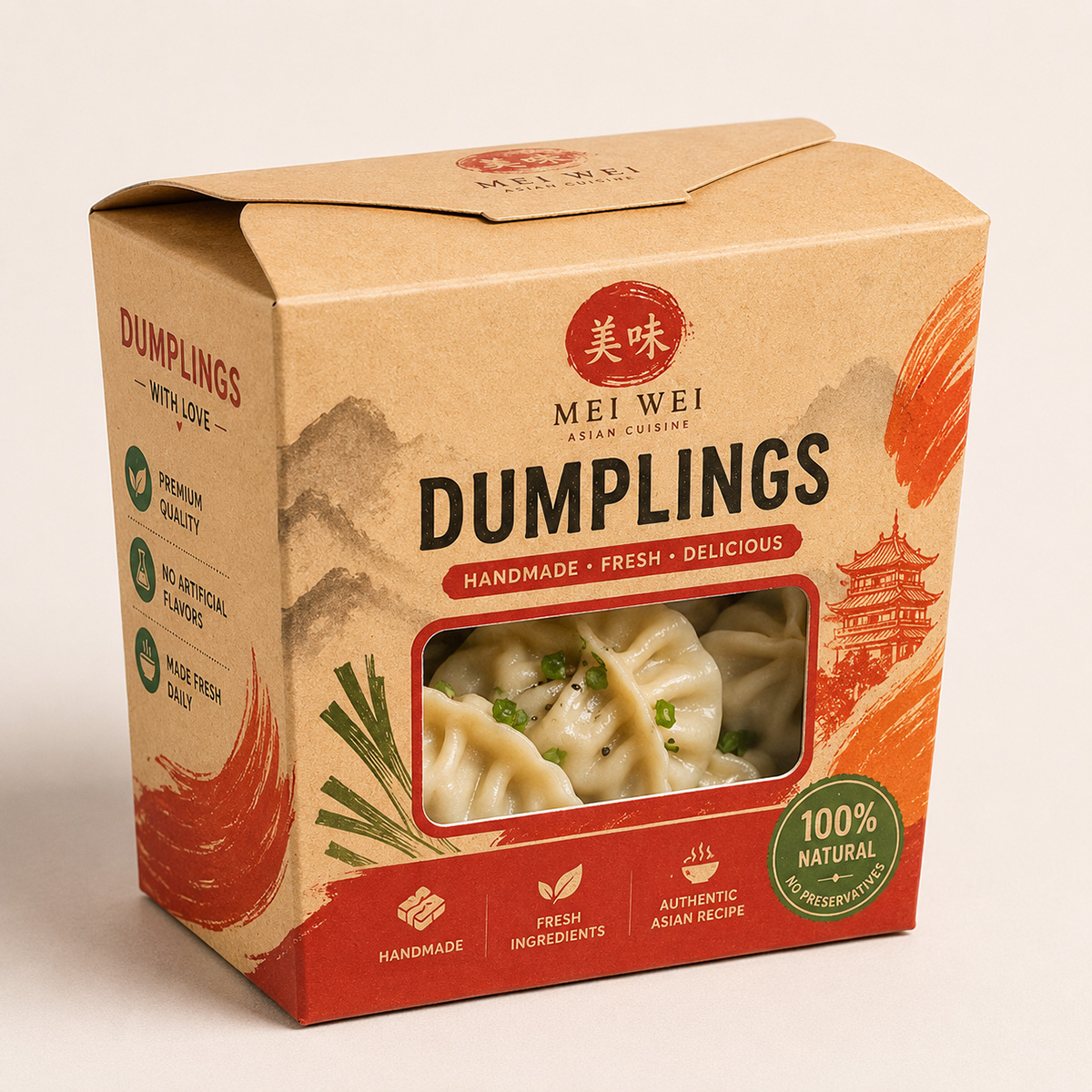
Dumpling Boxes
Custom packaging for dumplings, gyoza, dim sum, and other small bite formats. Dumpling packaging needs to hold the products in position without them touching each other – dumplings that stick together during transport are difficult to separate and present poorly. Available with insert configurations that separate individual dumplings.
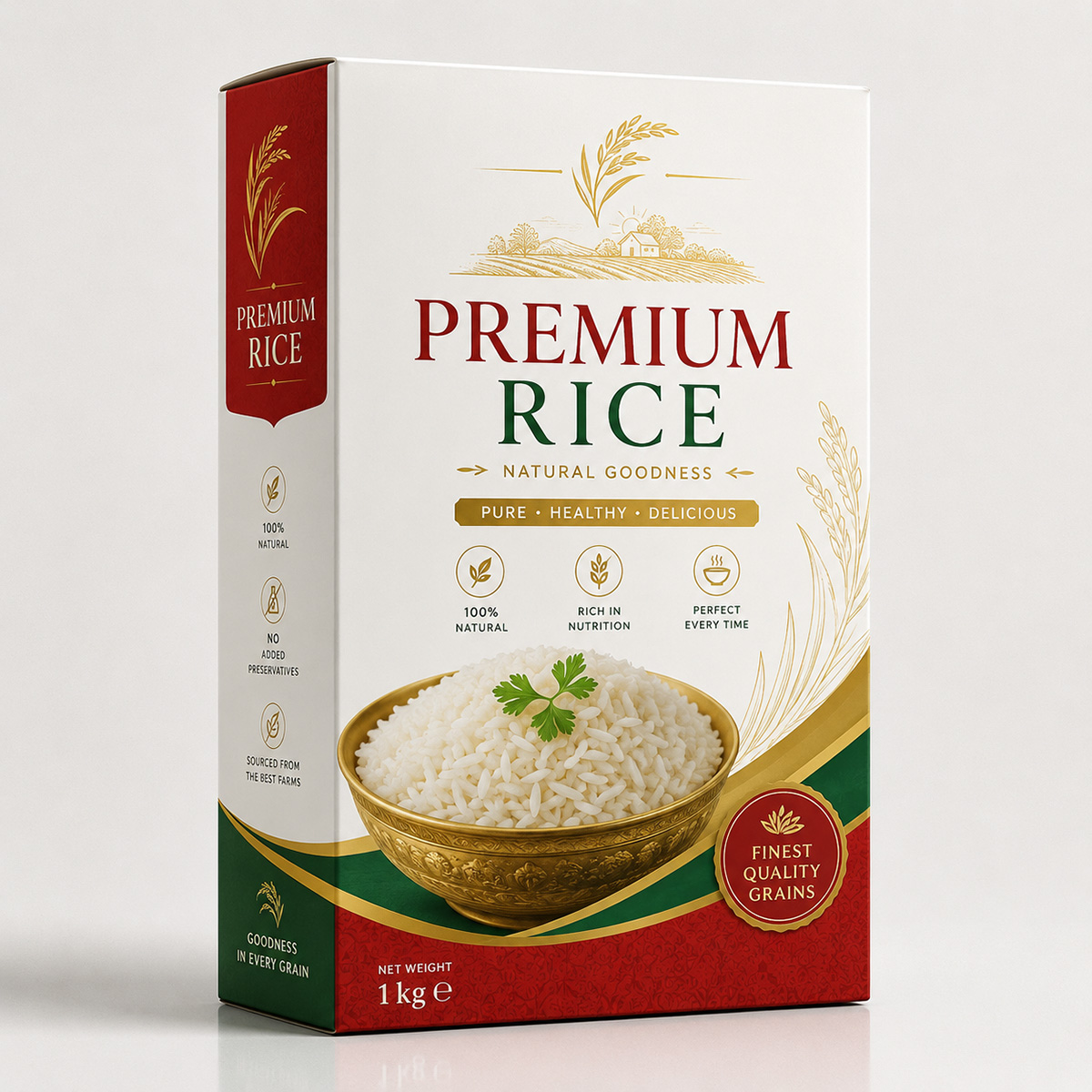
Rice Boxes
Custom packaging for fried rice, egg fried rice, congee, rice bowls, and other rice-based dishes – one of the most common formats in custom Chinese food packaging and Chinese takeout orders. Rice boxes need to contain the product securely with minimal liquid leakage, be easy to eat from directly, and maintain the heat of the product through the delivery journey. Available in multiple sizes to suit different portion configurations.
Poke Boxes
Custom packaging for poke bowls and Hawaiian-Japanese fusion bowls. Poke bowl packaging needs to hold multiple components – rice, protein, vegetables, sauce – in a visually appealing arrangement that maintains the integrity of each component through transport. Window options are common for poke, where the visual composition of the bowl is a primary selling point.
Choosing the Right Asian Food Box Configuration
The configuration decisions for Asian food packaging depend on the cuisine, the liquid content of the product, and the primary service channel.
Hot food vs cold food have fundamentally different requirements. Ramen, fried rice, and steamed dumplings are hot food products that need heat retention, steam management, and leak-proof construction for liquid components. Sushi, sashimi, and cold poke bowls need packaging that maintains the freshness and visual presentation of cold products, with minimal heat retention. These two categories should not be served by the same packaging specification – a box designed for hot ramen is not the right format for cold sushi, and vice versa.
Liquid content varies enormously across Asian food formats. A dry fried rice has minimal liquid content – the packaging requirements are primarily structural. A bowl of ramen broth may be 70% liquid by volume – the packaging requirements are primarily leak containment. Between these extremes sits a range of products – sauced noodles, curries, congee – each with different liquid content that affects the material and construction specification. The liquid content of the specific product, not just the general category, should inform the packaging brief.
Delivery platform compatibility is critical for most Asian food businesses. Asian food is the largest single cuisine category on Australian food delivery platforms – Uber Eats, DoorDash, and Menulog all carry a disproportionate share of Asian food orders. Packaging that works in a restaurant’s own delivery vehicles may not work as well in a third-party delivery context, where the bag handling is less careful and the delivery time may be longer. For businesses with significant delivery platform volume, the packaging specification should be tested for the delivery platform context specifically.
Chopstick and utensil accommodation. Many Asian food formats are eaten with chopsticks, and the packaging design may need to accommodate chopstick rests, chopstick pockets, or sauce cup holders as part of the overall packaging configuration. These are small details that affect the practical eating experience and communicate attention to the cultural context of the cuisine.
Asian Food-Specific Considerations
A few properties of the Asian food category that create specific packaging requirements.
Leak prevention is the most consequential packaging requirement. A leak in a delivery bag of ramen or curry doesn’t just damage the primary product – it damages everything else in the bag and creates a risk of food contamination. The consequences of a leak are disproportionate to the cost of preventing it. Non toxic, food safe materials that protect against food spoilage are the baseline requirement. The base construction, the wall-to-base join, and the lid closure of any liquid-containing Asian food packaging all need to be specified and tested for leak performance under the actual conditions of delivery.
Steam from hot food affects packaging integrity over delivery time. A hot noodle dish or a steamed dumpling produces steam continuously from the point of packaging to the point of consumption. In a sealed container, that steam condensates and falls back onto the food – making noodles soggy, steamed buns wet, and fried items soft. Ventilation that allows steam to escape without cooling the product too rapidly is the standard solution for hot Asian food packaging. The amount and placement of ventilation depends on the specific product and the expected delivery time.
Cultural authenticity in packaging design is commercially significant. Australian consumers of Asian food are increasingly food-literate, and a growing proportion of them have direct cultural connections to the cuisines they consume. Packaging that uses cultural visual elements inauthentically, or that looks generically “Asian” without reference to the specific cuisine, reads as disrespectful or ignorant to culturally engaged consumers. For restaurants and food businesses that position themselves on authenticity and cultural integrity, the packaging design brief should be as culturally specific as the menu.
The Australian Asian food market is culturally diverse and not monolithic. Chinese, Japanese, Thai, Vietnamese, Korean, Malaysian, and Indian cuisines have distinct visual cultures, distinct packaging conventions, and distinct consumer expectations. A packaging approach that works for a Japanese ramen restaurant would be inappropriate for a Vietnamese pho chain. The packaging brief needs to be specific to the cuisine and the brand, not to a generic “Asian food” category.
Food delivery platform branding is a significant opportunity. Asian food businesses that sell through delivery platforms reach a large volume of customers who never visit the physical restaurant. The packaging that arrives with the delivery is the primary physical brand touchpoint for these customers – the only thing that communicates the brand in a tangible way. For businesses with significant delivery platform volume, investment in branded packaging that communicates the restaurant’s identity and cuisine authentically is a direct brand-building investment.
Print & Finishing for Asian Food Boxes
Asian food packaging spans a wide range of visual cultures – from the minimalist refinement of Japanese packaging aesthetics to the bold, colour-rich visual language of Chinese celebration food to the clean, contemporary design of modern Asian fusion brands.
Japanese cuisine packaging tends toward a clean, restrained aesthetic – minimal print, considered typography, natural materials, and a visual restraint that references the precision and care of Japanese food culture. Matte lamination on white or natural kraft stock with minimal colour is common. Spot UV on key design elements adds a tactile refinement that suits the premium Japanese restaurant context.
Chinese cuisine packaging has a broader visual range – from traditional red and gold celebration aesthetics for dumpling houses and yum cha restaurants, to clean, contemporary designs for modern Chinese fusion. Environmentally friendly and cost effective material options are available for businesses managing packaging costs at bulk order volumes, without compromising on print quality or brand presentation. The cultural associations of colour in Chinese food culture – red for luck and celebration, gold for premium positioning – are meaningful to culturally engaged consumers and worth understanding before designing packaging for a Chinese food business.
Southeast Asian cuisine packaging – Thai, Vietnamese, Malaysian, Indonesian – often references the fresh, vivid food culture of these cuisines, with bright colours, fresh ingredient imagery, and a visual energy that communicates the flavour and freshness of the food. Modern Asian fusion brands frequently take a design-forward approach that references the cultural heritage of the cuisine while communicating to a contemporary Australian audience.
Modern Asian fusion branding has developed a distinct visual language that sits between cultural heritage and contemporary design – clean typography, considered colour palettes, and design elements that reference the cultural origin of the cuisine without relying on clichéd cultural imagery. This approach works well for brands targeting a broad, culturally aware Australian consumer.
All boxes are printed using full colour printing in CMYK. Files should be supplied as Adobe Illustrator (.ai) or high-resolution print-ready PDF, with fonts outlined and graphics embedded. Free design support is included – we’ll produce a free 3D mockup for your approval before production begins, and handle minor artwork adjustments at no extra charge. Free dieline templates are available if you’re building your artwork from scratch.
Materials & Specifications
We manufacture Asian food boxes in a full range of cardboard, paperboard, and food-grade materials, with leak-resistant and grease-resistant options for liquid-containing products, and heat-resistant options for hot food applications. Eco friendly and recyclable options are available across the range. All materials are food grade and food safe.
- Single copper paper
- White kraft
- Brown kraft
- Black kraft
- Gold foil paper
- Silver foil paper
- Corrugated board
Minimum order quantity is 1,000 units. Air freight runs approximately 3 – 4 weeks from production sign-off; sea freight is approximately 8 weeks. We supply Asian food businesses across Australia including Sydney, Melbourne, and Brisbane. For more detail on the full order process, artwork requirements, and lead times, get in touch and we’ll walk you through it.
Join our newsletter for 10% off your first order
Get our emails for info on new items, sales and much more.

Vivo Packaging Pty Ltd
Aussie Warehouse:
4 Tasman Ct, Keysborough VIC 3173, Australia
Monday – Friday: 9.30am – 5.30pm
Visitors By Appointment Only

Need Help?
Copyright 2026 © VIVO CUSTOM BOXES. ALL RIGHTS RESERVED.