
Coffee Packaging Bags: How to Choose Bags for Roasted Beans and Retail Coffee
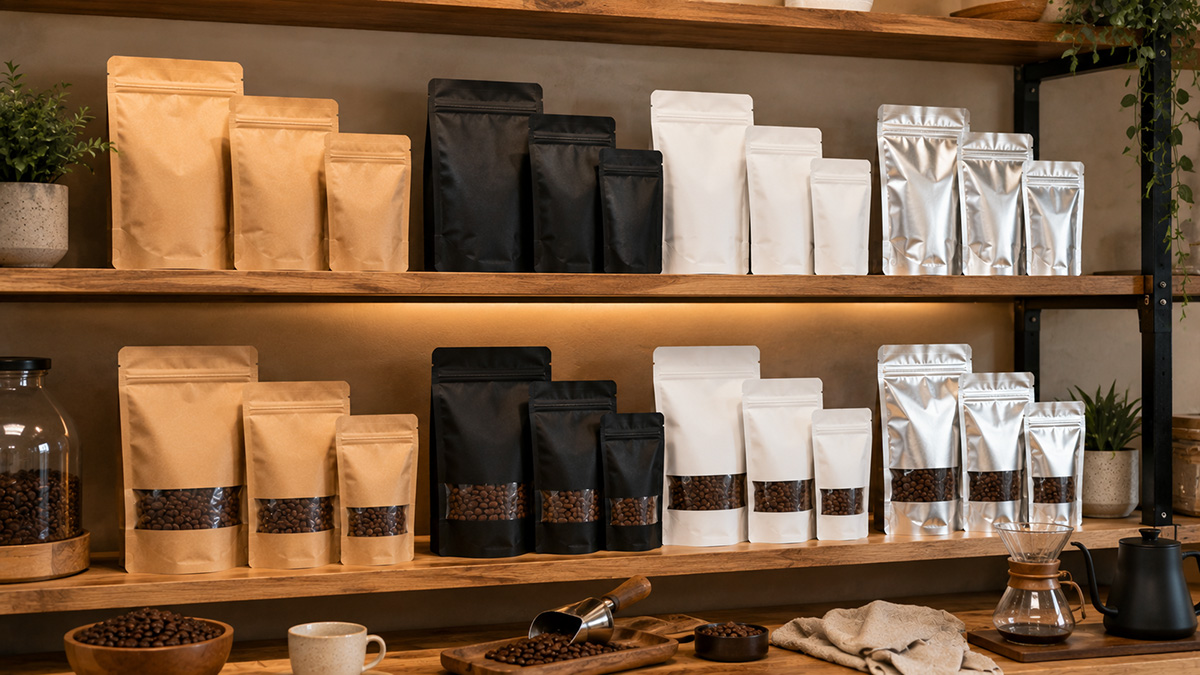
Coffee packaging has to do more than hold roasted beans. It needs to protect aroma, manage the way roasted coffee behaves after packing, present the product clearly on shelf and still work efficiently during filling, sealing, labelling and dispatch.
For coffee roasters, retailers and food brands, the right bag depends on the product format, retail environment and packing process. A small batch of roasted beans, a larger 1kg trade pack and a premium retail blend can all need different packaging features, even when they use the same general pouch style. That is why coffee bags with valve should be assessed by valve needs, barrier, zipper, bag shape, label area and heat sealing workflow together.
What makes coffee packaging different from general food packaging?
Roasted coffee is a sensitive dry product. After roasting, coffee beans can continue releasing gas, and the product can be affected by oxygen, moisture, light and aroma loss. Packaging cannot solve every freshness issue by itself, but it can help create a more suitable environment for storing, selling and handling roasted coffee.
This is why coffee bags are often different from general dry food pouches. They may include a one-way valve, an inner barrier layer, a resealable zipper, an opaque outer finish or a pouch shape designed for stronger shelf presentation. The best combination depends on how the coffee is packed, how quickly it is sold, whether it is sold whole bean or ground, and how the customer will use the product after opening.
Key coffee bag features to compare
Coffee bag features are sometimes discussed together, but each one solves a different problem. Separating them makes the buying decision easier and helps avoid choosing a bag based only on appearance.
One-way valve
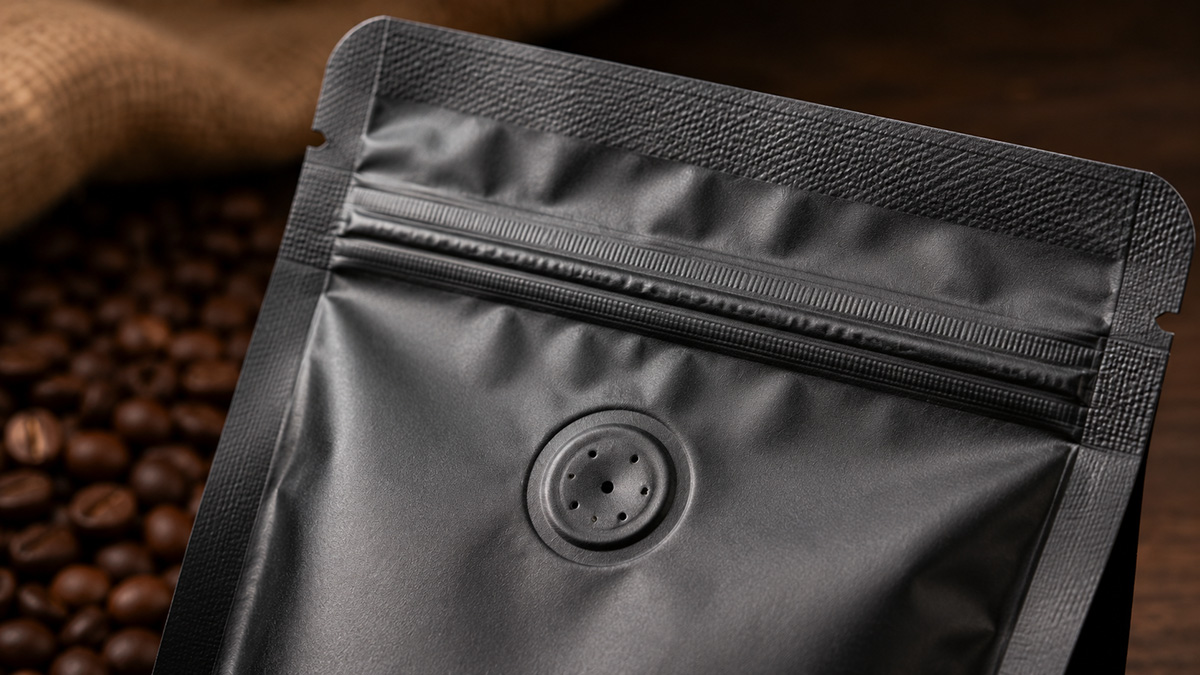
A one-way valve is commonly used for roasted coffee because it allows gas inside the bag to vent while helping reduce air moving back into the pack. This can be useful for roasted beans that continue degassing after packing. The valve should be considered alongside roast timing, pack size, product turnover and the rest of the bag specification.
Foil lining and barrier needs
Foil-lined or barrier-style bags are often chosen when the product needs more protection from external conditions such as light, moisture and oxygen exposure. A stronger barrier can be especially relevant for roasted coffee sold through retail shelves, longer distribution paths or storage environments where product quality needs closer control.
This does not mean every coffee product needs the same material structure. A business should consider how long the coffee will be stored, how it will be displayed, whether the pack is opaque or windowed and whether the bag is being used as a stock pouch, labelled retail pack or custom printed format.
Zipper and resealability
A zipper is mainly about the customer experience after the bag has been opened. It can be useful for retail coffee where the customer may open and close the pack many times. For larger trade packs or products that will be transferred into another container, the zipper may be less important than barrier, valve and sealing quality.
Label area and shelf presentation
Coffee packaging often has to communicate roast style, blend, origin, grind, weight and brand details. A bag with a clean front panel and enough label area can make stock packaging more practical for retail. For brands using printed labels, the surface finish and label placement should be tested on the actual filled bag, not just judged from an empty sample.
Flat bottom coffee bags vs stand up coffee bags
Coffee bags are commonly supplied in both flat bottom and stand up pouch formats. The better choice depends on how the coffee needs to look, how it needs to stand, and how the pack will be filled, sealed and displayed.
Flat bottom pouches can create a more structured, box-like shelf presentation. They often suit coffee brands that want a premium retail block, a broad front-facing label area or a more stable pack for display. They can be particularly useful for retail coffee ranges where multiple bags sit side by side on shelf.
Stand up pouches can be more flexible across a wider range of product sizes and uses. They can suit coffee, tea, samples, refill packs and dry food products where the bag needs to stand upright but does not need the same square-base presentation. For many brands, stand up pouches are a practical starting point because they balance presentation, storage and packing efficiency.
| Selection factor | Flat bottom coffee bag | Stand up coffee bag |
| Shelf presentation | Usually stronger for premium retail blocking and front-facing display. | Good general shelf display, especially for lighter or smaller packs. |
| Stability when filled | Often more structured because of the square base. | Can stand well, but depends more on fill weight and product settling. |
| Label area | Can provide a broader front panel for labels or branding. | Usually provides enough label area for many stock and retail coffee packs. |
| Common use case | Premium retail coffee, specialty beans, higher presentation ranges. | Everyday retail coffee, samples, smaller packs, flexible stock packaging. |
| Packing workflow | May stand neatly during filling when the size and product fit are right. | Often flexible and compact for storage before filling. |
| Main check | Make sure the extra structure adds real display value. | Make sure the filled pouch still stands neatly and leaves enough seal space. |
Choosing coffee bags by pack size and product format
Pack size is important, but it should not be the only selection factor. The same stated weight can behave differently depending on roast level, bean density, grind, product settling and how much top space is needed for filling and heat sealing.
For smaller retail packs, presentation and label clarity often matter because customers compare products quickly on shelf. For larger bags, stability, zipper usability, seal strength and carton fit can become more important. For sample packs or promotional packs, compact storage and simple filling may be more important than a premium shelf block.
A practical approach is to test the bag with the actual coffee product. Fill the pouch to the expected weight, check how it settles after a short period, confirm the zipper and top seal area still work properly, and see how the filled bag sits on shelf or inside a shipping carton.
Sealing and packing workflow for roasted coffee
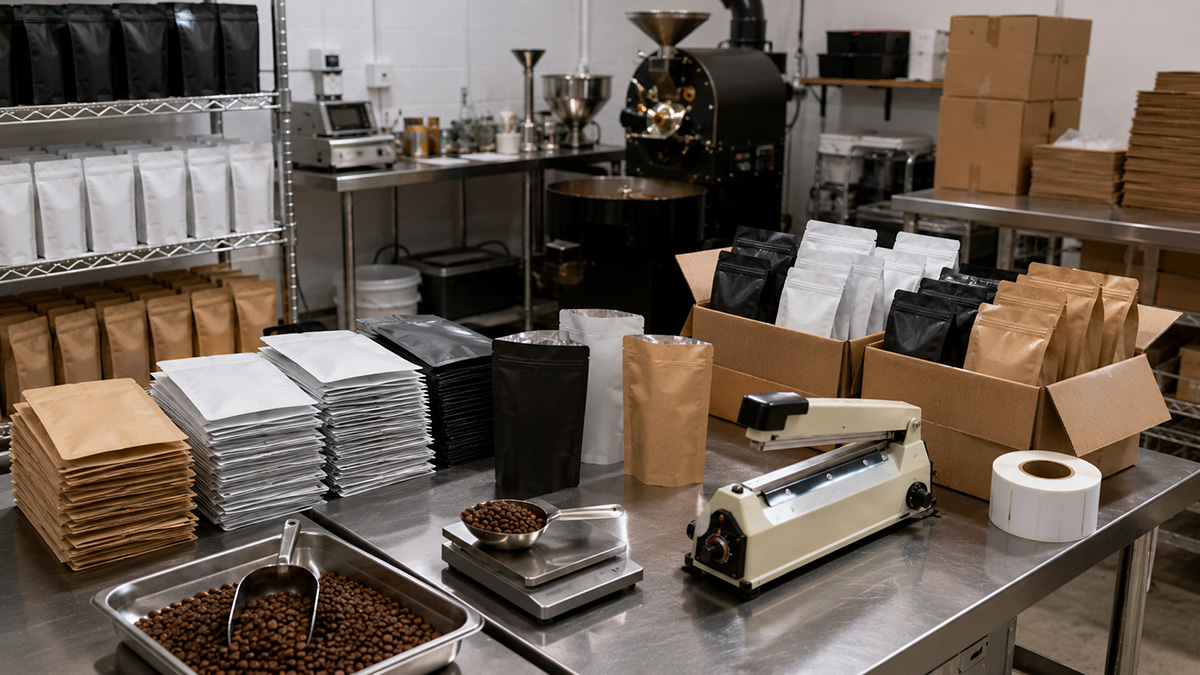
Coffee packaging should be judged at the packing bench, not only on the product page. A bag that looks suitable when empty may be harder to fill, seal or label in volume. Teams should check how easy the bag is to open, whether the valve position suits the final fill level, and whether product dust or loose grounds can interfere with the seal area.
If the coffee bag is sealed after filling, the sealing method needs to suit the bag specification. A suitable heat sealer can help create a consistent finish, but the packing process still matters. Leaving enough headspace, keeping the seal area clean and using a consistent sealing routine can make a noticeable difference to the final presentation.
Labelling should also be tested after the pouch is filled. Some labels look straight on an empty pouch but curve, crease or sit too close to a gusset once the bag is filled. For retail coffee, label readability and shelf presentation should be checked on a filled sample before committing to a full packing setup.
When to consider custom coffee packaging
Stock coffee bags can be a practical choice for many businesses because they allow brands to pack, label and sell coffee without developing a fully custom structure. They are especially useful for testing new products, managing multiple roast profiles or running a clean retail label system across several pack sizes.
Custom packaging becomes more relevant when the bag itself needs to carry the brand experience. Businesses may consider custom pouches and bags when they need custom print, a specific surface finish, a stronger retail identity, a launch range, or packaging that aligns closely with a broader brand system. The key is to move into custom packaging when the commercial and brand benefits justify the extra planning.
Coffee packaging checklist before ordering
Before choosing coffee packaging bags, check the following points with the actual product and packing process in mind:
- Is the coffee whole bean, ground, sample size, retail size or larger trade size?
- Does the coffee need a one-way valve for the way it will be packed and sold?
- Is a foil-lined or stronger barrier-style pouch appropriate for the product and selling environment?
- Does the customer need to reseal the bag after opening?
- Should the bag be a flat bottom format, standard stand up pouch or another pouch style?
- Is there enough front label area after the bag is filled?
- Does the filled pouch stand neatly on shelf?
- Is there enough top space for filling and heat sealing?
- Does the sealed bag fit neatly into cartons or shipping packaging?
- Will the brand stay with stock bags and labels, or move toward custom printed coffee packaging later?
The best coffee bag is usually the one that balances freshness considerations, presentation and operational fit. A premium-looking bag is not useful if it is difficult to seal consistently, and a practical pouch may still need the right valve, barrier and label setup to work properly for roasted coffee.
FAQ
What type of bag is best for roasted coffee?
The best bag depends on the coffee format, pack size, storage time, retail environment and packing process. Many roasted coffee products use valve coffee bags with suitable barrier properties, but the exact pouch format should be tested with the filled product.
Why do coffee bags have valves?
Coffee bags often use a one-way valve to help gas inside the bag vent after roasted coffee is packed. This can help manage degassing and bag pressure, but it should be considered together with the full bag specification and packing process.
Are flat bottom bags better for coffee than stand up pouches?
Flat bottom bags can provide a more structured shelf presentation, which may suit premium retail coffee. Stand up pouches can still work well for many coffee products, especially where flexibility, storage and broad size availability are important.
Do coffee bags need a zipper?
A zipper can improve the customer experience when the bag will be opened and closed repeatedly. It may be less important for products that are transferred into another container or used quickly after opening.
Should coffee bags be heat sealed?
Many coffee bags are heat sealed after filling to create a closed retail pack. The sealing process should suit the pouch specification, and the seal area should be kept clean and clear during packing.
Can stock coffee bags be used before moving to custom packaging?
Yes. Stock coffee bags can be useful for testing products, launching new blends or managing labelled retail packs. Custom packaging may become more suitable when the brand needs a stronger printed identity or a more specific packaging finish.

Posts Widget
- 1

- 2

- 3

- 4

- 5


Vivo Packaging Pty Ltd
Aussie Warehouse:
4 Tasman Ct, Keysborough VIC 3173, Australia
Monday – Friday: 9.30am – 5.30pm
Visitors By Appointment Only

Copyright 2026 © VIVO PACKAGING. ALL RIGHTS RESERVED.
