
Packaging on the Frontline of Strategy
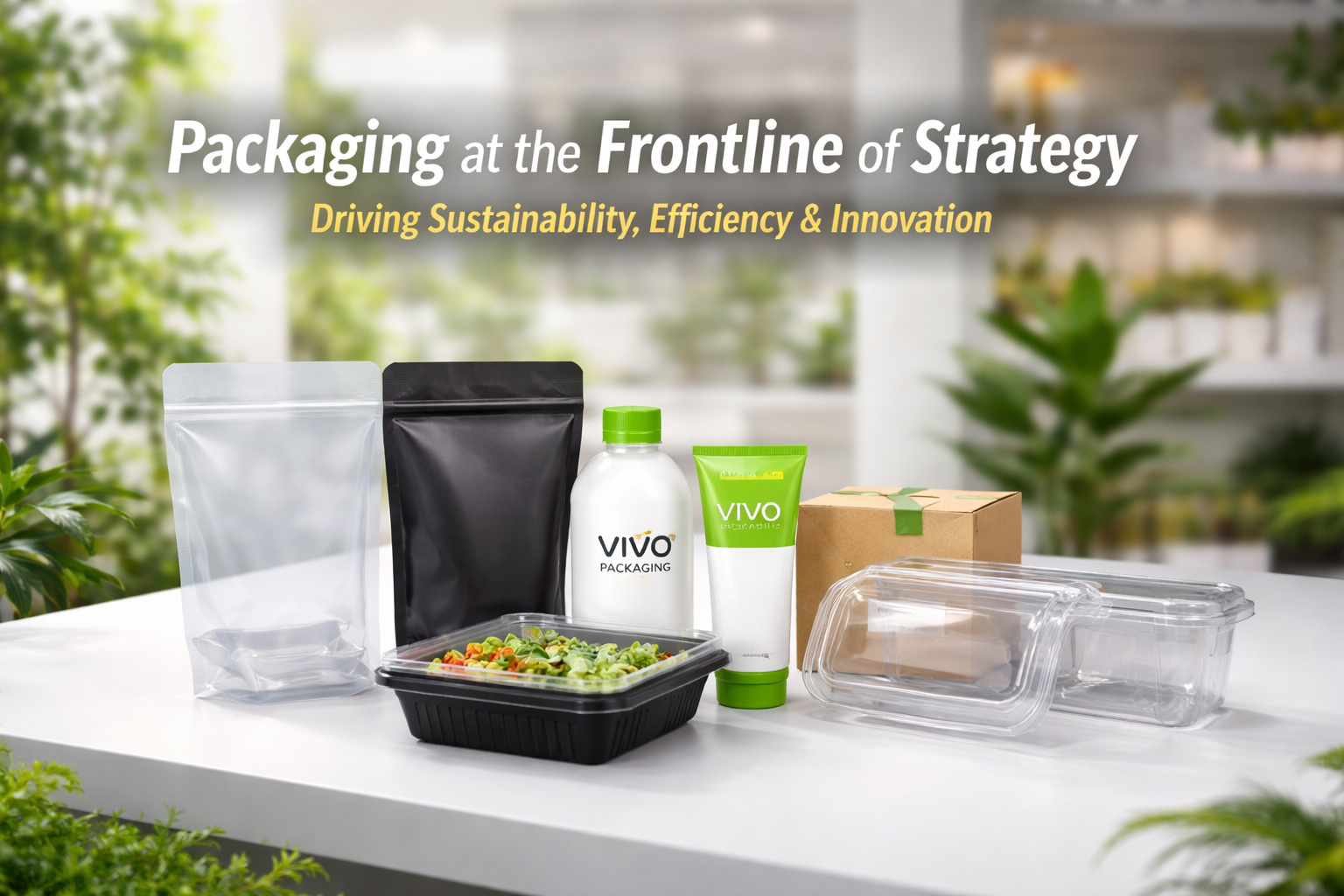
In today’s food and beverage market, packaging is no longer just a protective layer around a product. It has become a powerful strategic tool that influences how brands compete, how efficiently goods move through supply chains, and how well businesses meet growing sustainability and regulatory expectations. At VIVO Packaging, we see this shift every day as more brands look to packaging as a way to stand out on shelf, reduce costs, and unlock new markets.
Modern packaging must do more with less. Lightweight materials can significantly reduce transport emissions and freight expenses, while right-sized formats improve pallet efficiency and reduce product damage during transit. Even small design choices – such as changing a bottle shape, simplifying a label, or adjusting headspace – can have a measurable impact on logistics performance and consumer convenience. These practical improvements often translate directly into lower landed costs and a better customer experience.
Sustainability is now a commercial requirement, not just a brand value. Governments, retailers, and consumers are increasingly aligned in their expectation that packaging should be recyclable in real-world systems, not just in theory. This has driven a move toward single-material structures that are easier for sorting technology to identify and process. Clear plastics, easy-peel labels, and tethered caps are becoming more common, as they help improve the quality of recycled material and increase the chance that packaging is truly recycled back into similar products.
Innovation is also reshaping everyday formats. In beverages, lighter bottles, cans, and bag-in-box solutions are gaining traction as alternatives to heavy glass, offering benefits in safety, emissions, and portability. In fresh and prepared foods, advanced packaging techniques such as modified-atmosphere systems and micro-perforated films are extending shelf life and reducing food waste without relying on preservatives. These solutions allow brands to maintain product quality while improving efficiency across the supply chain.
For exporters, packaging plays a critical role as a “passport” to global markets. Different regions have different rules around recycling labels, deposit schemes, material restrictions, and even preferred pack formats. Designing with these requirements in mind from the start can help brands enter multiple markets without costly redesigns later. Clear on-pack communication, multilingual labelling, and region-compliant materials can make the difference between a smooth market entry and a delayed launch.
Of course, change comes with investment. New packaging formats may require updated machinery, line adjustments, or revised carton designs. But these investments also create opportunities to differentiate on shelf, reduce waste, and improve long-term operational efficiency. The brands that succeed are those that treat packaging as part of their overall business strategy, rather than an afterthought.
At VIVO Packaging, our approach is to work closely with customers to balance performance, sustainability, cost, and compliance. By aligning smart design with practical manufacturing and logistics considerations, packaging can become more than a container – it becomes a reason for shoppers to choose a product, and a foundation for brands to grow with confidence in an increasingly demanding global market.

Posts Widget




Vivo Packaging Pty Ltd
Aussie Warehouse:
4 Tasman Ct, Keysborough VIC 3173, Australia
Monday – Friday: 9.30am – 5.30pm
Visitors By Appointment Only

Copyright 2026 © VIVO PACKAGING. ALL RIGHTS RESERVED.
