
Custom Stationery Boxes
Stationery is one of the few product categories where the packaging and the product share the same aesthetic audience. The person buying a beautifully designed notebook, a curated pen set, or a premium desk accessory is making a visual and tactile decision – they’re drawn to objects that look good and feel good. The packaging for these products needs to meet the same aesthetic standard as the product itself, because the consumer’s design sensibility that attracted them to the product will also evaluate the packaging.
This creates a higher design expectation for stationery packaging than for many other retail categories. A notebook in a box that looks generic or poorly finished creates an immediate impression that the product’s aesthetic quality doesn’t extend to the brand’s overall execution. A notebook in packaging that matches or enhances the product’s visual identity creates a complete brand impression that reinforces the purchase decision.
The stationery category in Australia has grown significantly beyond functional office supplies into a lifestyle and gifting category. Premium notebooks, designer pen sets, and curated desk collections are bought as personal indulgences, as gifts for creative and professional occasions, and as expressions of aesthetic identity. The gifting dimension is particularly strong – a thoughtfully packaged stationery set is a natural and versatile gift that works across a wide range of occasions and recipients.
Our custom stationery boxes are manufactured to suit the specific product format, brand aesthetic, and market positioning of your stationery business. We’ve been supplying stationery packaging to Australian businesses since 2017.
Get in touch today to discuss your requirements or request a quote.





Order Process
We quote on the box style of your choice
We receive your final design on a die line template
We send you an invoice to pay
We send you 3D mockups to confirm and start production
We ship the order to you by air or by sea
Request a Quote
To request an accurate quote from us, please fill out the form below. If you have any questions about using this form, please send an email to [email protected]
Stationery Box Styles We Offer
We manufacture custom stationery boxes across a range of styles to suit different products and contexts. All styles are available in custom sizes, materials, and finishes.
Notebook and Journal Boxes
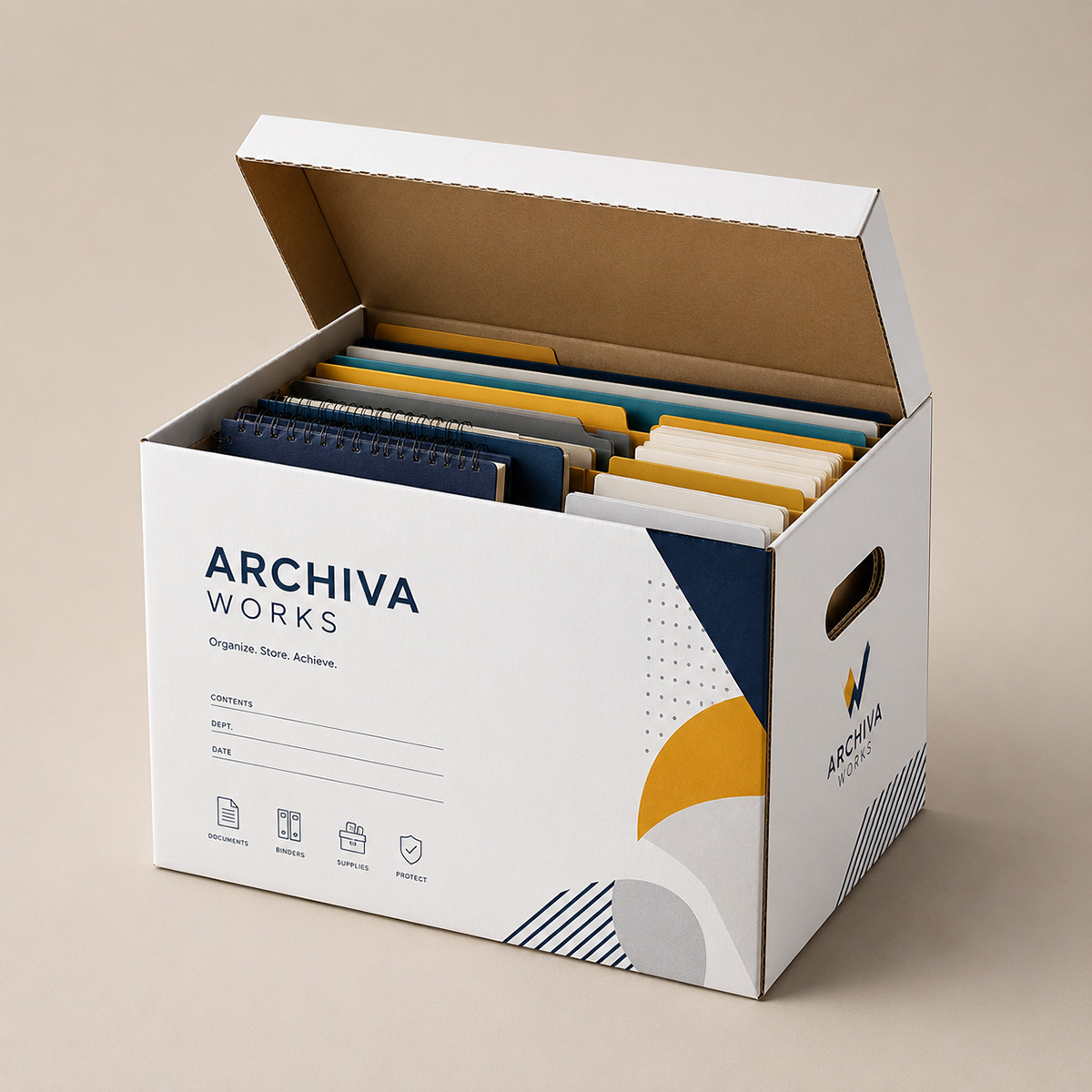
A format for premium notebooks, journals, diaries, and bound products. Notebook packaging needs to protect the cover from scuffing and the corners from damage during retail display and transport, while presenting the product attractively. For notebooks with premium covers – leather, cloth, debossed paper – the packaging should allow the cover material to be seen or communicated effectively.
Available in sleeve formats that wrap the notebook and showcase the cover, and in box formats for gifting and premium retail. For notebooks sold as gifts – birthday journals, graduation notebooks, new job diaries – the box configuration should suit the gifting context with appropriate construction and finish.
Pen and Writing Instrument Boxes
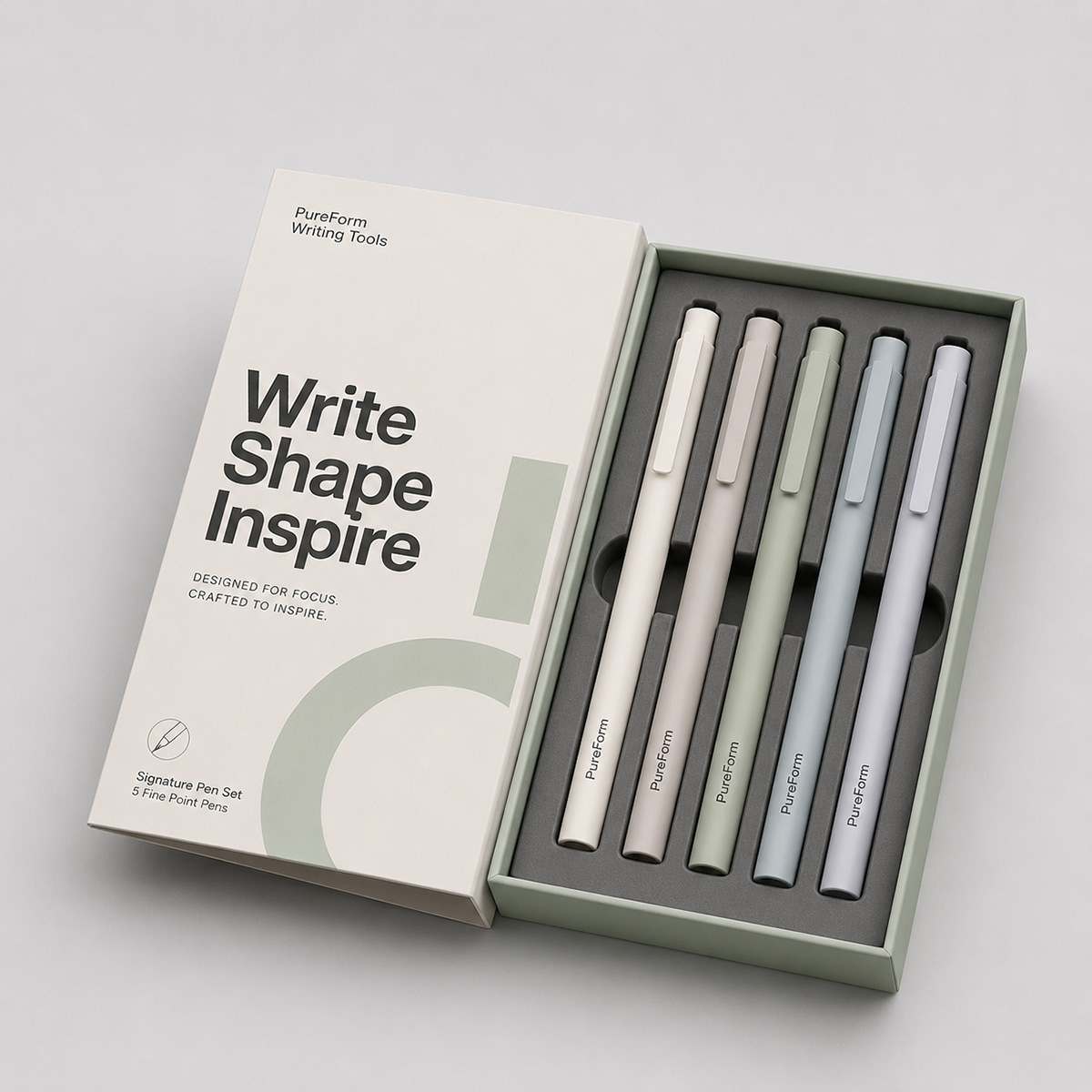
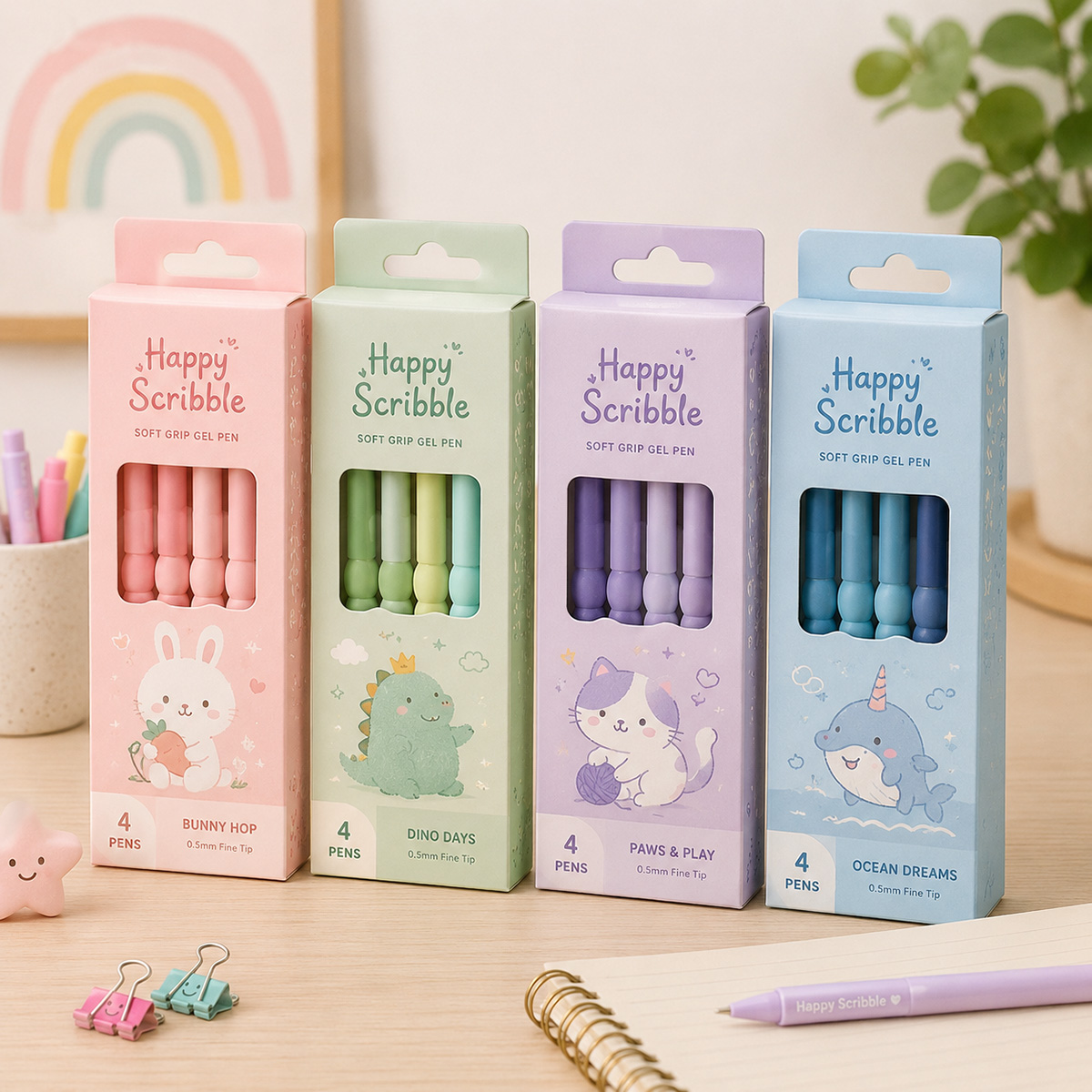
A format for pens, pencils, and writing instrument sets. Pen packaging spans from simple retail blister cards for everyday writing instruments to premium rigid boxes for luxury pens and curated writing sets. For premium pens and limited edition writing instruments, the packaging quality should match the craftsmanship of the pen – a fine fountain pen deserves packaging that communicates its quality.
Available in single pen formats, gift set formats for multiple instruments, and coordinated set configurations where a pen is presented alongside a notebook or other stationery items. The insert needs to hold each pen securely in a position that prevents rolling and contact damage to the finish.
Desk Accessory Boxes
A format for desk organisers, pen holders, bookends, desk trays, and other desktop stationery accessories. Desk accessory packaging is primarily a retail format – the product needs to be visible or clearly communicated at the point of purchase, and the packaging needs to protect the accessory from damage during retail handling.
Available with window configurations that show the accessory’s design and material quality, and in fully enclosed formats with product photography for accessories that don’t suit window display. For desk accessories with a premium material quality – marble, brass, leather – the packaging should communicate that material quality clearly.
Stationery Gift Sets
A format for curated stationery collections presented as gifts – a notebook and pen set, a complete desk setup, a writing essentials collection. Stationery gift sets are one of the most versatile gifting formats in the lifestyle category – they’re appropriate for corporate gifting, personal occasions, and professional milestones. The packaging needs to present the collection as a considered, curated gift rather than a collection of individual stationery items.
Available with custom interior configurations that hold each item in a deliberate arrangement, ribbon closures, and finishing options suited to premium gifting. The composition of the items within the box – their arrangement, their visual relationship to each other – is a design decision that affects the gift’s impression when opened.
Planner and Organiser Boxes
A format for planners, organisers, calendar notebooks, and productivity-focused stationery products. Planner packaging often has a strong seasonal dimension – January planners, academic year diaries, and yearly organisers have fixed purchase windows. The packaging needs to communicate the time period covered clearly, while maintaining visual appeal across the annual purchase cycle.
Available in sizes suited to standard planner formats, with design systems that allow the year or period to be updated efficiently without requiring a complete redesign of the base packaging format.
Choosing the Right Stationery Box Configuration
The packaging needs to match the product’s aesthetic standard. This is the fundamental brief for stationery packaging and the one most frequently underestimated. A consumer who has chosen a notebook for its design quality, its cover material, or its typographic detail brings an aesthetic expectation to the packaging that the packaging needs to meet. The packaging shouldn’t be an afterthought – it should be designed with the same level of care as the product itself. For stationery brands with strong visual identities, the packaging is an extension of that identity.
Product visibility varies by product type. For notebooks and journals, the cover is often the primary selling point – the texture, the colour, the design. Packaging that allows the cover to be seen – a clear sleeve, a box with a window that shows the cover – communicates the product’s quality directly. For pen sets and writing instruments, seeing the pens themselves communicates the finish quality and the visual impression of the set. For desk accessories, the material quality – marble, brass, ceramic – is often best communicated by seeing the product directly. The window or visibility approach should be chosen for what it best communicates about the specific product.
Gift set composition is a design decision. In a stationery gift set, the arrangement of the items within the box is a visual composition. A notebook standing slightly above a pen, with a small accessory nestled beside it, creates a different impression from the same items placed flat in a row. The interior configuration brief should specify not just where each item sits, but the visual relationship between them – height differences, spacing, the visual rhythm of the arrangement. A well-composed interior creates a strong gifting impression; a functional but uncomposed interior misses the opportunity.
Planners and dated products have packaging obsolescence requirements. A planner or diary with year-specific information on the packaging becomes unsellable at the end of its relevant period. For stationery brands with annual planner products, the packaging design system should be structured so that the year-specific elements can be updated efficiently – through a panel that changes each year while the rest of the box remains consistent, or through a sticker or band that carries the year information over a standard base box.
Stationery-Specific Considerations
The stationery aesthetic is specific and identifiable. Premium stationery brands – Leuchtturm, Moleskine, Papier, Poketo, and their many independent contemporaries – have collectively established a visual language for premium stationery that consumers recognise and respond to. Clean typography, considered colour palettes, quality paper or cloth cover textures, and a restrained design approach that communicates craft and thoughtfulness are all elements of this aesthetic. Packaging that feels consistent with this visual world communicates that the brand belongs in it. Packaging that doesn’t feel consistent creates a mismatch that the design-sensitive stationery consumer notices.
Corner and cover protection is a practical requirement for premium products. A notebook with a scuffed corner or a pen with a scratched barrel communicates poor quality at the point of sale, regardless of the actual quality of the product. The packaging needs to hold the product securely enough that retail handling – being picked up, examined, replaced on the shelf multiple times – doesn’t damage the finish. For products with soft or delicate covers – cloth-bound notebooks, leather journals, matte-finished products – the interior of the packaging needs to be smooth and non-abrasive at every contact point.
Stationery gifting has strong professional occasion associations. Stationery gifts – particularly premium notebooks and writing sets – are associated with professional milestones: new jobs, promotions, graduations, retirement. This professional dimension means the packaging needs to communicate quality and care in a way that’s appropriate for a professionally significant gift. A graduation gift notebook in packaging that looks casual or generic doesn’t match the occasion’s significance. For stationery brands with strong gifting sales, having a premium gifting format that suits professional occasions is a commercial priority.
Limited edition and seasonal stationery generates strong packaging interest. Limited edition notebooks, seasonal planner covers, and special collection stationery generate disproportionate consumer engagement relative to their sales volume. Consumers who collect stationery or follow stationery brands often purchase limited editions primarily for the aesthetic pleasure of the product and its packaging. For brands that release limited or seasonal collections, investing in packaging that makes those releases feel special – a different finish, a unique design element, a collectible quality – creates the excitement and urgency that drives these purchases.
Sustainable stationery packaging aligns with category values. Many stationery consumers – particularly those who buy premium and artisan products – are environmentally conscious and make purchasing decisions that reflect their values. A stationery brand that uses sustainably sourced paper in its notebooks but ships them in non-recyclable packaging creates a values inconsistency that engaged consumers notice. For stationery brands with sustainability positioning or sustainability-conscious consumer bases, FSC-certified board, recyclable materials, and minimal plastic are all appropriate packaging choices that communicate values alignment.
Print & Finishing for Stationery Boxes
Stationery packaging has a well-defined and refined aesthetic that’s specific to the category.
The premium stationery aesthetic uses clean, considered typography as the primary design element – the name of the product, the brand mark, and any relevant descriptors rendered in typefaces that communicate design quality and intentionality. Colour palettes are typically restrained – neutrals, earth tones, or a single distinctive brand colour used thoughtfully rather than a full-colour spectrum. Matte laminate is the dominant finish, complementing the paper and natural material qualities of the products inside. Foil stamp or emboss on the brand mark adds a tactile distinction that communicates quality at first touch.
Kraft and natural materials communicate the artisan and natural quality that many independent stationery brands position themselves on. Uncoated kraft stock with minimal print coverage, natural twine closures, and a deliberately simple aesthetic that communicates handmade quality is appropriate for brands with artisan positioning.
Gift set finishing warrants the premium treatment – rigid or semi-rigid construction, a finish that communicates the quality of a thoughtful gift, and an interior that presents the items as a curated collection. Ribbon closure, tissue paper lining, and a personalised message card position are all elements of a stationery gift set that communicates care and consideration.
Seasonal and limited edition packaging benefits from a design approach that communicates the special nature of the product – a different colour palette from the standard range, an illustration or design element specific to the edition, or a finishing detail that the standard range doesn’t have. The packaging should feel like a collector’s item, because for many stationery consumers, that’s exactly what it is.
All boxes are printed using full colour printing in CMYK. Files should be supplied as Adobe Illustrator (.ai) or high-resolution print-ready PDF, with fonts outlined and graphics embedded. Free design support is included – we’ll produce a free 3D mockup for your approval before production begins, and handle minor artwork adjustments at no extra charge. Free dieline templates are available if you’re building your artwork from scratch.
Materials & Specifications
We manufacture stationery boxes in a full range of cardboard and paperboard materials to suit different products and brand positionings. Eco friendly, FSC-certified, and recyclable options are available across the range.
- Single copper paper
- White kraft
- Brown kraft
- Black kraft
- Gold foil paper
- Silver foil paper
- Corrugated board
Minimum order quantity is 1,000 units. Air freight runs approximately 3 – 4 weeks from production sign-off; sea freight is approximately 8 weeks. We supply stationery businesses across Australia including Sydney, Melbourne, and Brisbane. For more detail on the full order process, artwork requirements, and lead times, get in touch and we’ll walk you through it.
Join our newsletter for 10% off your first order
Get our emails for info on new items, sales and much more.

Vivo Packaging Pty Ltd
Aussie Warehouse:
4 Tasman Ct, Keysborough VIC 3173, Australia
Monday – Friday: 9.30am – 5.30pm
Visitors By Appointment Only

Need Help?
Copyright 2026 © VIVO CUSTOM BOXES. ALL RIGHTS RESERVED.