
Custom Pet Toy Boxes
Pet toys present a specific packaging challenge because the product is almost never a regular shape. A squeaky plush toy, a rope tug toy, an interactive puzzle feeder, a rubber chew toy, and a crinkle cat wand are all pet toys – and they’re all completely different shapes that don’t fit neatly into a standard rectangular box. The packaging needs to be configured around the actual dimensions and shape of the specific toy, not around a generic toy box format.
Beyond the shape challenge, pet toys need to communicate several things simultaneously. The product itself needs to be visible or clearly illustrated – the buyer is choosing a toy partly based on how it looks, and partly on whether it looks like something their pet will engage with. The safety credentials need to be communicated clearly – pet owners are aware that toys can be hazards, and they look for non-toxic materials, appropriate sizing, and usage guidelines. And for interactive and puzzle toys, the play mechanism needs to be explained – how does it work, what does the pet do with it, what’s the benefit?
Our custom pet toy boxes are manufactured to suit the specific toy format, retail environment, and brand positioning of your pet toy business. We’ve been supplying pet product packaging to Australian businesses since 2017.
Get in touch today to discuss your requirements or request a quote.



Order Process
We quote on the box style of your choice
We receive your final design on a die line template
We send you an invoice to pay
We send you 3D mockups to confirm and start production
We ship the order to you by air or by sea
Request a Quote
To request an accurate quote from us, please fill out the form below. If you have any questions about using this form, please send an email to [email protected]
Pet Toy Box Styles We Offer
We manufacture custom pet toy boxes across a range of styles to suit different toy formats and retail contexts. All styles are available in custom sizes, materials, and finishes.
Standard Pet Toy Boxes
A format for toys that can be folded, compressed, or arranged to fit within a rectangular box. Rope toys, fabric toys, and flat toy formats all suit standard box configurations. The box needs to hold the toy securely without the toy being excessively compressed – compression affects the appearance of the product and can affect the structural integrity of plush and fabric toys over the display period.
Available in hanging formats with eurohole punching for retail hook display, and in flat box formats for shelf or counter display. The front panel design needs to communicate the brand, the toy type, and the key selling points – durability, material, play type – clearly at retail shelf distance.
Window Pet Toy Boxes
A window configuration that allows the toy to be seen before purchase. For toys where the colour, the texture, and the overall visual appeal are primary purchasing factors – plush toys, brightly coloured chew toys, novelty shapes – a window does more selling work than illustration or photography on the exterior panel.
Window placement needs to show the most visually compelling aspect of the toy. For a plush toy, the face or the most detailed surface. For a chew toy, the material texture and the colour. For a rope toy, the weave and the colour combination. The window should be sized to show the full relevant surface of the toy, not just a partial view.
Interactive and Puzzle Toy Boxes
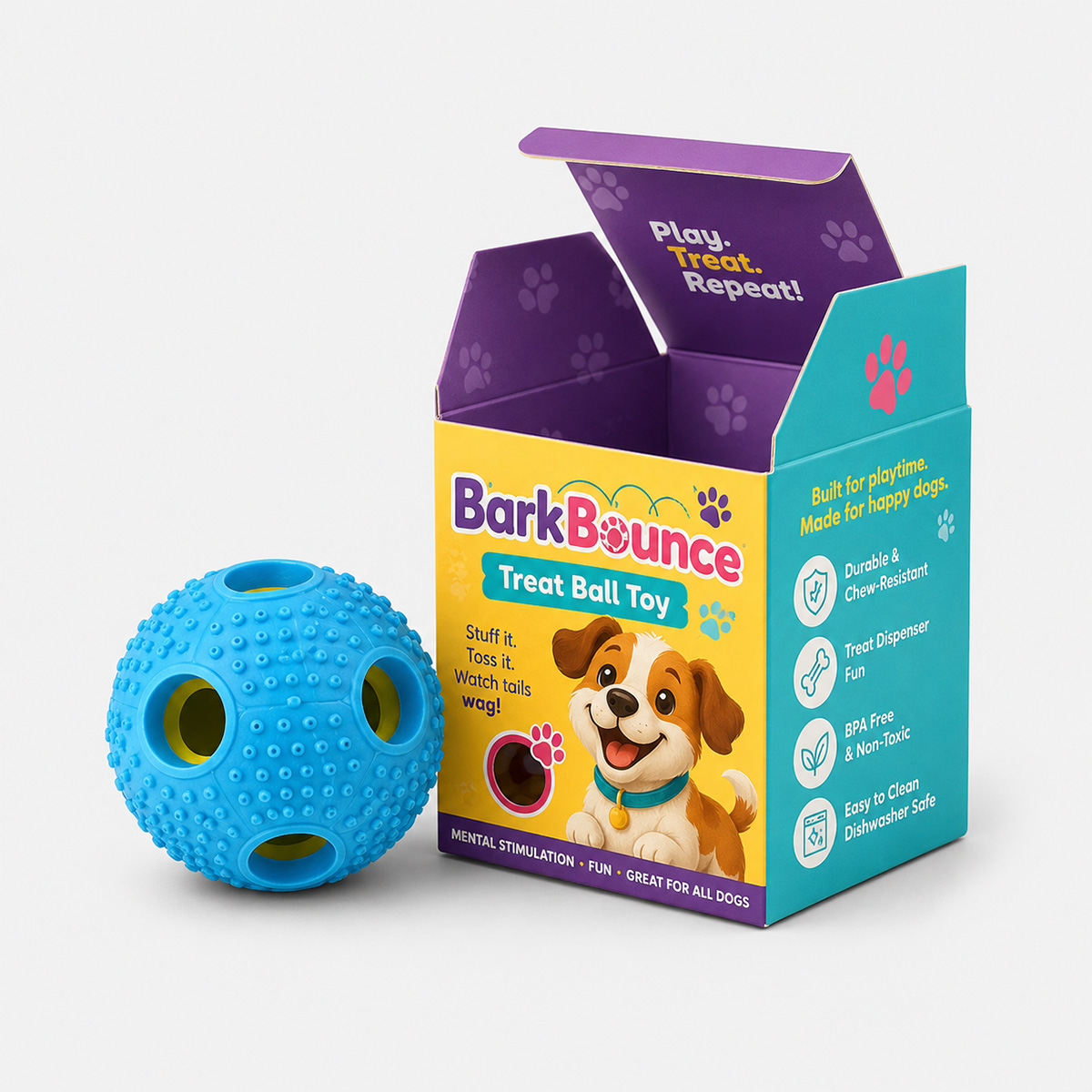
A format for toys that require explanation – puzzle feeders, treat-dispensing toys, lick mats, snuffle mats, and other interactive products where the play mechanism is not obvious from looking at the product. The packaging for interactive toys needs to communicate how the toy works, what the benefit is, and how to use it – typically through clear illustration or photography on the back or side panels.
The challenge with interactive toy packaging is balancing the functional explanation with the brand communication. The buyer needs to understand the product to make a confident purchasing decision, and that explanation needs to be clear and visual enough to work in a retail environment where they’re not going to read dense text. Illustrated step-by-step instructions, before-and-after photography, and benefit statements communicate more effectively than descriptive text alone.
Pet Toy Gift Sets
A format for curated toy collections – a selection of toys presented together as a gift. Pet toy gift sets are a popular format for birthdays, Christmas, and pet celebration occasions. The packaging needs to present as a complete and considered gift, with a construction and finish that communicates care and quality.
Available with window panels that show the toys in their arranged presentation, and with interior configurations that hold each toy in a deliberate layout. For premium gift sets, the interior presentation is as important as the exterior finish – the reveal when the box is opened is part of the gift experience.
Plush Toy Boxes
A format specifically for plush and stuffed toys – products with irregular shapes, fabric surfaces, and soft construction that require a packaging approach different from hard toys. Plush toys are typically displayed in a way that shows the face and the character of the toy – which means window placement and box configuration need to be designed around the toy’s character orientation, not just its dimensional footprint.
Available in window box formats that show the toy in its natural display position, and in sleeve formats that hold the toy in a specific orientation. For plush toys with strong character designs – specific animals, licensed characters, or novelty shapes – the packaging design should complement and enhance the character of the toy.
Choosing the Right Pet Toy Box Configuration
The configuration decisions for pet toy packaging depend on the toy format, the retail display context, and the information requirements of the specific product.
Toy shape drives the box configuration. A rubber chew toy, a plush duck, a rope tug, and a puzzle feeder all have completely different shapes that require completely different box configurations. The box dimensions and any interior support or insert need to be based on the actual three-dimensional shape of the toy in its intended display orientation. A toy that slumps, tilts, or shifts position within the box during the retail display period looks poorly presented and communicates lower product quality than the toy actually has. The interior configuration needs to hold the toy in its intended display position consistently.
Retail hook vs shelf display affects the entire design brief. Most pet toys are displayed on hooks in a retail environment – the packaging hangs from a hook in a wire fixture or pegboard. This means the front face of the packaging is the primary display surface, the eurohole needs to support the weight of the product reliably, and the packaging needs to maintain its visual integrity while hanging for an extended retail display period. For toys sold through online channels, the packaging sits flat or is photographed in a product image – the front face is still the primary display surface, but the structural requirements are different.
Size and breed suitability communication. Most pet toys are size-specific – a toy appropriate for a large breed dog is a choking hazard for a small breed dog, and a toy sized for a dog is often inappropriate for a cat. The packaging needs to communicate the appropriate size range and breed type clearly enough that the buyer can make a safe and confident purchase. Size icons, weight recommendations, breed examples, and explicit unsuitable-for statements are all useful communication tools that reduce the risk of inappropriate purchases and the returns and complaints that follow.
Interactive toy explanation needs to be visual, not textual. A buyer standing in front of a pet toy display will not read a paragraph of text explaining how a puzzle feeder works. They’ll look at the image on the front of the box and make an immediate judgment about whether they understand what the product does and whether their pet will engage with it. The explanation of an interactive toy’s function needs to be communicated primarily through clear, sequential photography or illustration – showing the toy, showing the pet interacting with it, and showing the outcome. Text can support this communication but shouldn’t be the primary vehicle.
Pet Toy-Specific Considerations
A few properties of pet toys that create specific packaging requirements.
Safety communication is mandatory and commercially important. Pet toys can be hazardous – a toy that’s too small for the breed can be swallowed, a toy with small detachable parts can be ingested, and certain materials are unsafe for animals. The packaging needs to communicate safety information clearly: the appropriate size range and breed type, a supervised use recommendation for toys not intended for unsupervised chewing, and any relevant material safety declarations. For toys made from non-toxic, BPA-free, or food-grade materials – which is a positive selling point in the premium pet market – communicating this clearly on the packaging builds consumer confidence.
Durability is a primary purchasing consideration for dog toys. Dog owners – particularly owners of heavy chewers and large breeds – are acutely aware that many dog toys don’t last. A toy that’s destroyed within fifteen minutes of being given to an enthusiastic Labrador is a poor value purchase and a disappointing brand experience. Packaging that communicates durability credibly – through material descriptions, construction details, or appropriate usage context – addresses this consumer concern directly. For premium dog toy brands with genuinely durable products, communicating the durability is a key differentiator.
Cat toys have different purchasing dynamics to dog toys. A cat toy purchase is made by a human, but the product needs to satisfy a cat – which is famously difficult to predict. Cat owners are accustomed to buying toys that their cat ignores, and they’ve developed a degree of skepticism about toy claims. Packaging for cat toys needs to communicate the specific sensory appeal of the toy – the texture, the movement, the sound, the smell – in a way that makes the cat owner believe this toy will actually engage their cat. This is a different communication challenge to dog toys, where durability and play type are more straightforward to communicate.
Interactive and puzzle toys benefit from usage photography. A puzzle feeder or a snuffle mat needs to be shown in use – a dog nosing treats out of a puzzle, a cat pawing at a treat dispenser – for the product’s function and appeal to be immediately clear. Packaging that shows only the toy itself, without showing it in use, leaves the buyer to imagine how the toy works and whether their pet will engage with it. For interactive toys, in-use photography or illustration is as important as product imagery.
The pet toy gift market has strong seasonal peaks. Christmas and birthdays are the primary pet toy gifting occasions, but the normalisation of pet celebrations – gotcha days, adoption anniversaries – has created a year-round gifting demand. For pet toy gift set brands, having packaging that works across multiple gift occasions – rather than being narrowly Christmas-specific – extends the commercial window for the product. A gift box that communicates celebration and care without specific seasonal iconography works for a birthday in March as well as Christmas in December.
Print & Finishing for Pet Toy Boxes
Pet toy packaging has one of the most playful and visually energetic design mandates of any consumer product category.
The visual language of pet toy packaging is defined by energy, colour, and character. Pet toys are fun products – the packaging should communicate that immediately. Bold colour, dynamic illustration or photography, playful typography, and design that captures the personality of the species and the play experience are all appropriate and expected. A pet toy in conservative or restrained packaging sends a confusing message – the packaging should feel as enjoyable as the toy itself is supposed to be.
Dog toy packaging tends toward bold, high-energy design that communicates strength, durability, and the active play experience. Photographs or illustrations of dogs in active play, strong primary colours, and bold typography that communicates the toy’s play type are all common. For premium dog toy brands targeting owners of specific breeds or play styles – fetch toys, tug toys, heavy chewer toys – the design should communicate the specific play context clearly.
Cat toy packaging reflects the mysterious, independent, and often ironic character of cats and cat culture. Design that acknowledges the cat’s inherent aloofness – or leans into the specific sensory triggers that cats respond to – often resonates more with cat owners than generic “fun pet toy” packaging. For interactive cat toys, the packaging design should communicate the specific type of stimulation the toy provides – hunting simulation, batting, batting and chasing – in a way that cat owners will recognise as relevant to their cat’s behaviour.
Interactive and puzzle toy packaging for premium brands warrants a more considered design approach – clean design, high-quality photography of the product and of a pet using the product, benefit-led communication, and a finish that communicates the quality of the product. For puzzle feeders and treat-dispensing toys positioned as enrichment products for pet wellbeing, the packaging should communicate thoughtfulness and quality rather than playful energy.
Pet toy gift set packaging warrants the most premium finish in the toy category – the gifting context justifies rigid construction, considered exterior finish, and an interior presentation that creates a positive reveal when the box is opened. A foil-stamped brand mark, a warm interior colour, and a neat arrangement of the toys in the box all contribute to a gift presentation that communicates care and quality.
All boxes are printed using full colour printing in CMYK. Files should be supplied as Adobe Illustrator (.ai) or high-resolution print-ready PDF, with fonts outlined and graphics embedded. Free design support is included – we’ll produce a free 3D mockup for your approval before production begins, and handle minor artwork adjustments at no extra charge. Free dieline templates are available if you’re building your artwork from scratch.
Materials & Specifications
We manufacture pet toy boxes in a full range of cardboard and paperboard materials to suit different toy formats and retail environments. Eco friendly and recyclable options are available across the range. All materials meet relevant safety standards for pet product applications.
- Single copper paper
- White kraft
- Brown kraft
- Black kraft
- Gold foil paper
- Silver foil paper
- Corrugated board
Minimum order quantity is 1,000 units. Air freight runs approximately 3 – 4 weeks from production sign-off; sea freight is approximately 8 weeks. We supply pet toy businesses across Australia including Sydney, Melbourne, and Brisbane. For more detail on the full order process, artwork requirements, and lead times, get in touch and we’ll walk you through it.
Join our newsletter for 10% off your first order
Get our emails for info on new items, sales and much more.

Vivo Packaging Pty Ltd
Aussie Warehouse:
4 Tasman Ct, Keysborough VIC 3173, Australia
Monday – Friday: 9.30am – 5.30pm
Visitors By Appointment Only

Need Help?
Copyright 2026 © VIVO CUSTOM BOXES. ALL RIGHTS RESERVED.