
Custom Pie Boxes
Pies present a packaging challenge that’s different from most other bakery products. They’re among the heaviest products in the category, the wet filling applies continuous downward pressure on the base during transport, and the pastry – particularly the bottom crust – is vulnerable to softening from both heat and moisture. A hot pie in a sealed box will steam its own base soft within minutes. A cold pie with a decorated top crust will have that decoration damaged by any lid contact. Getting the packaging right for pies requires addressing weight, heat, moisture, and surface protection simultaneously.
Our custom printed pie boxes and custom pie packaging are manufactured to suit the specific dimensions, weight, and delivery context of your pie products, from individual hand pies and slices through to whole pies for retail and catering supply. We’ve been supplying pie box packaging to Australian bakeries, pie shops, and catering businesses since 2017.
Get in touch today to discuss your requirements or request a quote.

Order Process
We quote on the box style of your choice
We receive your final design on a die line template
We send you an invoice to pay
We send you 3D mockups to confirm and start production
We ship the order to you by air or by sea
Request a Quote
To request an accurate quote from us, please fill out the form below. If you have any questions about using this form, please send an email to [email protected]
Choosing the Right Pie Box Configuration
The configuration decisions for pie packaging are driven primarily by the product format – round or rectangular, whole or portioned, hot or cold – and the delivery context.
Round vs rectangular pie. A round pie needs a box with a circular or square base footprint large enough to accommodate the dish or the pie base, with enough wall clearance to slide the pie in and out without catching on the sides. A rectangular pie – a slab pie, a deep dish, or a rectangular pastry – needs a box configured to its specific length and width. Most standard pie box formats are square, which works for round pies up to a size where the corners become wasteful. For large rectangular pies or non-standard sizes, a custom footprint is the practical solution.
Whole pie vs individual portion. A whole pie box and a slice box are fundamentally different products with different structural requirements, different use contexts, and different presentation needs. A whole pie box needs to support significant weight and provide a stable platform for transport. A slice box needs to hold a wedge or rectangular portion securely in a compact format suitable for cafe counter service or takeaway. If you sell both formats, they need separate packaging specifications.
Hot vs cold delivery. This is the most consequential configuration decision for pie packaging. A hot pie generates steam that, if trapped inside a sealed box, will soften the bottom crust and condensate on the lid. A hot pie box needs ventilation – either perforated panels, a vented lid, or a design that allows steam to escape without losing heat so quickly that the product arrives cold. A cold pie box needs no ventilation but needs to maintain structural integrity at refrigeration temperatures. If you deliver both hot and cold, the two use cases may need different packaging specifications.
Weight. A whole pie – pastry, filling, and dish – is one of the heaviest products commonly packaged in the bakery category. A large meat pie or a fruit pie can weigh 800 grams to over a kilogram. The base of the box needs to support that weight without flexing or delaminating during transport. For catering orders where multiple pies are stacked or transported together, the stacking strength of the box construction is as important as the base.
Pie Box Styles We Offer
We manufacture custom pie boxes across a range of styles to suit different products and sales contexts. All styles are available in custom sizes, materials, and finishes.
Whole Pie Boxes
The primary format for retail and catering pie supply. A whole pie box needs a base strong enough to support the full weight of the product, wall height sufficient to clear the top crust and any decoration, and a secure closure that holds during transport.
Available in cardboard pie boxes and paperboard formats for standard retail use, and corrugated cardboard constructions for heavier products and catering supply. Standard sizes are available from 6 inch through to 12 inch and larger, with custom sizes available for non-standard products. The base construction for whole pie packaging boxes is specified to the weight of the product – a lightweight folding carton that works for a cupcake is not appropriate for a kilogram meat pie. Sturdy base construction is non-negotiable for this product.
Individual and Hand Pie Boxes
A compact format for single-serve pies, hand pies, and individual portions. These boxes are the standard format for cafe counter service and takeaway – they need to be easy to carry, quick to assemble, and sized to the product without excess space that allows the pie to move.
Hand pie boxes are a smaller, narrower format for oval or rectangular hand-formed pies. The box should hold the pie snugly to prevent movement during handling, with a lid height that clears the crimped pastry edge without contact. Available with window panels for retail display applications where the product needs to be visible at the point of sale.
Window Pie Boxes
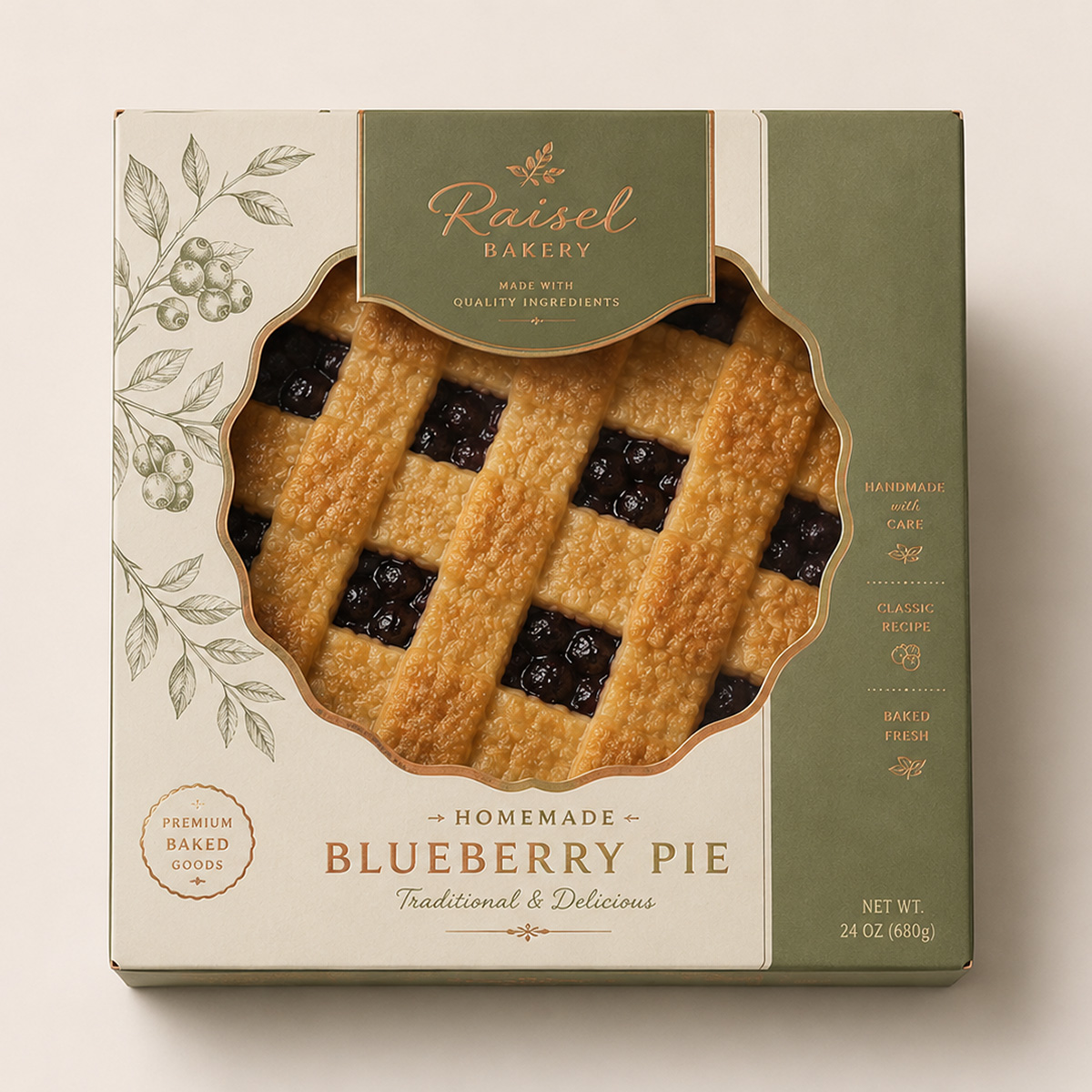
A window on a pie box showcases the top crust – the glazing, the decoration, the vent pattern, and the golden colour of a well-baked pie. For pies where the top crust is visually distinctive – lattice crusts, leaf decorations, branded stamps, or elaborate pastry work – a window creates an immediate product impression at the retail counter or display case.
Window placement for pie boxes works best as a top panel or partial lid window that shows the full top surface of the pie. The window needs to be sized to show the complete crust pattern, not just part of it. For round pies, a circular or square window centred on the lid is the standard configuration.
Pie Slice Boxes
A format specific to cafe retail and food service, where pies are pre-cut and sold by the slice. A pie slice is wedge-shaped – wide at the crust end and narrow at the tip – which requires a box configured for that geometry rather than a standard rectangular format.
Pie slice boxes need to hold the slice level and secure during handling – a slice that tips or slides in the box will have filling overflow and pastry damage by the time it reaches the customer. The base needs to be grease resistant to handle the filling content, and the lid height needs to clear the top crust without contact.
Insulated Pie Boxes
For hot pie delivery and catering supply where maintaining product temperature is a priority, an insulated box construction extends the time the product stays hot during transport. Insulated formats use a double-wall or lined construction that slows heat loss, combined with ventilation that allows steam to escape without losing heat too rapidly.
These are used primarily in hot pie delivery, food truck supply, and catering contexts where pies are transported and served over a period of time rather than consumed immediately. The insulation requirement adds to the construction cost but reduces the product quality complaints associated with cold or soggy pies on delivery.
Wholesale and Catering Pie Boxes
A high-volume format for catering supply, wholesale delivery, and institutional food service. Structural robustness and stackability are the primary requirements – these boxes are loaded, transported, unloaded, and often stacked in a catering kitchen environment where they need to hold up under real-world handling conditions.
Print requirements for wholesale and catering formats are typically simpler than for retail – a brand mark, product identification, quantity, and storage instructions. The priority is consistent structural performance across large runs rather than premium finish detail.
Pie-Specific Considerations
A few properties of pies that create packaging requirements specific to this product category.
The base must bear the full weight of the product. This seems obvious but is frequently under-specified. A standard folding carton base that works adequately for a 200-gram cupcake box will fail under the weight of a kilogram meat pie, particularly if the box is carried by one hand or placed down with any impact. The base construction needs to be specified for the actual weight of the filled product, not for the approximate size of the box. For large whole pies, a reinforced base or a heavier board weight is the right specification.
Steam softens the base crust of hot pies. When a hot pie is sealed in an airtight box, the steam produced by the hot filling has nowhere to go. It condensates on the inside of the box and the lid, falls back onto the pie, and softens the base crust over time – sometimes within 15 to 20 minutes. A vented lid design that allows steam to escape while retaining enough heat for transport addresses this problem. For any business selling hot pies in boxes, ventilation is not an optional feature – it’s a product quality requirement.
Glazed top crusts are vulnerable to lid contact. A pie with a glossy egg-wash glaze or a decorated pastry top will transfer that glaze to the inside of the lid if there is any contact. The lid height needs to clear the highest point of the crust – which for a decorated pie may include raised pastry elements, vent holes that protrude slightly, or a crimped edge that sits higher than the crust itself. Measure the maximum height of the top surface, not the average, before finalising the lid height specification.
Pie sizes are not fully standardised. Pie dishes and baking tins vary between producers, and a 9-inch pie from one bakery may not be the same diameter as a 9-inch pie from another. The box dimensions need to be confirmed against your actual product measurements rather than assumed from a nominal size. A box that’s too small for the dish won’t close; a box that’s too large allows the pie to slide during transport. Both are problems worth avoiding at the specification stage.
Seasonal demand is significant for pies. Christmas and Easter are both strong pie occasions in Australia – Christmas pies, mince pies, and Easter savoury pies all have seasonal packaging implications. Personalised pie boxes with a custom logo, seasonal print treatment, or event-specific branding are common for businesses with strong seasonal volume. These need to be planned with adequate lead time to account for production and freight – August or September is the practical ordering window for Christmas seasonal packaging.
Retail pie presentation vs catering delivery are different briefs. A pie in a retail display case needs packaging that reads as considered and premium at the point of sale – the box is part of the product. A pie in a catering delivery context needs packaging that holds up under repeated handling and stacking. These are different specifications, and a business serving both channels benefits from having separate packaging for each rather than trying to use one format across both.
Print & Finishing for Pie Boxes
Pie packaging spans from traditional bakery retail through to premium artisan producers, and the visual language varies accordingly.
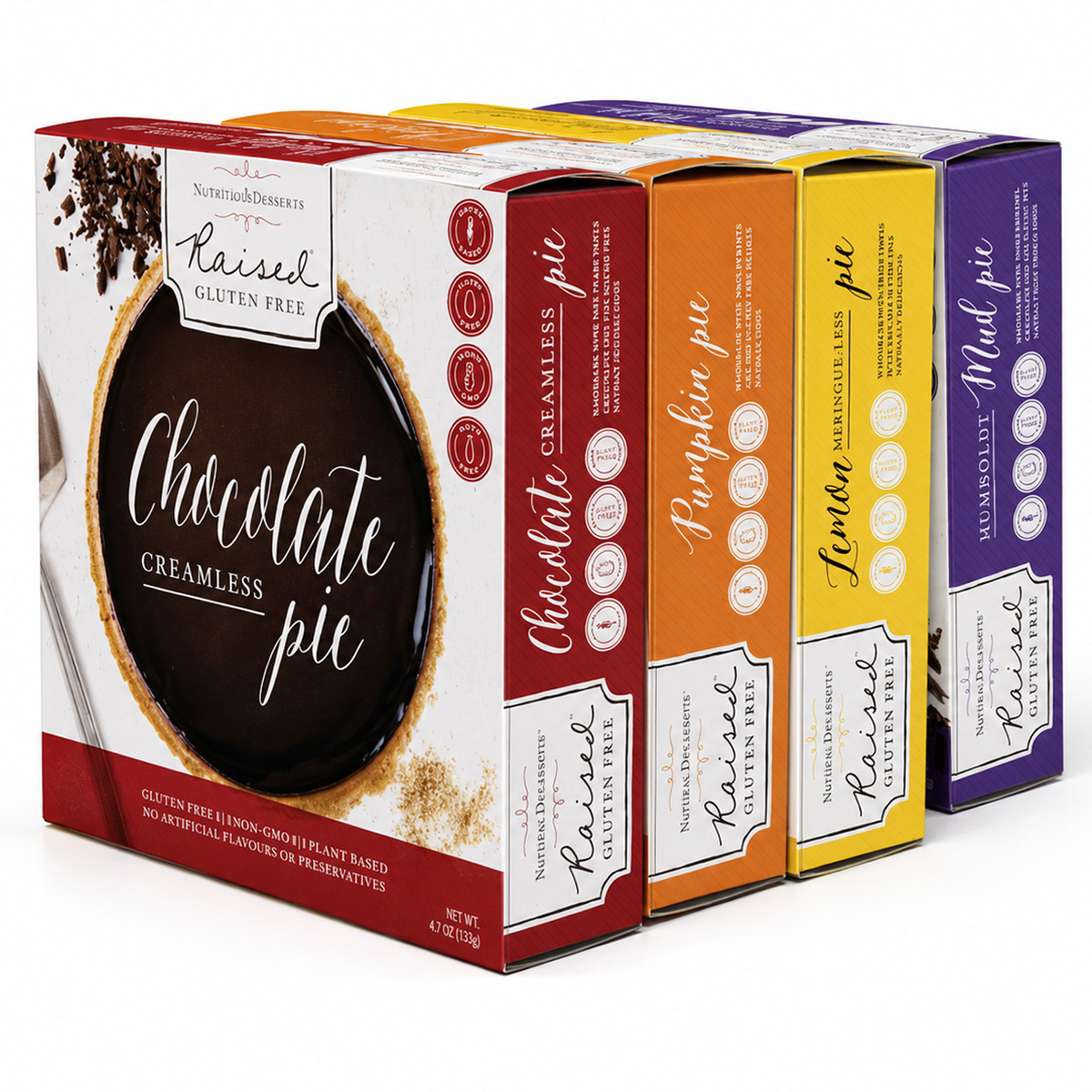
Traditional and artisan bakery packaging for pies tends toward warm, homey design aesthetics – kraft materials, earthy colour palettes, hand-drawn illustration styles, and typography that communicates craft and tradition. This visual language is appropriate for bakeries and pie shops that position themselves around artisan production, family recipes, and quality ingredients. A matte or uncoated finish suits this aesthetic better than gloss, and kraft board stock is a natural choice.
Modern premium bakery packaging for pies takes a cleaner, more contemporary approach – minimal design, bold typography, and a considered colour palette that positions the product as a quality food product rather than a traditional baked good. This approach works well for newer bakery businesses targeting a younger or more design-conscious market, and it translates well to e-commerce and social media contexts.
For seasonal packaging, a themed print treatment applied to a consistent box format is the practical approach for most pie businesses. A Christmas iteration and a standard-year iteration of the same box format, with a shared structural specification and different print files, gives seasonal presence without requiring a full re-specification each year.
For catering and wholesale formats, a functional print treatment with clear product identification and storage instructions is appropriate. The box is a delivery vehicle in this context, not a retail product, and the print should reflect that.
All boxes are printed using full colour printing in CMYK. Digital printing is available for shorter runs with fast turnaround where large minimum quantities aren’t practical. Spot UV can be applied selectively to key design elements for premium retail formats. Files should be supplied as Adobe Illustrator (.ai) or high-resolution print-ready PDF, with fonts outlined and graphics embedded. Free design assistance is included – we’ll produce a free 3D mockup for your approval before production begins, and handle minor artwork adjustments at no extra charge. Free dieline templates are available if you’re building your artwork from scratch.
Materials & Specifications
We manufacture pie packaging boxes in a full range of cardboard, paperboard, and corrugated cardboard materials, with grease resistant options for products with high filling content and reinforced base constructions available for heavy whole pie formats. Eco friendly and recyclable materials are available across the range for businesses looking to reduce their environmental impact. All materials are food grade and food safe, and all formats are designed for safe delivery from production through to the customer.
Bulk orders are available for catering and wholesale supply. Minimum order quantity is 1,000 units.
- Single copper paper
- White kraft
- Brown kraft
- Black kraft
- Gold foil paper
- Silver foil paper
- Corrugated board
Minimum order quantity is 1,000 units. Air freight runs approximately 3 – 4 weeks from production sign-off; sea freight is approximately 8 weeks. We supply pie shops and bakeries across Australia including Sydney, Melbourne, and Brisbane. For more detail on the full order process, artwork requirements, and lead times, get in touch and we’ll walk you through it.
Join our newsletter for 10% off your first order
Get our emails for info on new items, sales and much more.

Vivo Packaging Pty Ltd
Aussie Warehouse:
4 Tasman Ct, Keysborough VIC 3173, Australia
Monday – Friday: 9.30am – 5.30pm
Visitors By Appointment Only

Need Help?
Copyright 2026 © VIVO CUSTOM BOXES. ALL RIGHTS RESERVED.