
Custom Chocolate Boxes
Chocolate is the most format-diverse product in the confectionery category. A single-origin dark chocolate bar, a box of assorted pralines, a slab of bark with dried fruit and nuts, and a collection of hand-painted bonbons all require fundamentally different packaging approaches. Add to that a market that spans mass retail, specialty artisan, and luxury gifting – with completely different visual languages and structural requirements at each level – and the packaging decisions involved are more varied than almost any other product category.
Our custom chocolate box packaging is manufactured to suit the specific format, weight, and market positioning of your product, from everyday retail bar packaging through to fully customisable premium assorted gift boxes for the luxury end of the market. We’ve been supplying personalised packaging for chocolate businesses across Australia since 2017.
Get in touch today to discuss your requirements or request a quote.

Order Process
We quote on the box style of your choice
We receive your final design on a die line template
We send you an invoice to pay
We send you 3D mockups to confirm and start production
We ship the order to you by air or by sea
Request a Quote
To request an accurate quote from us, please fill out the form below. If you have any questions about using this form, please send an email to [email protected]
Choosing the Right Chocolate Box Configuration
The right configuration for a chocolate box depends more on the product format than on almost any other variable. Different chocolate formats have different structural requirements, different insert needs, and different presentation priorities.
Bar and tablet formats are the most structurally straightforward chocolate product to package. A bar or tablet is a rigid, uniform shape that fits snugly in a wrap or a folded sleeve without requiring internal support. The packaging requirement is primarily about moisture and temperature protection, print surface, and retail shelf presence. The box or wrap needs to fit the bar closely – excess space allows movement that can cause surface bloom – and the print surface is the primary branding opportunity since the product itself isn’t visible until the packaging is removed.
Assorted filled chocolates, pralines, and bonbons are the most complex format to package because the product is a mixed assortment of different shapes, sizes, and weights. Unlike truffles, which are relatively uniform in shape, an assorted chocolate box might contain rounds, squares, rectangles, domes, and irregular hand-formed pieces. The insert design needs to accommodate this variety – either through a grid of uniform cavities that each piece fits into with some tolerance, or through a custom insert with individually shaped cavities for each piece in the assortment. The latter is more expensive to produce but gives a more precise fit and a more premium presentation.
Bark and mendiants are flat, irregular products that don’t suit individual cavity inserts. A flat tray format with a close-fitting lid, or a rigid box with a paper or tissue liner, is the standard approach. The challenge is that bark in particular breaks easily along its irregular edges during transport – the packaging needs to hold the pieces firmly enough to prevent movement without applying pressure that causes breakage.
Weight consideration for assorted boxes. A fully loaded twelve-unit assorted chocolate box is heavier than a comparable truffle box because filled chocolates are denser than cream ganache truffles. The base construction needs to be specified for the actual load weight, particularly for larger assortment boxes that may be stacked during transport or retail display.
Chocolate Box Styles We Offer
We manufacture custom chocolate boxes across a range of styles to suit different products, markets, and sales channels. All styles are available in custom sizes, materials, and finishes.
Chocolate Bar Boxes
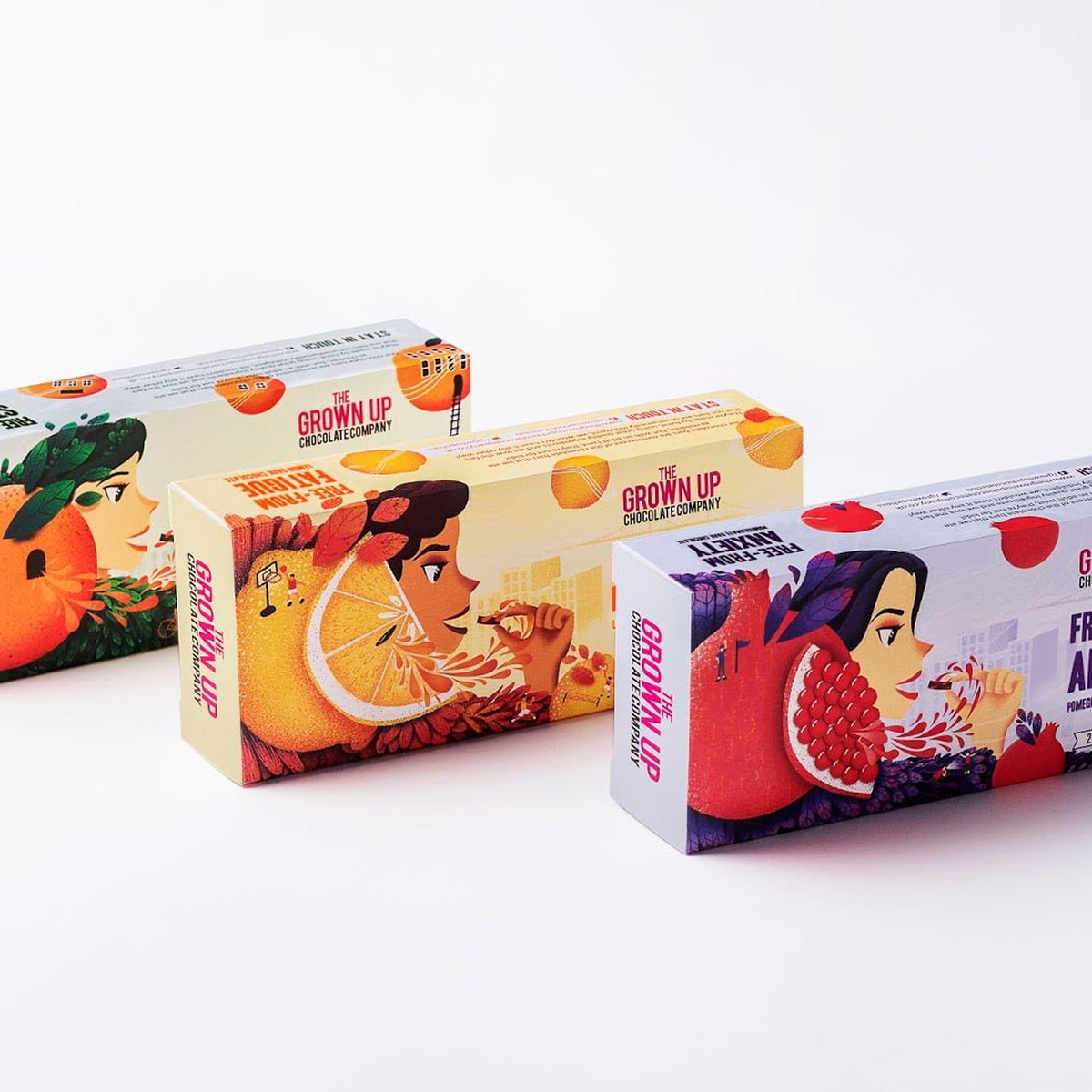
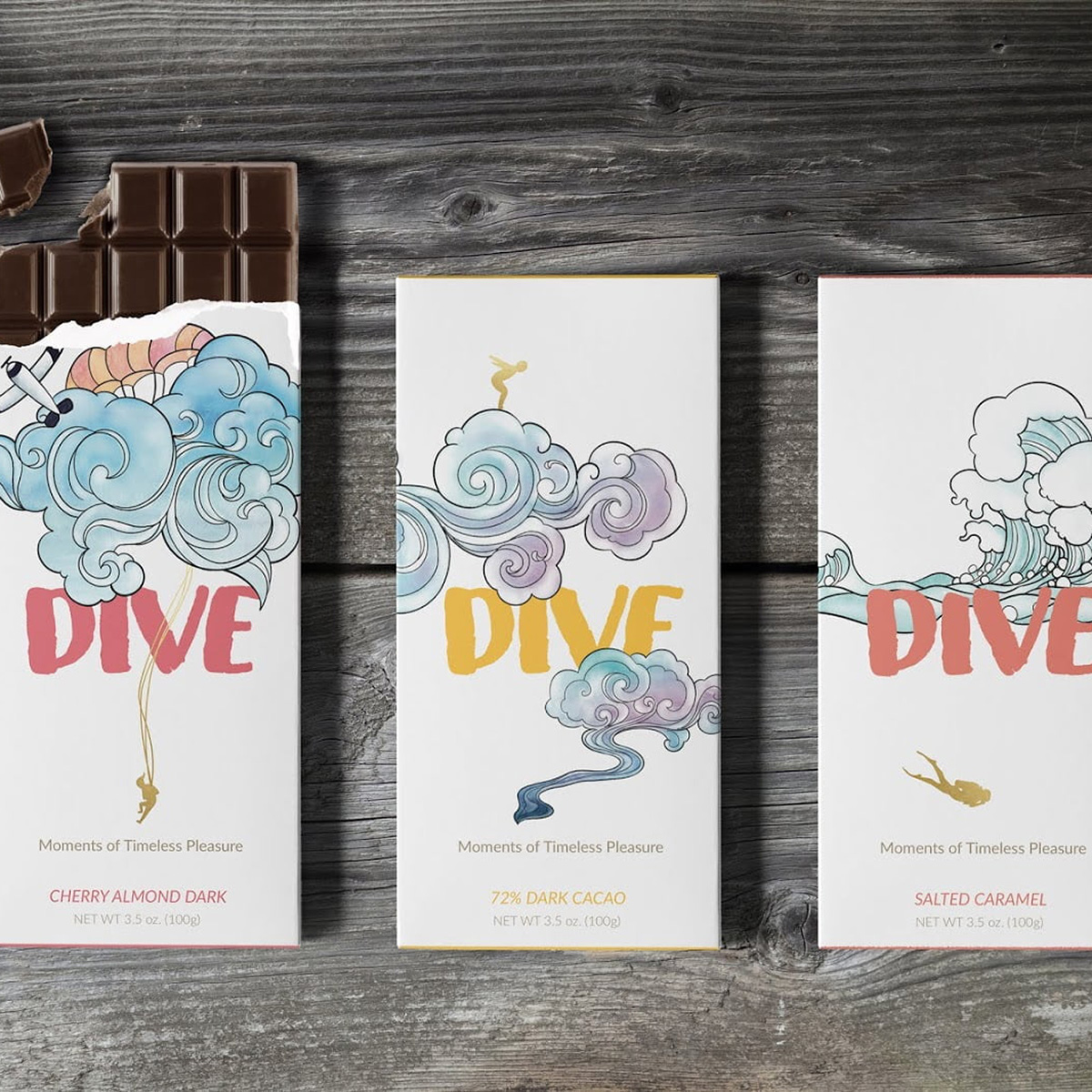
A format specific to bar and tablet products. The packaging wraps closely around the bar, providing a large continuous print surface and a snug fit that prevents the bar from moving inside the packaging. Available in folded sleeve, tuck-end box, and wrap formats depending on the production process and the retail or gifting context.
Chocolate bar packaging offers one of the largest print-to-product-size ratios of any confectionery format – the entire exterior surface is printable, which makes it one of the most effective branding canvases in the food category. For artisan and bean-to-bar producers, the bar packaging is often as much a part of the brand story as the product itself.
Assorted Chocolate Boxes
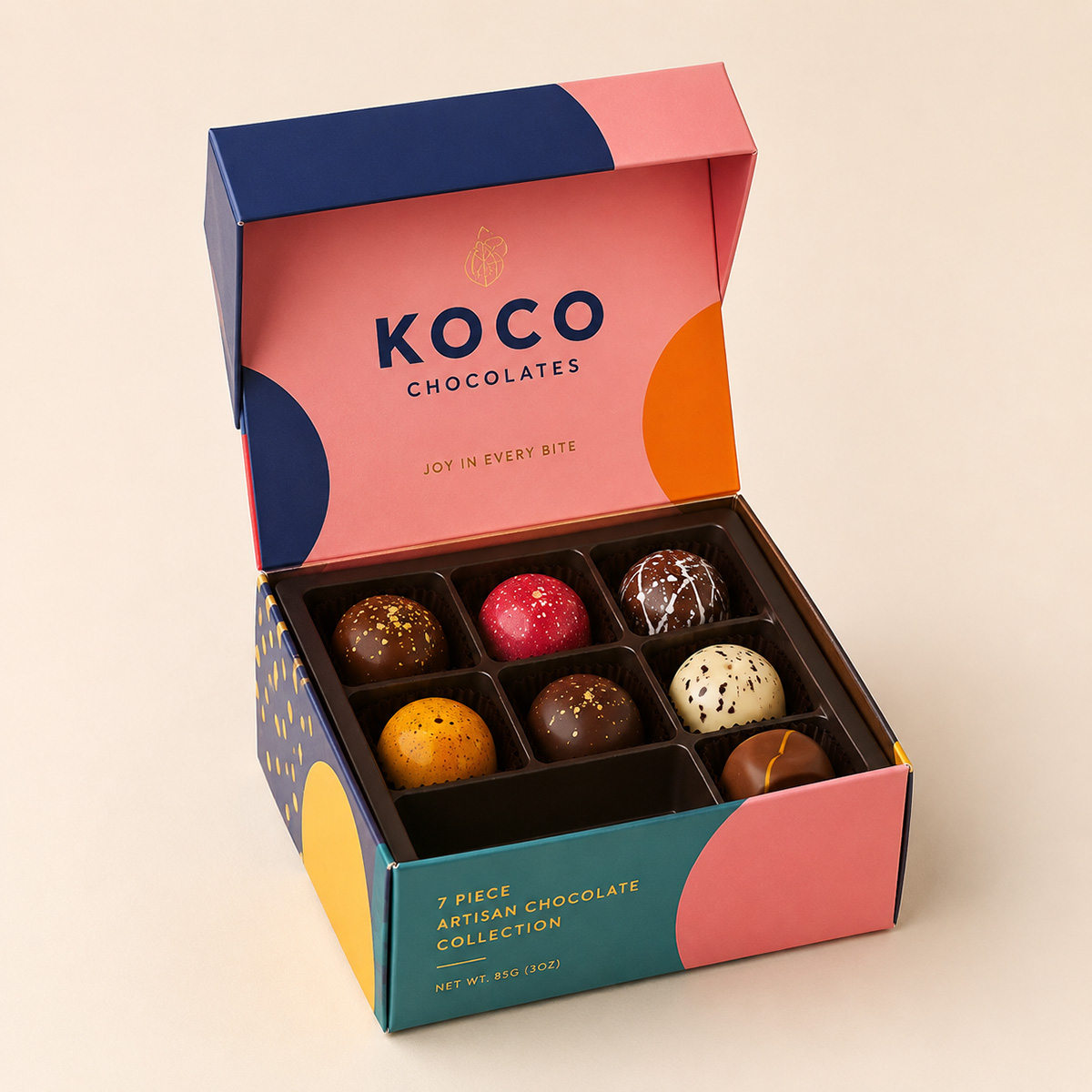
The primary format for gifting chocolate collections – pralines, bonbons, filled chocolates, and mixed assortments. Internal inserts hold each piece in position, prevent contact between pieces, and present the assortment as a deliberate arrangement rather than a loose collection.
Insert design for assorted boxes requires more specification work than for uniform products. We need to know the dimensions and shapes of each piece in the assortment, the number of pieces, and the arrangement you want to present. If your assortment changes seasonally or by flavour range, it’s worth discussing whether a single insert configuration can accommodate the variation or whether different insert specifications are needed for different ranges.
Chocolate Gift Boxes
Premium presentation format for assorted chocolates, seasonal collections, and corporate gifting. Rigid construction, custom inserts, and finishing options suited to the luxury end of the market. Small chocolate boxes for party favours, wedding bomboniere, and birthday celebrations sit at one end of the range; large corporate gift boxes for special events and client gifting sit at the other. The packaging needs to meet the expectation of the occasion across all of these contexts.
Available with magnetic or ribbon closures, foil stamped or embossed exteriors, custom-printed interior trays, and tissue or fabric lining. The exterior and interior finish should work together to create a coherent premium presentation – a beautifully finished exterior that opens to a plain interior is a missed opportunity in the gifting context.
Window Chocolate Boxes
A window on an assorted chocolate box allows the customer to see the collection before buying – the colour variety, the surface decoration, and the overall arrangement of the assortment. For a product where the visual presentation of the collection is part of the appeal, a window creates an immediate reveal that showcases the product and does more selling work than print on the exterior.
Window configuration for chocolate boxes needs to show the full arrangement or a representative portion of it. A window that shows only part of the assortment creates an incomplete impression. For bars and tablets, a partial window that shows the texture or inclusions of the chocolate – visible nuts, fruit pieces, or cocoa nibs – communicates product quality and differentiation at the point of sale.
Seasonal and Advent Chocolate Boxes
Easter and Christmas are the two largest chocolate gifting occasions in the Australian calendar, and both have specific packaging formats associated with them. Easter packaging needs to accommodate egg-shaped products alongside flat and moulded formats, in a context where the visual language of the season – specific colour palettes, motifs, and formats – is part of the product story. Christmas chocolate gifting has its own set of visual conventions, and seasonal limited edition packaging is a standard part of the offer for most chocolate businesses with a gifting trade.
Advent calendar formats – a box with numbered compartments for daily chocolates through December – are a growing product category that requires a specific packaging format. We can manufacture custom advent calendar boxes to your compartment count and chocolate dimensions.
Bean-to-Bar and Artisan Chocolate Boxes
The bean-to-bar and craft chocolate market has one of the strongest and most distinct visual cultures of any food category. Single-origin bars, small-batch productions, and high-cacao artisan chocolates are packaged in a way that communicates the story of the product – the origin, the producer, the process – as much as the flavour. The packaging is frequently the primary marketing asset for small-batch producers who don’t have retail distribution or large advertising budgets.
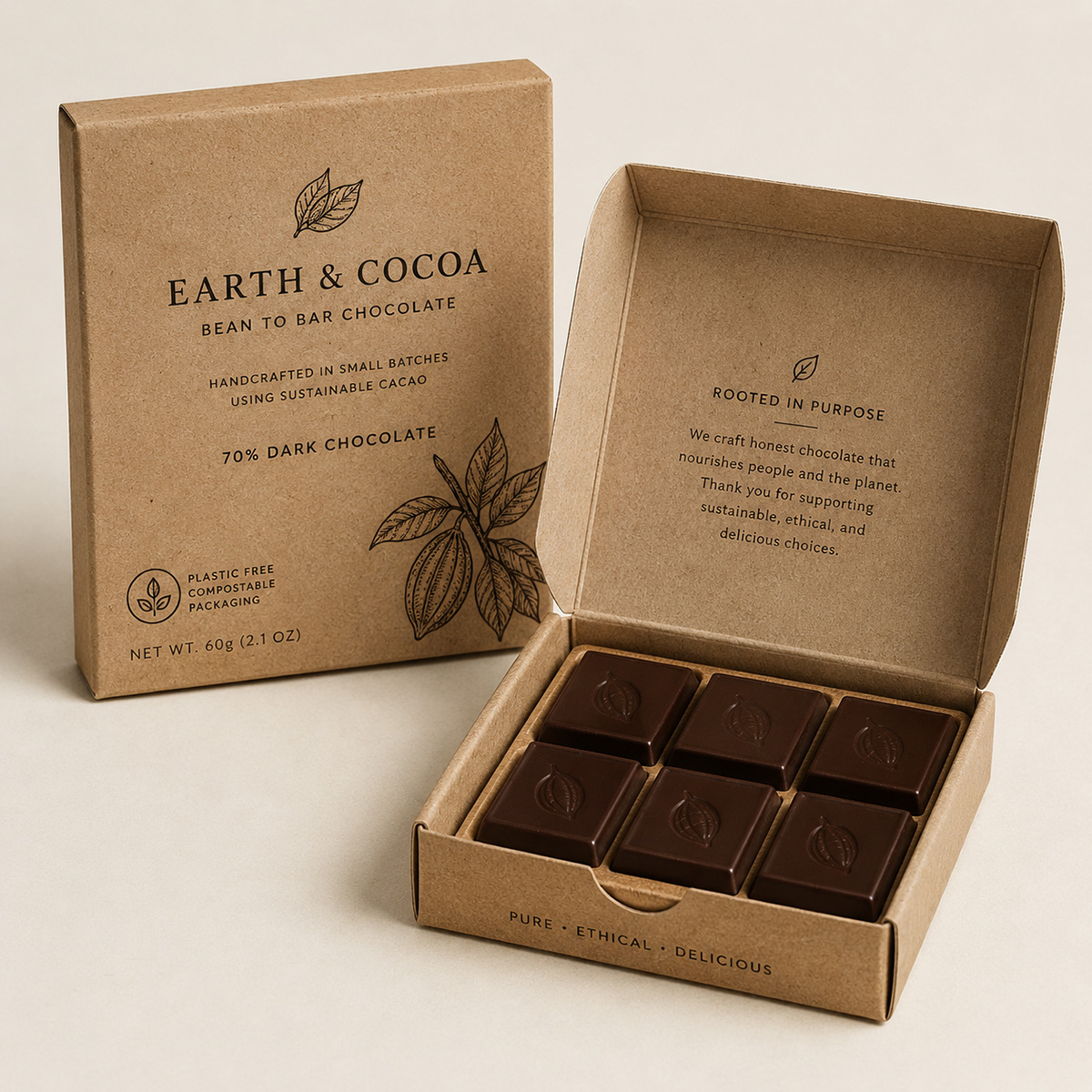
Bean-to-bar packaging typically uses the full print surface of the bar wrap as a storytelling canvas – origin maps, producer portraits, processing notes, and flavour descriptors are all common. The finish tends toward matte, uncoated, or tactile materials that communicate craft and authenticity rather than mass-market gloss. If you’re in this market, the packaging brief is fundamentally different to a mass retail chocolate brief, and it’s worth discussing what visual language best represents your product.
Chocolate-Specific Considerations
A few properties of chocolate as a product that create packaging requirements specific to this category.
Temperature management is more complex for chocolate than for most other confectionery. Chocolate bloom – the white or grey streaking that appears when chocolate goes through temperature fluctuation – is a quality issue that affects retail and gifting product alike. Packaging that protects against heat absorption and helps preserve freshness and shelf life – lighter exterior colours, premium materials that don’t trap radiated heat – reduces the risk of bloom during the retail period. For any product with an e-commerce or postal delivery component, temperature management in transit is a significant practical consideration in the Australian climate.
Allergen labelling is a compliance requirement for retail chocolate. Chocolate products typically contain multiple major allergens – milk, nuts, soy, gluten – and retail packaging must include compliant allergen declarations. For assorted boxes that contain multiple varieties with different allergen profiles, the labelling requirement can be complex. If you’re selling into retail channels, the print specification needs to include adequate space for all required label information alongside the brand and product design. This is worth planning at the artwork stage rather than retrofitting later.
Bar packaging needs to fit closely. A chocolate bar with excess space in its packaging will move during transport and handling. Movement causes bloom at contact points and can cause the bar to develop surface marks or edge chips. The packaging dimensions need to match the bar dimensions closely – ideally with only a millimetre or two of clearance on each face. If your bar dimensions vary between productions, the packaging specification needs to accommodate the largest expected variation without becoming loose for the smallest.
The bean-to-bar market has specific packaging aesthetic expectations. In the craft chocolate market, packaging that looks mass-market actively damages the brand. The visual language of this market – matte finishes, kraft materials, considered typography, minimal design – is well established and customers recognise when packaging doesn’t fit it. If you’re a bean-to-bar producer, your packaging brief is a brand and storytelling exercise as much as a technical one.
Easter lead time planning. Easter is the single largest chocolate gifting occasion in the Australian calendar and it falls in a different week each year. Production lead times of 3 to 4 weeks for air freight mean that Easter packaging orders need to be placed at least eight weeks before the occasion. For businesses with strong Easter volume, this means ordering seasonal packaging in January or February regardless of when Easter falls in a given year.
Corporate chocolate gifting at scale. Chocolate is the most common product in the Australian corporate gifting market. End-of-year gifting volumes in November and December can be substantial, and corporate clients often require custom branding on the packaging – their logo, a seasonal message, or specific colour requirements. If you service corporate clients, a box construction that can be reprinted for different clients without changing the physical specification is a practical efficiency.
Print & Finishing for Chocolate Boxes
Chocolate packaging spans a wider range of visual contexts than almost any other food product, from mass-market retail through to luxury gifting, and the print and finishing approach needs to match the specific market and occasion.
Bean-to-bar and artisan chocolate packaging has a distinct visual language that’s worth understanding before briefing a design. Matte, uncoated, and textured materials dominate this market – they enhance the perception of craft and authenticity in a way that sleek gloss laminates don’t. Embossing, letterpress-style print effects, and natural kraft materials are common. The design tends to be typography-led and information-rich, communicating origin, process, and producer story to customise the brand identity around the product’s provenance. A gloss-finished box in this market reads as mass-market regardless of the quality of the chocolate inside.
Premium chocolate gifting sits closer to the truffle packaging market in its finish expectations – dark base stocks, foil stamping, embossing, magnetic closures, and custom interior treatments are all appropriate. The difference from truffle packaging is that chocolate gift boxes often have a larger exterior print surface, which creates more opportunity for detailed graphic work alongside the premium finish elements.
Retail bar and tablet packaging needs to balance brand impact with the practical information requirements of a retail product – ingredients, allergens, nutritional information, barcode, and country of origin all need to fit alongside the brand design. Full colour printing in CMYK on a gloss or matte laminate is the standard approach, with the finish choice driven by brand positioning. For bars sold in specialty food retail, a matte finish often reads better than gloss in the context of the surrounding products.
Seasonal packaging – Easter eggs, Christmas assortments, Valentine’s Day collections – benefits from a design approach that’s recognisably seasonal while still being on-brand. Seasonal colour palettes and motifs applied to a consistent box format across multiple seasons build recognition over time, which is more effective than a completely new design approach each year.
All boxes are printed using full colour printing in CMYK. Files should be supplied as Adobe Illustrator (.ai) or high-resolution print-ready PDF, with fonts outlined and graphics embedded. Free design support is included – we’ll produce a free 3D mockup for your approval before production begins, and handle minor artwork adjustments at no extra charge. Free dieline templates are available if you’re building your artwork from scratch.
Materials & Specifications
We manufacture chocolate boxes in a full range of cardboard, paperboard, and rigid board materials to suit different products and market positions. Eco friendly kraft options and recyclable materials are available across the range. All materials are food grade and food safe.
- Single copper paper
- White kraft
- Brown kraft
- Black kraft
- Gold foil paper
- Silver foil paper
- Corrugated board
Minimum order quantity is 1,000 units. Air freight runs approximately 3 – 4 weeks from production sign-off; sea freight is approximately 8 weeks. We supply chocolate businesses across Australia including Sydney, Melbourne, and Brisbane. For more detail on the full order process, artwork requirements, and lead times, get in touch and we’ll walk you through it.
Join our newsletter for 10% off your first order
Get our emails for info on new items, sales and much more.

Vivo Packaging Pty Ltd
Aussie Warehouse:
4 Tasman Ct, Keysborough VIC 3173, Australia
Monday – Friday: 9.30am – 5.30pm
Visitors By Appointment Only

Need Help?
Copyright 2026 © VIVO CUSTOM BOXES. ALL RIGHTS RESERVED.