
Custom Muffin Boxes
Muffins look straightforward to package, but they’re not. The dome top is wider than the body, structurally fragile at the edges, and the product itself is dense, oily, and moisture-heavy. A box that doesn’t account for those properties – one that’s too tight across the dome, too flimsy at the base, or made from a material that absorbs oil over time – will cause problems before the product reaches the customer.
Our custom printed muffin boxes and custom muffin packaging boxes are manufactured to suit the specific dimensions and properties of your product, printed to reflect your brand’s identity, and built with durable construction to handle the practical demands of cafe retail, takeaway, wholesale supply, and delivery. We’ve been supplying muffin packaging boxes to Australian food businesses since 2017, from independent cafes to large-scale wholesale bakeries.
Get in touch today to discuss your requirements or request a quote.
Order Process
We quote on the box style of your choice
We receive your final design on a die line template
We send you an invoice to pay
We send you 3D mockups to confirm and start production
We ship the order to you by air or by sea
Request a Quote
To request an accurate quote from us, please fill out the form below. If you have any questions about using this form, please send an email to [email protected]
Choosing the Right Muffin Box Configuration
The decisions that matter most for muffin packaging are different to those for cupcakes or cakes, and it’s worth understanding why before you finalise your brief.
Dome clearance works differently for muffins than for cupcakes. A cupcake dome is formed by piped frosting – it’s relatively consistent in height and sits centrally on the product. A muffin dome is part of the baked product itself – it’s wider relative to the body, irregular in shape, and the outer edge is the most fragile part. The lid clearance needs to account for the full width of the dome, not just the height. A lid that fits the height but catches the edge of the dome will cause crumbling on every unit.
Insert vs no insert depends on your product weight, packaging configuration, and how the boxes are being transported. Single muffins in a retail setting often don’t need an insert – a well-sized base with a snug fit is sufficient. Multi-unit boxes benefit from inserts or dividers that prevent lateral movement between muffins during transport. Without separation, muffins in contact with each other will transfer moisture and damage each other’s surfaces during transit.
Paper tray liners are worth considering for muffins with particularly high oil or moisture content. A tray liner inside the box protects the base and walls of the box from oil migration, which extends the structural life of the packaging and keeps the presentation clean at the point of sale.
Single vs multi-unit configuration should be driven by your primary sales channel. Cafes selling individual muffins over a counter typically need single or two-unit boxes. Wholesale bakeries supplying cafes and retailers need six and twelve-unit configurations. Event caterers often need both.
Muffin Box Styles We Offer
We manufacture custom muffin boxes across a range of configurations to suit different products, quantities, and sales channels. All styles are available in custom sizes, materials, and finishes.
Single Muffin Boxes
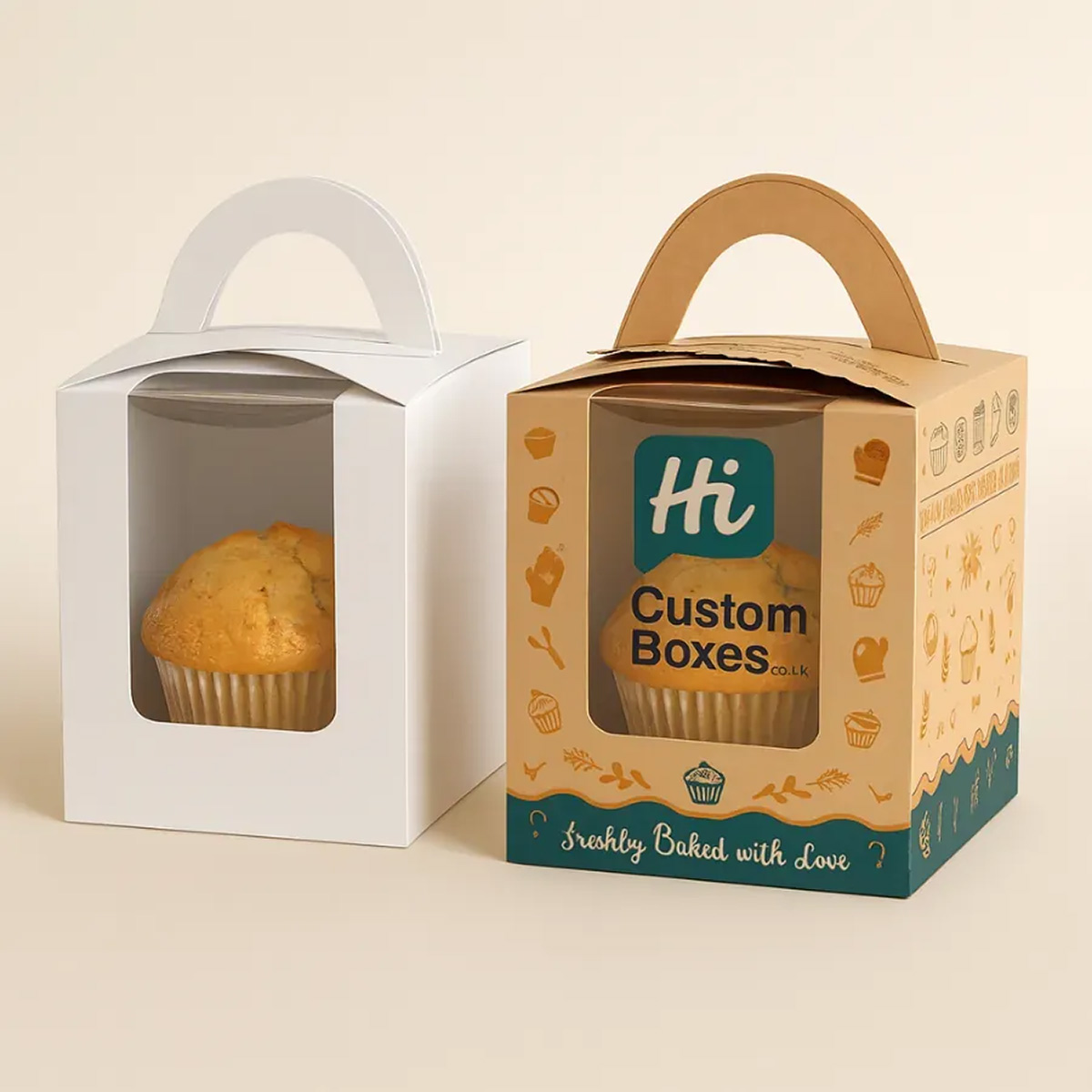
The most common format for cafe retail and individual gifting. A single muffin box needs to present well on a counter or in a display case, be easy to hand to a customer, and hold the product securely without the dome being compressed or the edges crumbling.
Available with window panels for full product visibility, and with a range of lid configurations to suit different dome heights. Single muffin boxes are one of the more effective branding touchpoints in a cafe environment – they’re handled directly by the customer and often taken away, extending the brand impression beyond the point of sale.
Multi-Muffin Boxes
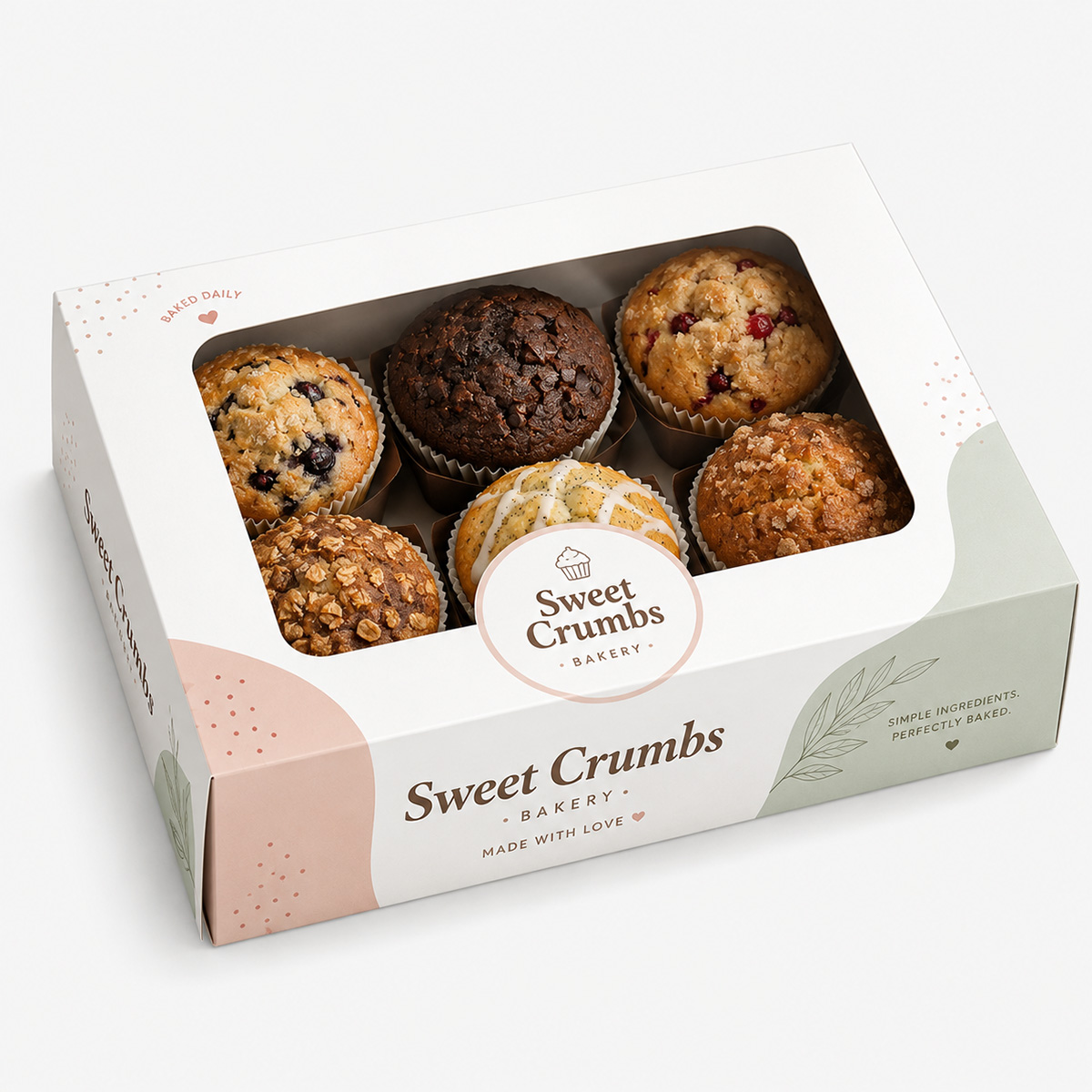
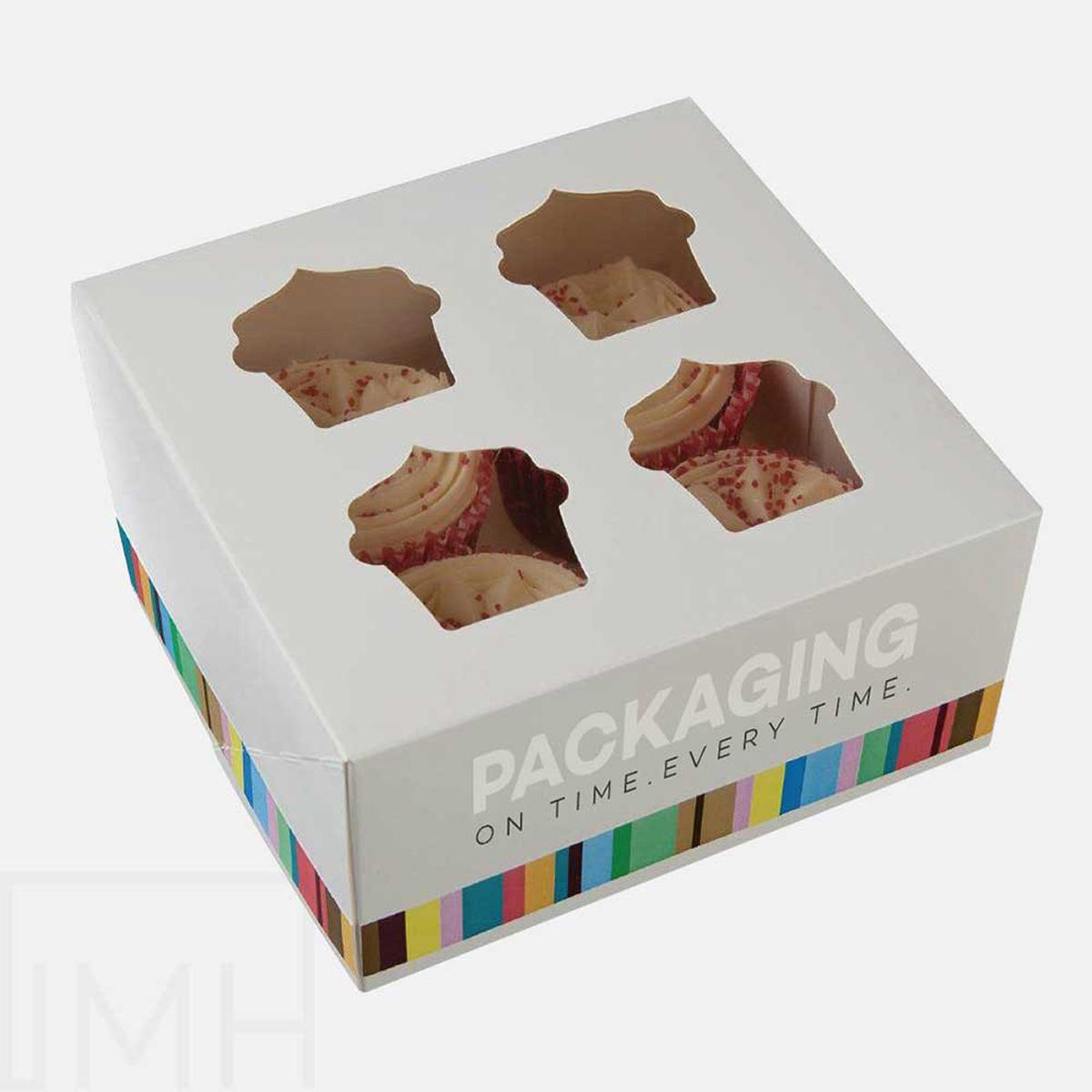
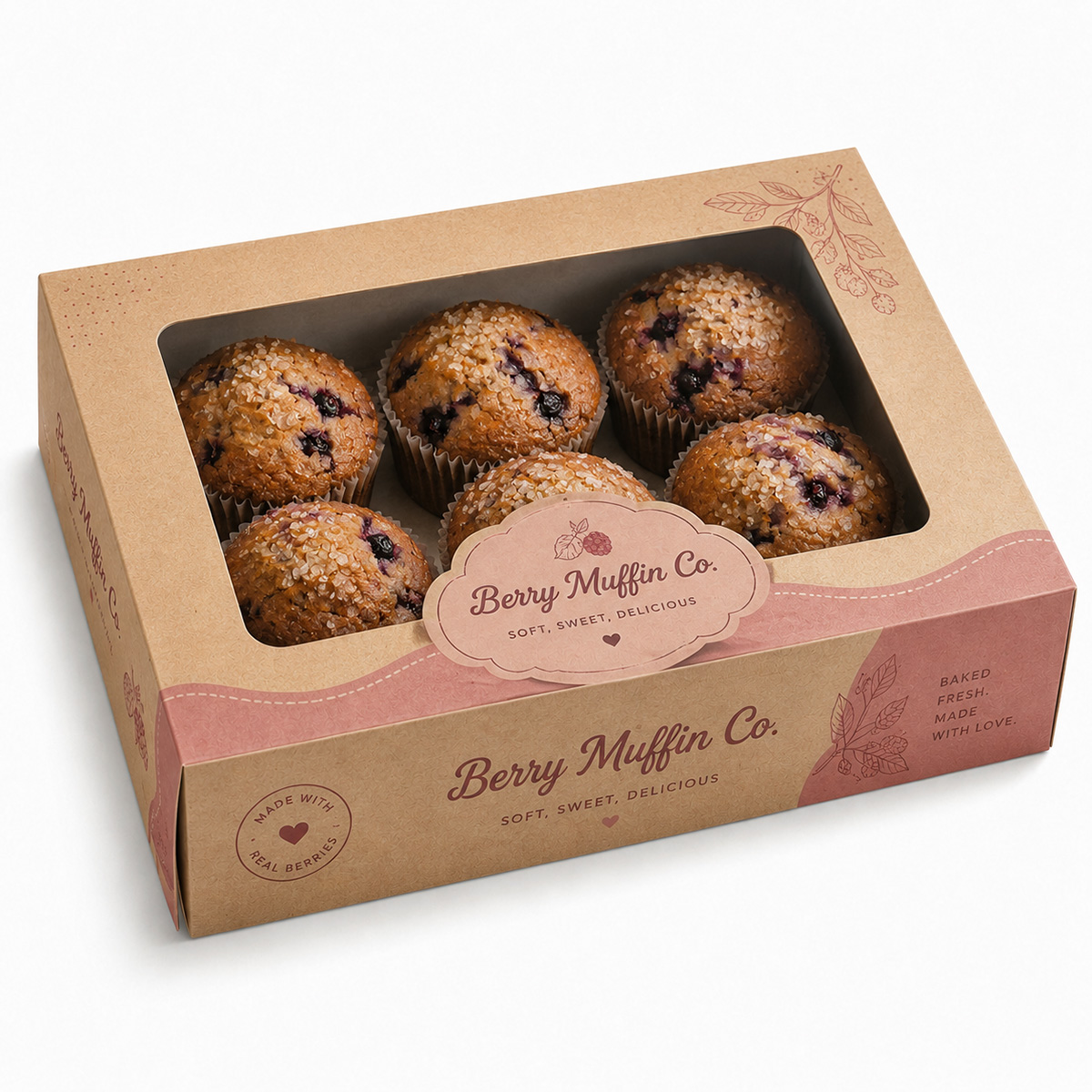
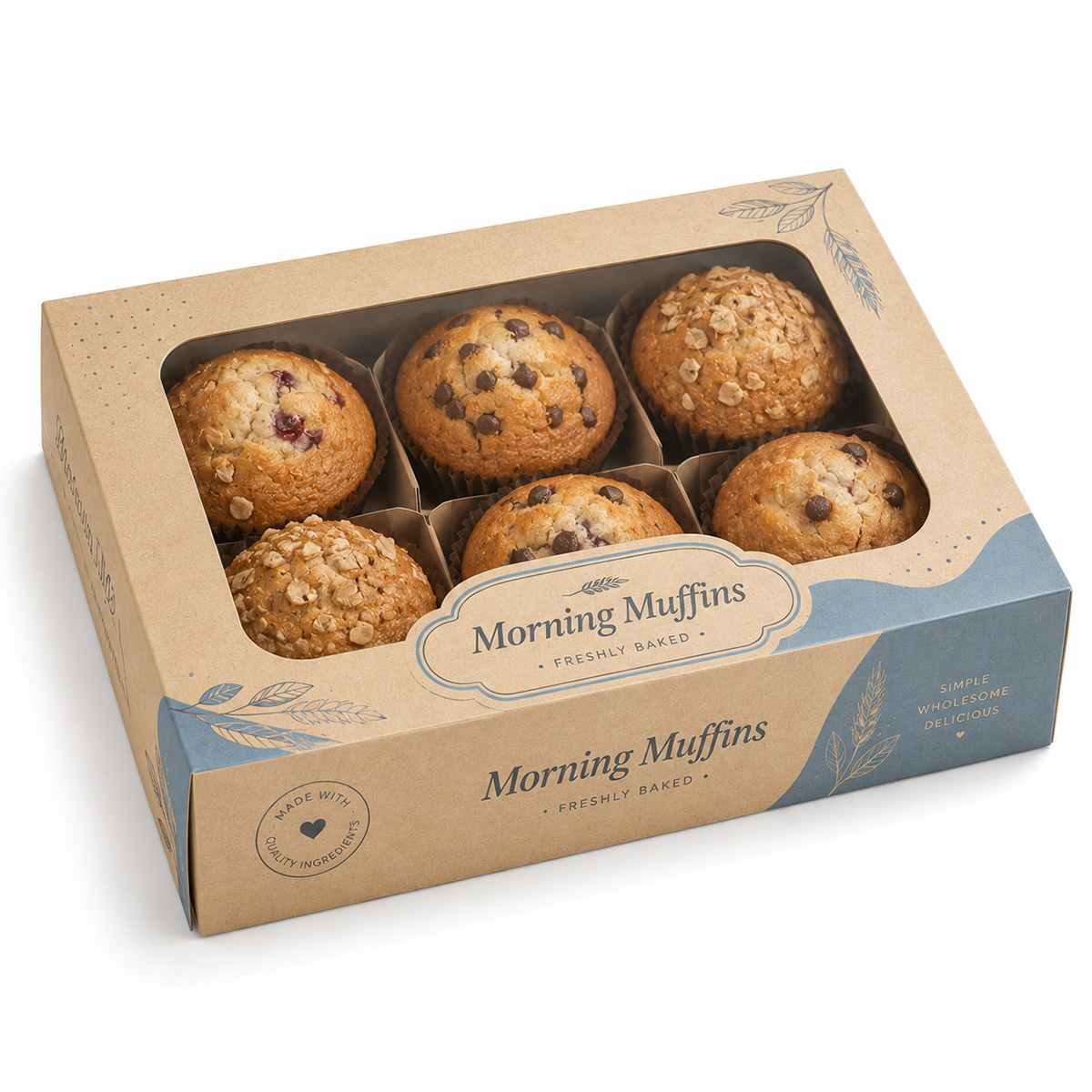
Four, six, and twelve-unit configurations for wholesale supply, catering orders, and retail multipacks. Internal dividers keep each muffin separated during transport, preventing the moisture transfer and surface damage that happens when muffins are in direct contact with each other over distance.
Multi-muffin boxes are typically the primary packaging format for wholesale bakeries supplying hospitality businesses. The structural requirements are higher than for single-unit retail boxes – these boxes are often stacked, loaded into vehicles, and handled multiple times before the muffins reach the end customer.
Window Muffin Boxes
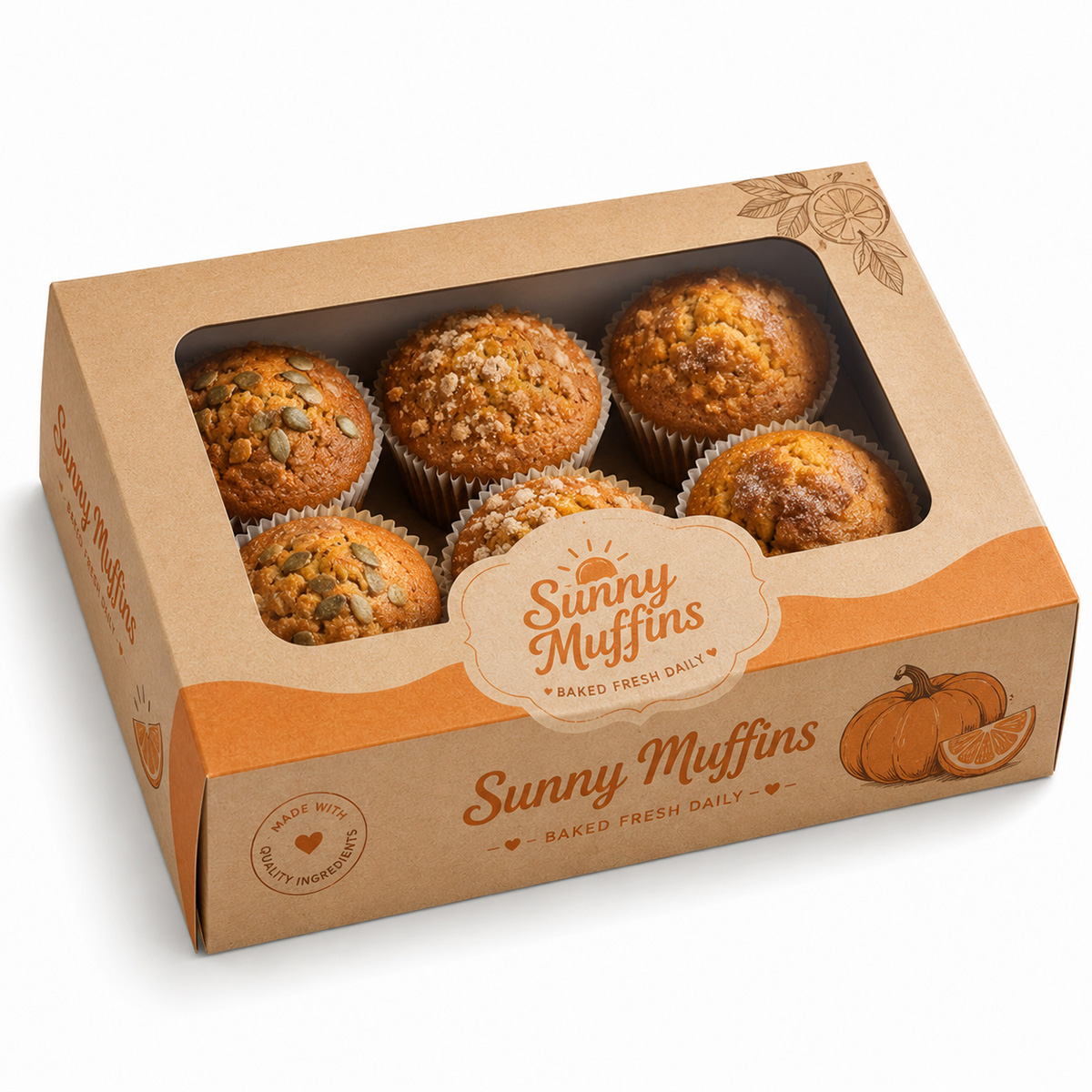
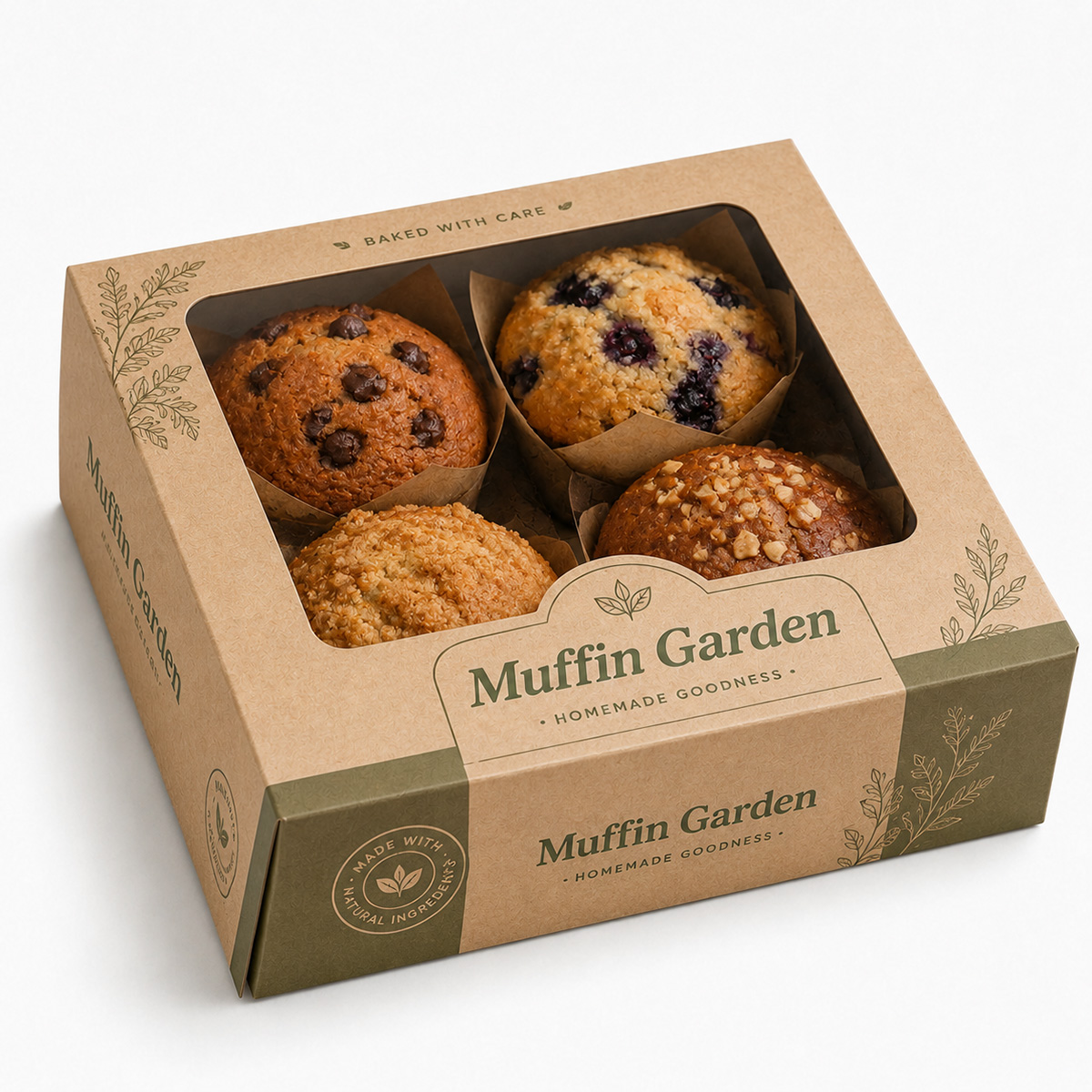
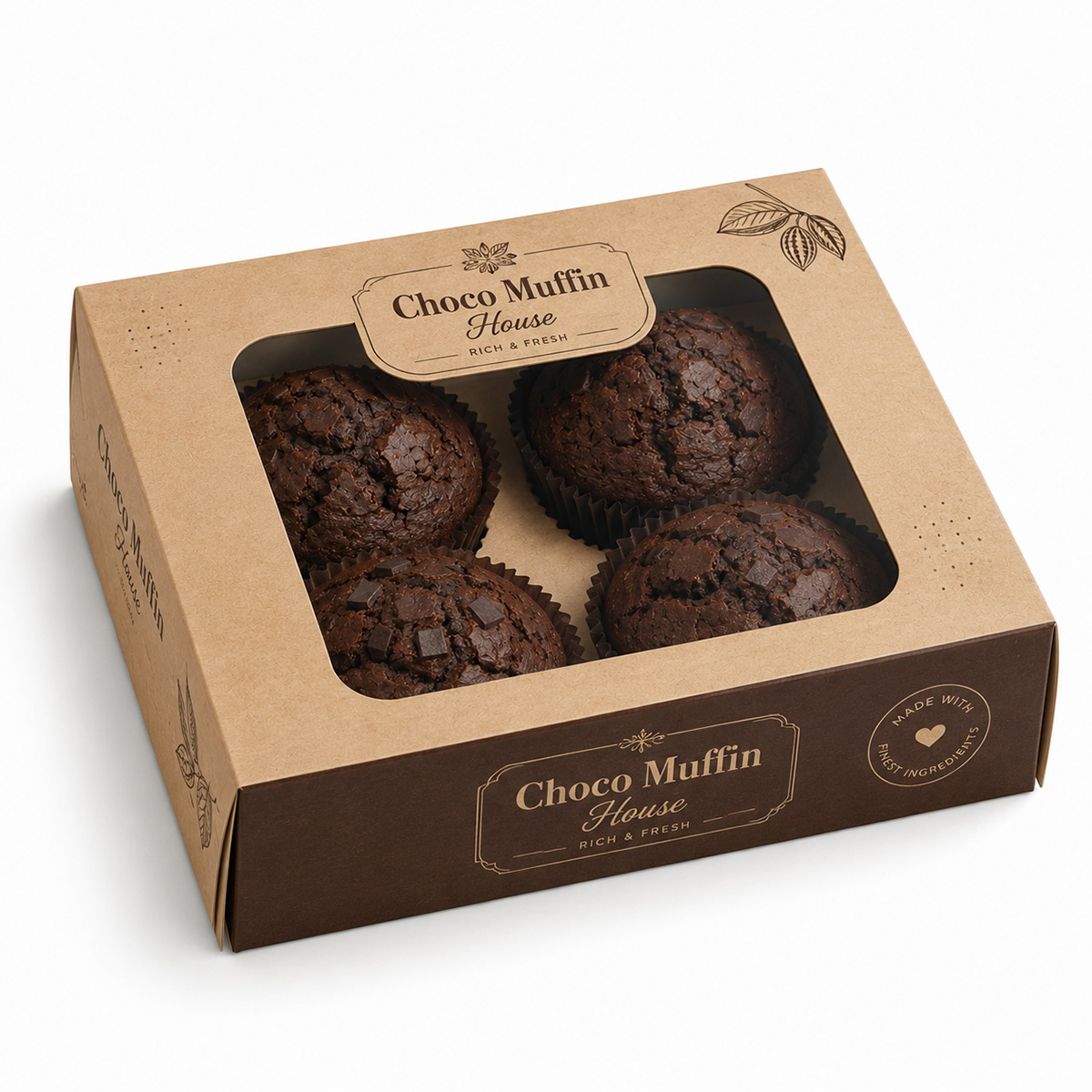
A window panel on a muffin box serves a different purpose to a window on a cupcake box. On a cupcake box, the window shows the frosting – the most visually compelling part of the product. On a muffin box, the window shows the dome – the texture, the colour, and any inclusions like blueberries, choc chips, or seeds that communicate flavour before the box is opened.
For cafe retail and display environments, a window is close to standard – it lets the product sell itself without requiring the customer to open the box or ask what’s inside. Window placement should be configured to show the top of the dome, not the side of the body.
Muffin Tray Boxes
A flat tray format suited to large-quantity catering and wholesale supply. Rather than a lidded box with individual compartments, a tray box holds multiple muffins in a single open or semi-open tray that can be placed directly on a table or display surface.
Tray boxes are faster to pack at volume and easier to serve from in a catering context. They’re less suitable for transport over distance without a covering lid, but for short-distance delivery or on-site catering they’re a practical and cost-effective option.
Muffin-Specific Considerations
A few properties of muffins as a product that directly affect packaging decisions and are worth working through before you finalise your brief.
The dome edge is the most vulnerable part of the product. Muffin domes crack and crumble where the dome meets the body of the muffin. This is where the product is structurally weakest, and it’s the first place that shows damage. The most common cause of dome edge damage in packaging is a lid that catches the outer edge of the dome on closing or during transport. The lid needs to clear the widest point of the dome, not just the highest point.
Oil migration affects both the box and the presentation. Muffins have a high fat content that migrates into paperboard over time. A box that’s been holding a muffin for several hours will show oil staining through the walls if the material hasn’t been specified for it. All food grade materials we use are suitable for direct contact with baked goods – for products that are pre-packed and held for a period before sale, a grease resistant kraft paper liner or food grade barrier material is worth the small additional cost.
Moisture and breathability. Muffins release moisture as they cool and continue to do so in storage. A completely sealed box traps that moisture, which softens the dome surface and affects the freshness and texture of the product. Some degree of breathability in the packaging – or a brief cooling period before boxing – is standard practice for muffin packaging to maintain freshness. This is worth discussing at the specification stage if your product is being boxed immediately after baking.
Cafe retail vs wholesale delivery vs catering. These three contexts have meaningfully different packaging requirements. Cafe retail packaging needs to present well at a counter or in a display case, be easy to hand over, and represent the brand clearly. Wholesale delivery packaging needs structural durability above presentation – these boxes are stacked and handled by logistics, not by a cafe barista. Catering packaging needs to hold volume efficiently and be easy to set out and serve from. The same muffin can require three different box specifications depending on where it’s going.
Seasonal and limited edition products. Muffins are one of the products most commonly used for seasonal and promotional lines – pumpkin spice, Christmas flavours, Easter specials. If you run seasonal variants, packaging that can be updated with a printed sleeve or a changed outer panel – rather than a full box reprint – gives you flexibility to run limited editions without the full MOQ cost of a new box.
Print & Finishing for Muffin Boxes
Muffins are one of the highest-frequency products in cafe and bakery retail – they’re purchased daily, handed over dozens of times a day, and taken into offices, homes, and public spaces. The packaging travels further and is seen by more people than almost any other bakery product format. That makes brand visibility on a muffin box more valuable than the surface area alone would suggest.
For cafe retail, the most practical and effective combination for visual appeal is a clean, legible brand treatment on a gloss lamination base, with a window panel that shows the product. The box is typically displayed facing the customer at counter height, which means the front panel carries the most visual weight. Keep the design focused on that panel and let the product in the window do the rest.
For premium and gifting applications, a matte laminate with foil stamp, embossing, or spot UV detail elevates the packaging beyond everyday retail. Spot UV works particularly well on muffin boxes – applying a high-gloss coating over a matte base creates a contrast that draws the eye to your logo or key design element without adding colour. This is more common in single-unit muffin boxes intended for gifting or corporate catering, where the packaging needs to reflect your brand’s identity and the value of what’s inside.
For wholesale and bulk supply, print requirements are typically simpler – a clean brand mark, flavour identification, and product information. The priority is consistency across large print runs rather than premium finish detail.
Finishing options available across the range include gloss lamination, matte lamination, foil stamping, spot UV, embossing, debossing, and window cut-outs. All boxes are printed using full colour printing in CMYK. Files should be supplied as Adobe Illustrator (.ai) or high-resolution print-ready PDF, with fonts outlined and graphics embedded. Free design support is included – we’ll produce a free 3D mockup for your approval before production begins, and handle minor artwork adjustments at no extra charge. Free dieline templates are available if you’re building your artwork from scratch.
Materials & Specifications
We manufacture muffin boxes in a full range of cardboard and paperboard materials, with grease resistant options available for products with high fat content. Eco friendly and recyclable materials are available across the range for businesses mindful of their environmental impact, and all styles offer full customisation options across size, print, and finish.
- Single copper paper
- White kraft
- Brown kraft
- Black kraft
- Gold foil paper
- Silver foil paper
- Corrugated board
Minimum order quantity is 1,000 units. Air freight runs approximately 3 – 4 weeks from production sign-off for a fast turnaround; sea freight is approximately 8 weeks. We supply businesses across Australia including Sydney, Melbourne, and Brisbane. For more detail on the full order process, artwork requirements, and lead times, get in touch and we’ll walk you through it.
Join our newsletter for 10% off your first order
Get our emails for info on new items, sales and much more.

Vivo Packaging Pty Ltd
Aussie Warehouse:
4 Tasman Ct, Keysborough VIC 3173, Australia
Monday – Friday: 9.30am – 5.30pm
Visitors By Appointment Only

Need Help?
Copyright 2026 © VIVO CUSTOM BOXES. ALL RIGHTS RESERVED.