
Sustainable Flexible Packaging — But Does It Still Protect Your Product?
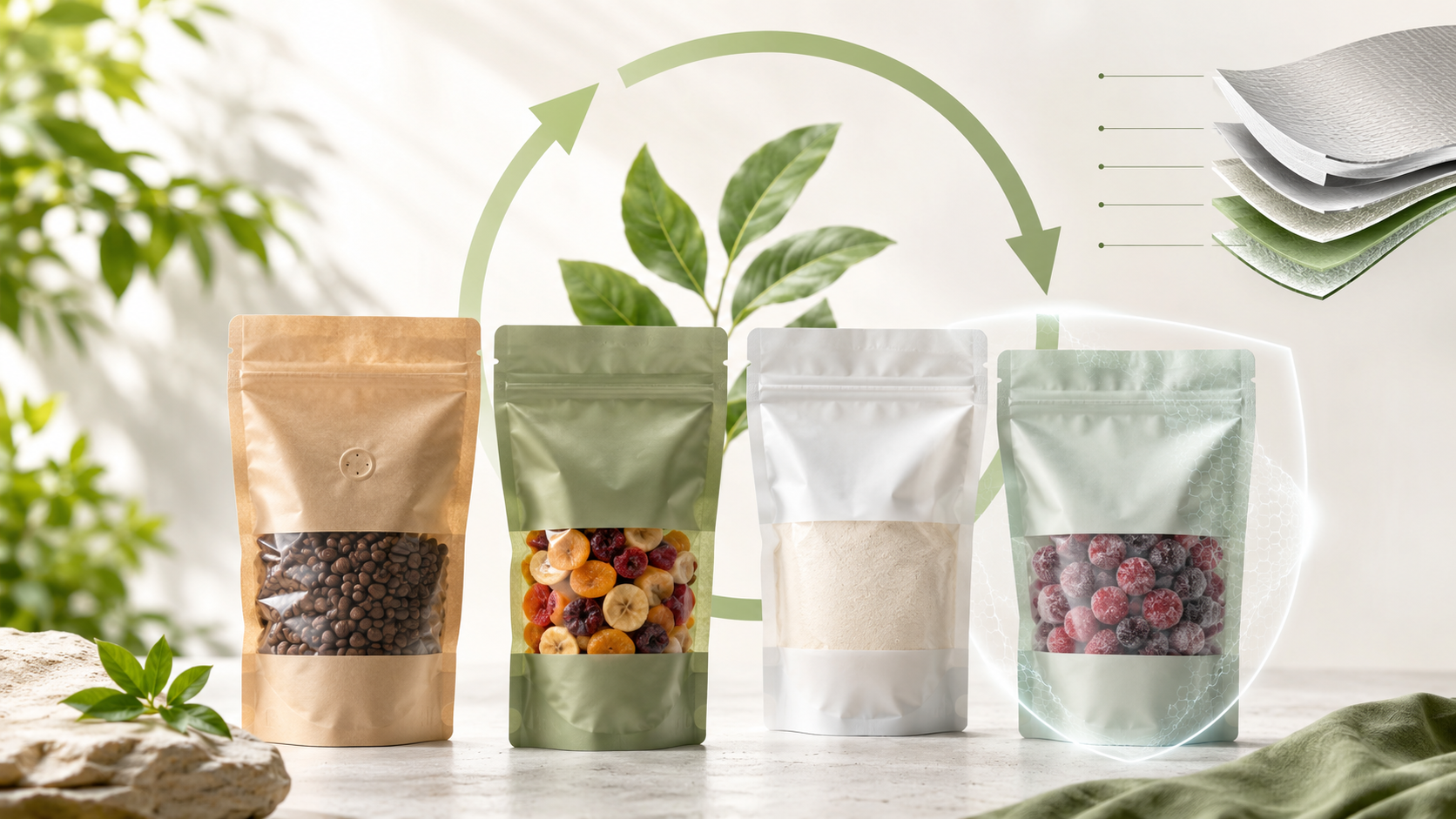
In Australia, sustainability has become one of the biggest drivers of packaging decisions. Recycled content, mono-material structures, soft-plastics recovery and extended producer responsibility are now part of many packaging conversations — and rightly so. The industry needs to keep moving towards a more circular future, and at Vivo Packaging, we support that direction.
But sustainability cannot be considered in isolation.
Packaging still has a fundamental job to do: protect the product inside. For food, coffee, powders, pet treats and frozen products, the wrong packaging structure can reduce shelf life, weaken barrier protection, create sealing issues, and result in a pack that does not perform as intended.
That is why sustainable flexible packaging should not begin with a label such as “recyclable” or “mono-material”. It should begin with the product.
What does the product actually need? How sensitive is it to oxygen, moisture or light? How long does it need to remain stable? Will it be frozen, refrigerated or stored at room temperature? Will the pouch be filled by hand or run through automated equipment?
Two pouches that look almost identical can require very different material structures. Coffee may need strong oxygen and aroma barriers. Dried fruit may need moisture protection. Frozen food requires a structure that remains reliable at low temperatures. Powders can demand excellent sealing performance.
Australia also has its own market realities. Our collection and recycling infrastructure differs from Europe and other larger markets, so a packaging solution that works well overseas may not always translate directly to Australian conditions.
Mono-material flexible packaging is developing quickly and is an important part of the industry’s future. But not every product can yet move to the same structure without compromising performance.
Different packaging layers may provide strength, sealability, puncture resistance, oxygen barrier, moisture barrier or light protection.
The challenge is to simplify packaging where it makes technical sense, without making claims that do not hold up in real-world use.
At Vivo Packaging, our starting point is not simply, “What is the sustainable option?” We first ask: “What does your product actually need?”
Once the requirements are clear — shelf life, barrier performance, sealing, storage, transport and filling conditions — we can identify a structure that is fit for purpose. From there, we look at how to improve its environmental performance through recyclable mono-material structures, reduced material use or optimised thickness.
Starting with performance does not mean sustainability is less important. It means sustainability is built into a packaging structure that can still do its job.
A pack that appears more sustainable but leads to shorter shelf life, higher failure rates or greater product waste may not deliver the environmental benefit it was intended to achieve.
For us, better packaging is not about making the strongest sustainability claim. It is about choosing a technically realistic structure that protects the product and moves in a better environmental direction.
If you are developing custom printed pouches, reviewing an existing packaging structure or exploring recyclable packaging options in Australia, start with the product itself. Tell us what you are packing, how it will be filled and how long it needs to last. From there, Vivo Packaging can help you work towards packaging that is fit for purpose, commercially practical and more sustainable.

Posts Widget
- 1
- 2

- 3
- 4
- 5

Vivo Packaging Pty Ltd
Aussie Warehouse:
4 Tasman Ct, Keysborough VIC 3173, Australia
Monday – Friday: 9.30am – 5.30pm
Visitors By Appointment Only

Copyright 2026 © VIVO PACKAGING. ALL RIGHTS RESERVED.
