
Custom Boxes vs Custom Pouches: Which Packaging Format Suits Your Product?
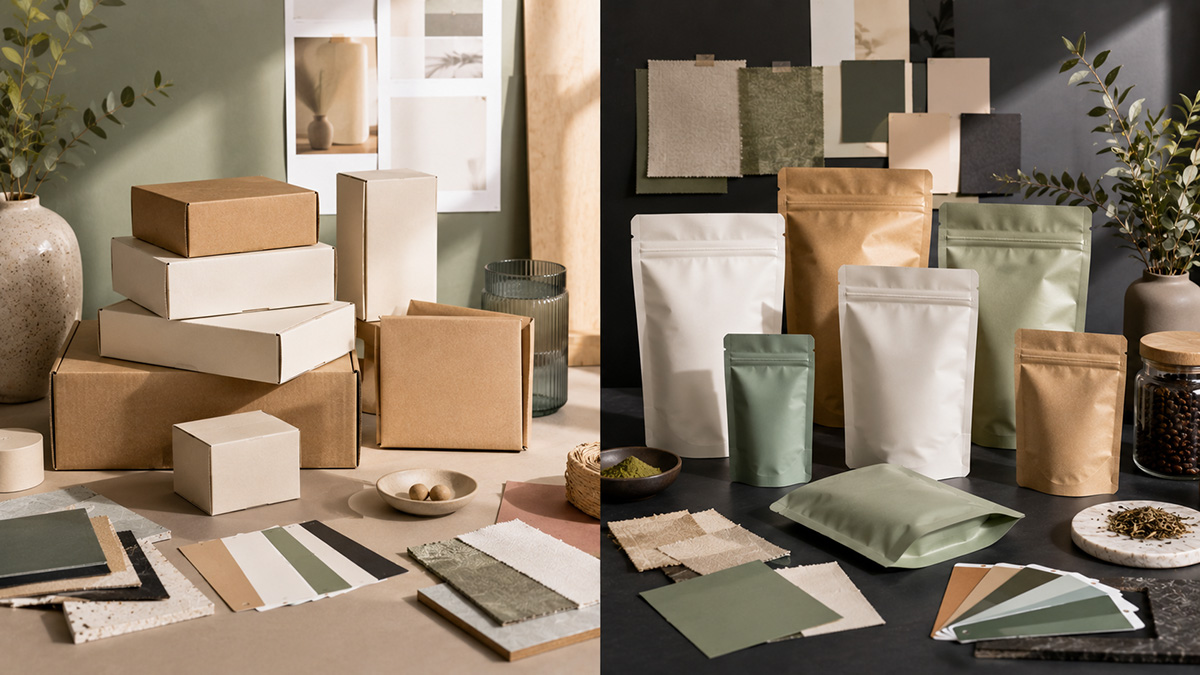
Custom boxes and custom pouches can both create strong product presentation, but they solve different packaging problems. A box gives structure, defined panels and a more rigid product experience. A pouch gives flexibility, lighter storage, useful barrier options and a format that can suit many dry goods, refills, snacks, coffee, tea and lightweight retail products.
The better choice is not simply the one that looks more premium in a mock-up. It depends on what the product is, how it is filled or packed, how it will be displayed, how it will be shipped and what the customer needs to do with the pack after opening.
Start with what the packaging needs to protect or present
The easiest way to compare custom boxes and custom pouches is to list the job the packaging has to do. Some products need shape protection, stacking strength or a structured unboxing experience. Others need flexible barrier packaging, a resealable opening or a lightweight format that fits neatly into cartons and retail displays.
For example, a candle, jar, bottle, gift set or cosmetic kit may need a box because the product already has a defined shape and benefits from extra presentation. Roasted coffee, tea, powder, snacks, pet treats or refill products may work better in a pouch because the pack needs to hold loose contents, stand on shelf and be opened and closed by the customer.
This is why packaging choice should begin with the product, not the artwork. A design concept can often be adapted to several formats, but the wrong format can create issues with filling, shelf stability, shipping protection or customer use.
When custom boxes usually make more sense
Custom boxes are usually worth considering when the packaging needs structure. They can suit products that are rigid, fragile, premium, giftable, stacked on shelf or sold as sets. A box can also help create a more deliberate unboxing experience when the customer is meant to slow down and notice the brand presentation.
- Rigid or fragile products: boxes can support products such as jars, bottles, candles, cosmetics, hardware items, kits or products that need a more protective outer form.
- Premium retail presentation: a box can create clean edges, multiple visible panels and a stronger block effect when several units are displayed together.
- Gift sets and bundles: boxes can hold multiple products together, separate items with inserts or make a product feel more complete as a set.
- Detailed brand storytelling: box panels can provide room for product information, campaign messaging, usage details and design elements without crowding the front face.
A box may still need outer shipping protection, especially for ecommerce orders. In some cases, the custom box is primarily the retail or presentation pack, while a separate shipper or carton protects it during delivery.
When custom pouches or bags usually make more sense
Custom pouches and bags are generally better suited to loose, flexible or refill-style products. They can work well for products where the package needs to hold contents directly, stand upright, reseal, reduce storage space or support a lighter packing workflow.
- Food, coffee, tea and dry goods: pouches can suit products that need a fillable pack with a strong front panel and practical closure features.
- Powders, granules and refill products: a pouch can be easier to store, handle and pack than a rigid container, depending on the product and fill method.
- Multi-variant ranges: pouches can work well for flavour ranges, seasonal products and product families that need a consistent format across several SKUs.
- Lightweight ecommerce products: pouches can reduce bulk and may fit neatly inside satchels, cartons or mailing boxes when used as the primary product pack.
The main planning point is that a pouch is part of the product handling system. It has to suit the product contents, closure method, filling process, heat sealing approach, shelf display and any carton or mailer used for dispatch.
A practical way to compare the two formats
A custom box often wins when the product needs form, structure and a stronger presentation moment. A custom pouch often wins when the product itself needs a flexible container that can be filled, sealed, stored and displayed efficiently. The difference is less about which format is “better” and more about which format removes the most friction from the product journey.
For protection, boxes are usually better for shape, stacking and presentation protection, while pouches are better suited to loose contents where the pack itself becomes the container. For shelf display, boxes can create a clean rectangular block, while pouches can create a strong front panel with a more flexible, tactile appearance. For packing workflow, boxes may need folding, inserting and carton packing, while pouches may need filling, zipper choice, top sealing, labelling and carton fit checks.
Branding also works differently. Boxes can offer several panels for information and design. Pouches concentrate attention on the front face, finish, shape, window, closure and how the filled pack stands. Both can look professional, but they communicate in different ways.
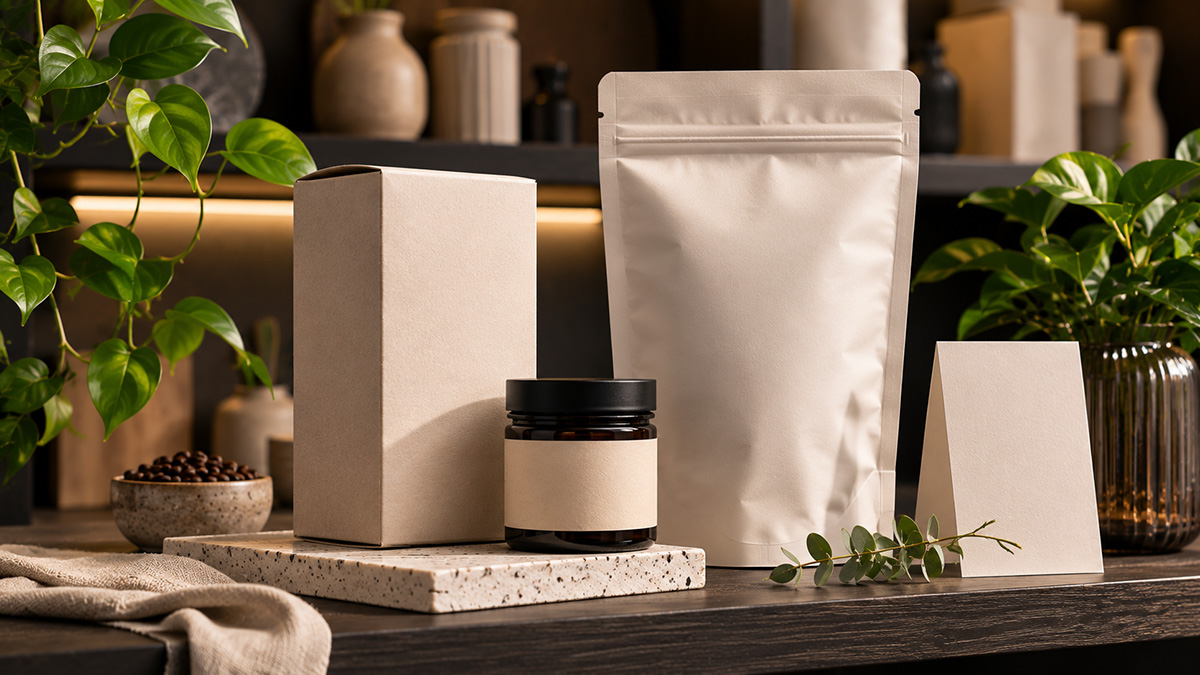
How the choice changes by product type
The same brand might use both formats across different products. A skincare business may use a custom box for a glass jar and a custom pouch for a refill pack. A food brand may use pouches for the main product and boxes for gift bundles or ecommerce kits. A coffee roaster may use custom pouches for beans and boxes for sample collections or subscription sets.
Food, coffee and dry goods
Coffee, tea, snacks, powders and dry food products often point naturally toward pouches because the pack needs to hold loose contents and may need features such as a zipper, valve, window or heat seal area. A box can still play a role for gift packs, sampler collections or outer presentation, but the primary product pack is often more practical as a pouch.
Cosmetics, candles and retail gifts
Boxes often suit products where the item already has its own container or shape, such as jars, tubes, bottles, candles, soaps, gift sets and cosmetics. The box can add structure, protect the retail presentation and create space for brand storytelling. Pouches can still suit refills, samples, bath salts, masks, powders or smaller loose-format products.
Ecommerce and subscription products
Ecommerce adds another layer. A pouch may be the primary product pack, but it may still need a carton, satchel or mailing box for dispatch. A box may look like the final retail pack, but it may still need outer protection if the presentation surface matters. The packaging choice should therefore consider both the product pack and the shipping pack.
Branding, print finish and launch planning
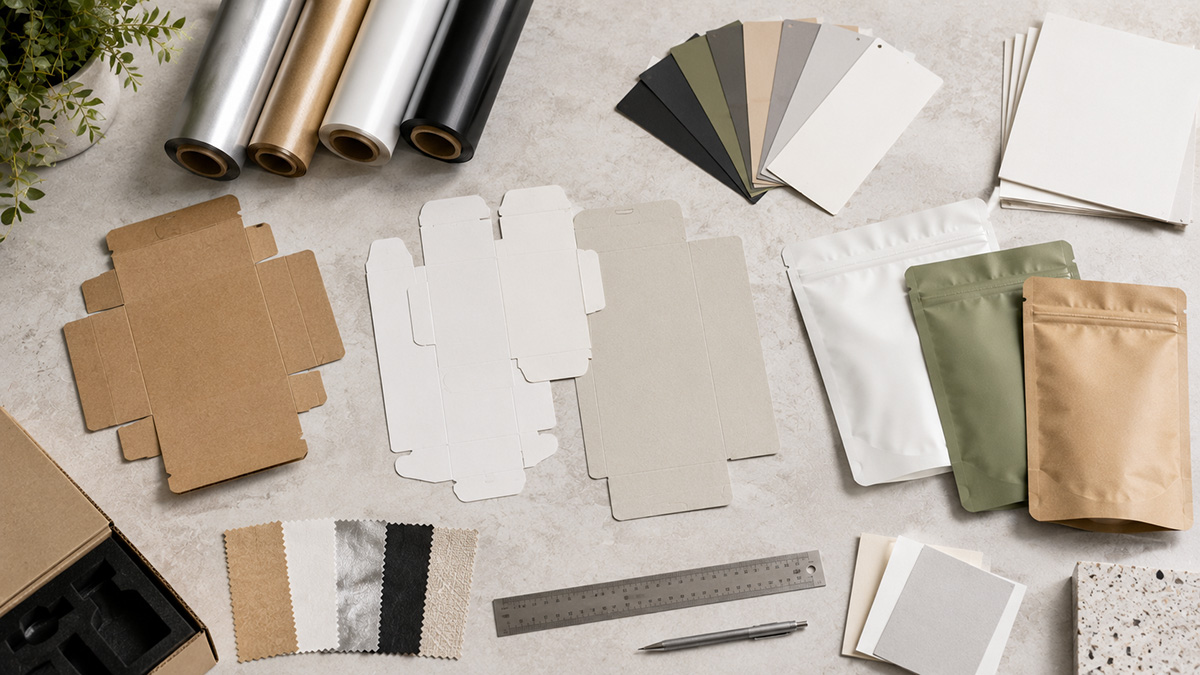
Both boxes and pouches can carry strong branding, but the artwork should be planned around the finished physical format. A flat box dieline, a folded carton, an empty pouch and a filled pouch all present artwork differently. Important information should be placed where it remains visible and natural after the pack is formed, filled or sealed.
Digital printing can be useful when a business is planning a product launch, a seasonal range, several design variants or packaging that may still evolve. The key is to think beyond the first pack. If the brand may add flavours, sizes, gift versions or retail-exclusive variants, the packaging system should be designed so the range can grow without looking inconsistent.
For some projects, the best approach is not choosing only one format. A brand may use pouches for core consumable products, boxes for premium bundles and broader custom packaging for the complete product range. Planning that system early helps avoid packaging that works for one SKU but feels awkward as the range expands.
A short decision guide before requesting a quote
Choose a custom box if the product needs structure, defined presentation, gift appeal, panel space, insert options or stronger shape protection. Choose a custom pouch if the product needs a flexible fillable pack, resealability, lighter storage, a strong front panel or a format that suits loose contents and refill-style products.
Before sending a quote request, gather the product type, product dimensions or fill weight, preferred sales channel, reference packaging styles, artwork status, required features and how the product will be packed or shipped. Those details help the packaging supplier suggest a format that suits both the brand and the real handling process.
If the choice is still unclear, compare the product in three moments: on shelf, during packing and after the customer opens it. The right format should make sense in all three situations, not just in a design presentation.
FAQ
Are custom boxes better than custom pouches?
Not always. Custom boxes are usually better when the product needs structure, panel space or premium presentation. Custom pouches are usually better when the product needs a flexible fillable pack, resealability, lighter storage or a format suited to loose contents.
Can a product use both a custom pouch and a custom box?
Yes. Some brands use a pouch as the primary product pack and a box for gift sets, sample collections, ecommerce kits or premium retail presentation. The right combination depends on the product and sales channel.
Which format is better for food products?
Many dry food, coffee, tea, snack and powder products suit pouches because the packaging needs to hold the contents directly. Boxes may still be useful for gift packs, product bundles or outer presentation. Food suitability should always be checked against the specific product and packaging specification.
Which format is better for ecommerce?
It depends on whether the packaging is the primary product pack, the presentation pack or the shipping pack. A pouch can work well inside a satchel or carton, while a custom box may still need outer protection if the printed surface needs to arrive clean and undamaged.

Posts Widget
- 1
- 2
- 3

- 4

- 5

Vivo Packaging Pty Ltd
Aussie Warehouse:
4 Tasman Ct, Keysborough VIC 3173, Australia
Monday – Friday: 9.30am – 5.30pm
Visitors By Appointment Only

Copyright 2026 © VIVO PACKAGING. ALL RIGHTS RESERVED.
