
Direct Thermal Shipping Labels: What They Are and When to Use Them
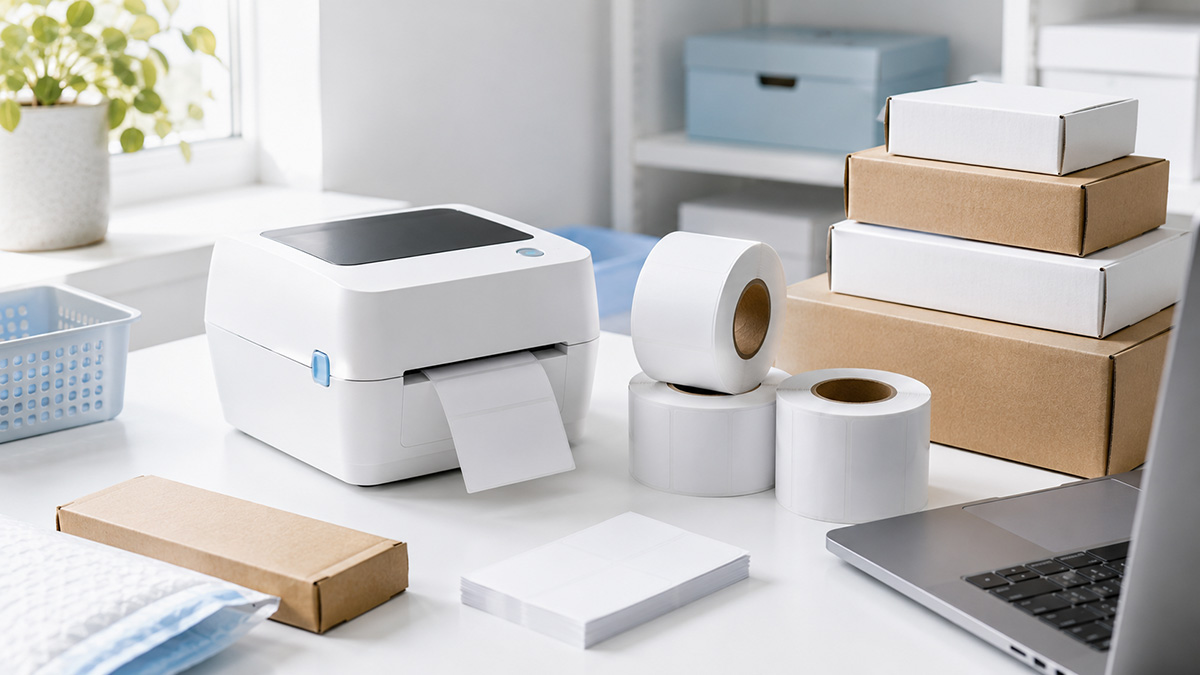
Direct thermal shipping labels are a practical option for ecommerce, warehouse and fulfilment teams that need clear parcel labels without using ink, toner or ribbon. They are commonly used for shipping labels because they are simple to print, quick to apply and well suited to the short parcel journey from dispatch to delivery.
For businesses that send regular orders, the label is a small part of the packaging process, but it can have a large effect on daily workflow. A good label setup should print cleanly, scan reliably, fit the parcel surface and work smoothly with the wider packing and shipping station.
What are direct thermal shipping labels?
Direct thermal shipping labels are labels made with heat-sensitive material. When they pass through a compatible thermal printer, the printer head applies heat to create the printed image on the label surface. This means the print process does not require a separate ribbon, ink cartridge or toner.
In shipping, direct thermal labels are usually used for address details, barcodes, tracking information and carrier label formats. The label is printed, applied to the parcel, scanned during transit and used by the carrier to route the shipment.
That short-term use is important. A shipping label generally needs to stay readable through picking, packing, transport, sorting and delivery. It is different from a long-term product label that may need to remain attractive and readable on a shelf for months or years.
How direct thermal labels work
A direct thermal printer uses heat to create the image directly on the label coating. Because there is no separate ribbon, the setup can be relatively simple for dispatch teams. The main consumable is the label roll itself.
This simplicity is one reason direct thermal labels are popular in ecommerce fulfilment. The operator can print a batch of shipping labels, apply them to parcels and keep the dispatch process moving without changing ink or ribbon supplies.
However, direct thermal printing is not the same as every other label printing method. The printed surface can be more sensitive to heat, direct sunlight, abrasion and certain storage conditions. That is why direct thermal labels are usually chosen for short-term logistics use rather than permanent labelling.
Why direct thermal labels are commonly used for shipping
Shipping labels are operational tools. Their job is not to create a premium brand moment; their job is to help the parcel move through the carrier network accurately. For many dispatch teams, direct thermal labels suit that purpose because they are fast, clean and easy to use in repeated daily workflows.
They can be especially useful where orders are printed in batches, where staff need labels ready at the packing bench, or where the business wants to reduce the number of printer consumables it manages. A reliable roll of shipping labels can make the packing process feel more consistent from one order to the next.
Direct thermal shipping labels vs standard printer labels
Many businesses start by printing shipping labels on office paper or standard sheet labels. That can work for very low order volumes, but it may become slower or messier as dispatch volume increases.
| Factor | Direct thermal shipping labels | Standard printer labels or paper labels |
| Consumables | Usually require the label roll only, with no separate ink, toner or ribbon. | May require ink, toner, label sheets, paper, tape or other supplies depending on the setup. |
| Workflow | Well suited to repeated parcel labelling at a packing station. | Can be acceptable for occasional orders but may become slower for batch dispatch. |
| Label format | Often supplied in common shipping label sizes and roll formats. | May need trimming, peeling from sheets or manual adjustment to fit carrier formats. |
| Durability expectations | Usually best for short-term parcel transit and delivery use. | Depends on paper, adhesive, printer type and whether the label is protected. |
| Operational risk | Printer and roll compatibility need to be checked before ordering. | Print alignment, paper handling and taping can create extra handling steps. |
What to check before choosing shipping labels
The right label is not only about whether it prints. It should fit the printer, parcel, carrier format and dispatch routine. The following checks help avoid simple mistakes that can slow down fulfilment.
Label size and carrier format
Label size should match the way shipping labels are generated by the carrier platform, marketplace or shipping software. For many ecommerce dispatch workflows, 100 x 150mm, also commonly called 4 x 6 inch, is a widely used shipping label size.
Size also affects placement. A label should fit flat on the parcel surface, with enough room for barcodes, tracking details and address information to stay readable. If a label wraps around an edge or sits over a carton seam, scanning can become less reliable.
Roll core and printer compatibility
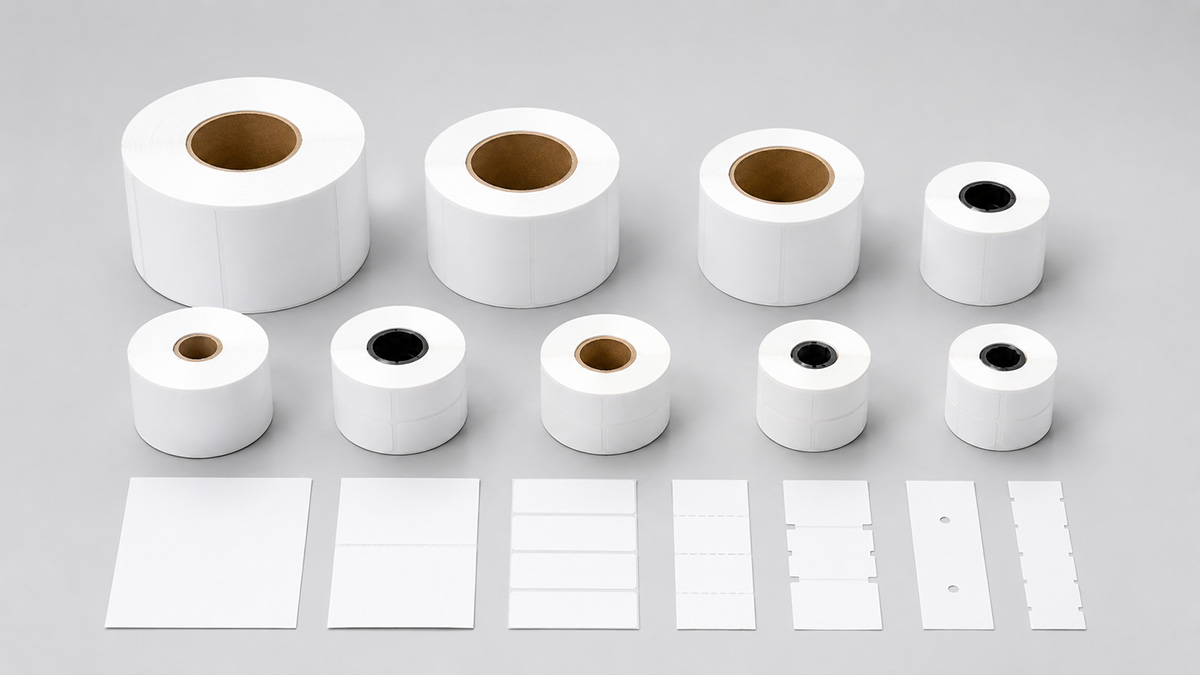
Before ordering label rolls, check the printer model, accepted roll width, core size, maximum roll diameter and whether the printer uses internal or external label feed. Two rolls may look similar but behave differently if the core or roll diameter does not suit the printer.
This is especially important for businesses using multiple printers or changing from sheet labels to roll labels. A label that suits one printer may not suit another without an adapter, holder or different roll format.
Perforated vs non-perforated rolls
Perforated rolls can make it easier to separate labels by hand at the packing bench. Non-perforated rolls may suit workflows where the printer or dispenser controls label separation. The better choice depends on the printer setup and how staff physically apply labels during dispatch.
Barcode scanability and placement
A shipping label should be applied smoothly to a clean, flat area of the parcel. Creases, folds, heavy curves, tape over barcodes or labels placed across carton edges can make scanning harder. The label does not need to look decorative, but it does need to stay readable.
This is where packaging choices connect. A label may apply differently to a small carton, a padded satchel or a mailing box. If a business regularly uses mailing boxes, it is worth checking that the label sits flat on the box size most commonly used.
Storage conditions
Direct thermal labels should be stored in sensible conditions before use. Excessive heat, harsh light, moisture, pressure or rough handling can affect label quality. Keep rolls protected until they are needed at the packing station.

When direct thermal labels may not be the right option
Direct thermal labels are useful for many shipping workflows, but they are not the best answer for every labelling job. If a label needs to remain readable for long-term storage, outdoor exposure, harsh handling, high heat or specialist product identification, another label type or printing method may be more suitable.
For everyday parcel dispatch, the key question is simpler: will the label print cleanly, stick properly, scan during transit and stay readable until the parcel reaches the customer? If the answer is yes, direct thermal labels can be a practical fit for many ecommerce and warehouse teams.
Quick checklist before ordering
Before choosing direct thermal shipping labels, check the full dispatch setup rather than the label roll alone:
- What printer model will be used?
- Does the printer accept the label width, roll core and roll diameter?
- Does the label size match the carrier, marketplace or shipping software format?
- Will the label fit flat on the parcel sizes used most often?
- Does the workflow need perforated labels for easy hand separation?
- Will labels be printed individually or in daily batches?
- Can the barcode and address area stay flat, clean and scannable?
- Will the label be exposed to heat, sunlight, moisture or rough handling before delivery?
- Are label rolls stored properly before use?
- Does the label setup reduce handling time at the packing station?
A good shipping label setup should make dispatch easier, not add extra handling steps. When the label size, printer compatibility and parcel surface are matched properly, direct thermal labels can support a cleaner and faster daily packing process.
FAQ
What are direct thermal shipping labels?
Direct thermal shipping labels are heat-sensitive labels that print through a compatible thermal printer without using ink, toner or ribbon. They are commonly used for parcel labels, barcodes and tracking information.
Do direct thermal labels need ink?
No. Direct thermal printers create the image using heat on the label surface, so they do not need ink, toner or a separate ribbon.
Are direct thermal labels suitable for ecommerce shipping?
They can be a practical option for many ecommerce shipping workflows because they are quick to print and easy to use at a packing station. Printer compatibility, label size and parcel placement still need to be checked.
What size shipping label should I use?
The right size depends on the carrier format, shipping software and printer. A common ecommerce shipping label size is 100 x 150mm, also known as 4 x 6 inch, but businesses should confirm the format used by their own dispatch system.
What is the difference between perforated and non-perforated shipping label rolls?
Perforated rolls are designed to separate more easily by hand between labels. Non-perforated rolls may suit printers, dispensers or workflows where the label is separated by the machine or application process.
Can direct thermal labels fade?
Direct thermal labels can be more sensitive to heat, light, abrasion and certain storage conditions than some other label types. They are generally chosen for short-term shipping and logistics use rather than long-term product labelling.
Can I use shipping labels on mailing boxes?
Yes, provided the label fits flat on the box surface and the barcode and address area remain clean and scannable. Avoid placing the label across seams, edges or heavily curved surfaces.

Posts Widget
- 1

- 2

- 3

- 4

- 5


Vivo Packaging Pty Ltd
Aussie Warehouse:
4 Tasman Ct, Keysborough VIC 3173, Australia
Monday – Friday: 9.30am – 5.30pm
Visitors By Appointment Only

Copyright 2026 © VIVO PACKAGING. ALL RIGHTS RESERVED.
