
Flat Bottom Pouches vs Stand Up Pouches: Which Packaging Format Works Better?
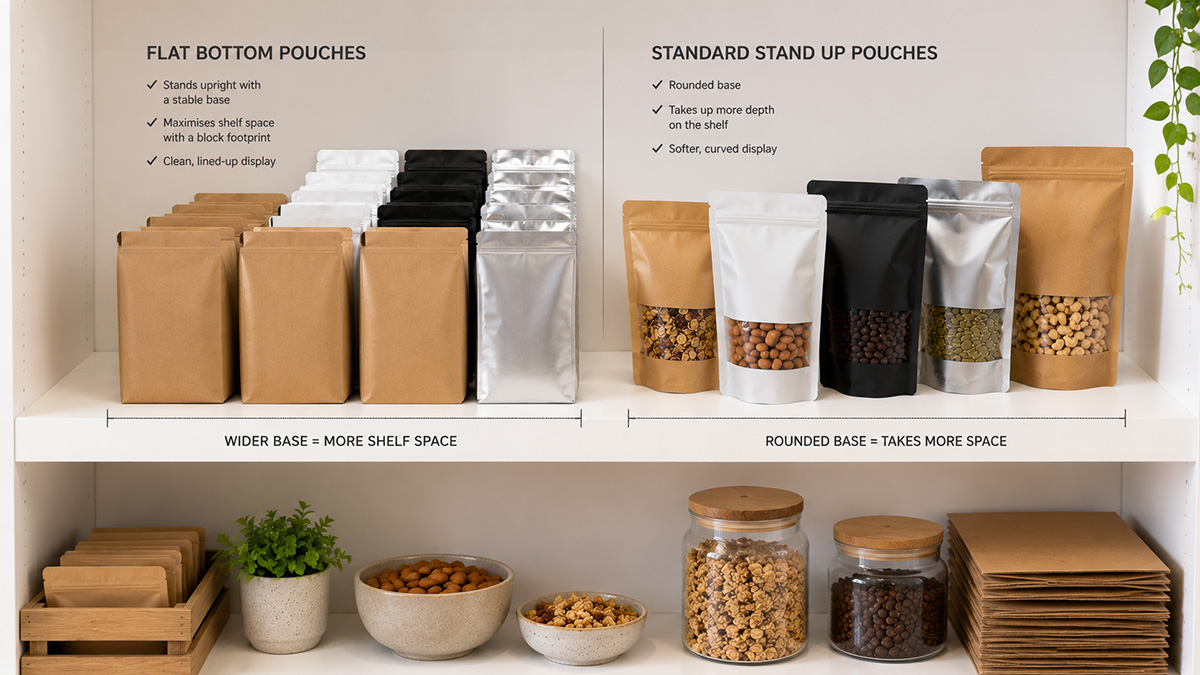
Flat bottom pouches and stand up pouches are both flexible packaging formats, but they solve slightly different business problems. A stand up pouch is often chosen for versatility and efficient retail packaging, while a flat bottom pouch is usually considered when shelf structure, front-facing presentation and filled stability matter more.
The better option depends on the product, not just the pouch shape. Coffee, tea, powders, snacks, pet treats, dry foods and retail goods all behave differently once packed. Fill weight, product settling, label space, sealing process and the way the pouch sits on shelf can all change which format works best. Vivo Packaging offers both flat bottom pouches and stand up pouches, so the most useful decision is to compare how each format will perform in the real packing and selling environment.
What is a flat bottom pouch?
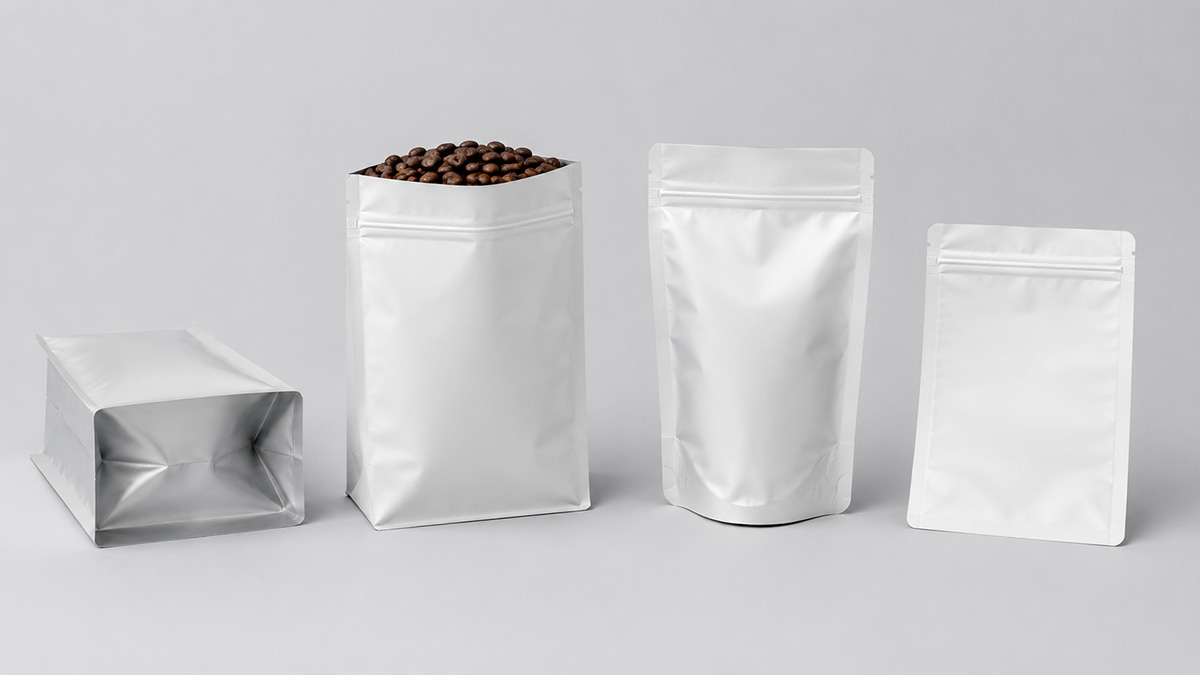
A flat bottom pouch is a flexible pouch with a squared base that helps the pack stand with a more box-like footprint. Compared with a standard stand up pouch, it usually presents a broader front panel and more structured base when filled. This can make it useful for products that need stronger shelf presence or a more premium retail look.
Flat bottom pouches are commonly used for coffee, tea, dry foods, confectionery, snacks, pet treats, powders and specialty retail goods. They can work especially well when the pack needs to stand neatly beside similar products, create a tidy display block, or carry a front label that should stay visible on shelf.
What is a stand up pouch?
A stand up pouch is a flexible pouch with a bottom gusset that allows it to stand upright when filled. It is a broad and practical format used across many food, coffee, retail and ecommerce products because it can combine shelf display, compact storage, resealability and heat sealing in one pack.
Within broader pouch packaging, stand up pouches are often a strong starting point when a business needs a flexible pack that looks presentable without the extra structure of a flat bottom format. They can be suitable for lighter products, small to medium fills, samples, refill-style products and general retail packaging where flexibility matters.
Flat bottom pouches vs stand up pouches: practical comparison
The two formats are not simply good or bad versions of each other. A flat bottom pouch can make a product look more structured and shelf-ready, while a stand up pouch can be more adaptable across a wider range of everyday product and fulfilment needs.
| Selection factor | Flat bottom pouch | Stand up pouch |
| Shelf stability | Usually stronger due to the squared base and wider footprint. | Good for many products, but stability depends more on fill weight and product shape. |
| Shelf presentation | Often better for premium display, front-facing blocks and tidy retail shelves. | Strong general shelf presence, especially for lightweight or medium-weight products. |
| Product fit | Useful for products that need more structure or a broader display face. | Useful for a wide range of dry goods, snacks, samples, refill packs and retail products. |
| Coffee packaging | Often used where coffee needs a more premium or structured retail pack. | Can suit coffee, especially when paired with the right finish, zipper or valve option. |
| Packing workflow | May stand more neatly during filling and display, depending on size and product. | Often flexible and efficient, but overfilling can affect the top seal and final shape. |
| Storage before filling | Still compact compared with rigid packaging, but may use more space than simpler pouches. | Usually compact and easy to store in volume before filling. |
| Common mistake | Choosing it only because it looks premium without checking fill behaviour and cost sensitivity. | Choosing by capacity only and ignoring display, label area and base stability. |
When flat bottom pouches usually work better
Flat bottom pouches usually work better when shelf presentation is a major part of the purchase decision. The squared base can help the pouch sit more cleanly on shelf, while the broader front panel can make branding, product labels and visual hierarchy easier to manage.
They are often considered for coffee, premium dry goods, specialty snacks, pet treats, powders and retail products that need a more structured look. If the product is competing on a crowded shelf, the extra visual order can be useful because the pack is less likely to collapse into a soft or uneven shape once filled.
Flat bottom pouches can also help when the product has enough weight or volume to benefit from a more stable base. This does not mean the pouch should be chosen for every heavier product, but it is worth testing when a standard stand up pouch does not sit neatly, leans forward, or does not create the shelf presence the brand wants.
When stand up pouches usually work better
Stand up pouches usually work better when the business needs a flexible, practical format across many product types. They can suit dry foods, tea, snacks, confectionery, samples, powders, supplements, pet treats and refill products where the pack needs to stand upright but does not require a box-like base.
They are also useful when storage space, packing flexibility and broad size availability matter. For many ecommerce and retail products, a standard stand up pouch can provide enough presentation while keeping the pack easy to store, label, fill and dispatch.
A stand up pouch may also be the better starting point when the product is lightweight, irregular, trial-sized or sold in multiple pack sizes. In these cases, the extra structure of a flat bottom pouch may not add enough practical value to justify changing format.
Product examples: coffee, dry foods, snacks and ecommerce products
The difference becomes easier to understand when comparing common product categories. The goal is not to match every product to one fixed format, but to identify what the packaging needs to do during filling, display, use and dispatch.
Coffee and premium dry goods
Coffee is one of the clearest examples where pouch format affects presentation. A flat bottom pouch can create a premium block on shelf and may suit brands that want a more structured retail pack. A standard stand up pouch can still be practical for coffee, especially when the finish, zipper and valve needs are considered properly. Dedicated coffee bags with valve may be the better reference point when degassing and coffee-specific packaging features matter.
Snacks, powders and lightweight foods
Snacks, powders and lightweight foods can work well in stand up pouches because the format is versatile and easy to handle. The main risk is choosing only by stated capacity. A bulky snack and a fine powder can sit very differently inside the same pouch, so businesses should check how the product settles, whether the pouch stands neatly and whether the seal area stays clean during filling.
Pet treats and larger dry products
Pet treats and larger dry products may need more attention to base stability and zipper usability. A flat bottom pouch can be useful when the pack needs to stand more confidently or present a broader front label. A stand up pouch may still work well where the product is lighter, sold in smaller quantities or packed for ecommerce rather than shelf display.
Ecommerce and refill-style products
For ecommerce and refill-style products, the pouch needs to survive handling, fit into outer cartons or satchels and remain easy for the customer to use. Shelf blocking may be less important than product protection, label readability, resealability and packing speed. In these cases, a standard stand up pouch can often be a practical first option, while a flat bottom pouch may be reserved for products where presentation is still central.
Sealing, storage and packing workflow considerations
A pouch format should be judged in the packing environment as well as on the shelf. Teams should check how easy the pouch is to open before filling, whether it stands during filling, how close the product gets to the top seal area and whether the final sealed pack looks consistent across a batch.
If the pouch will be sealed after filling, the available seal area and sealing equipment matter. A suitable heat sealer helps create a more consistent finish, but the operator still needs the right process. Overfilled pouches, product dust near the opening or uneven product settling can all affect the final presentation.
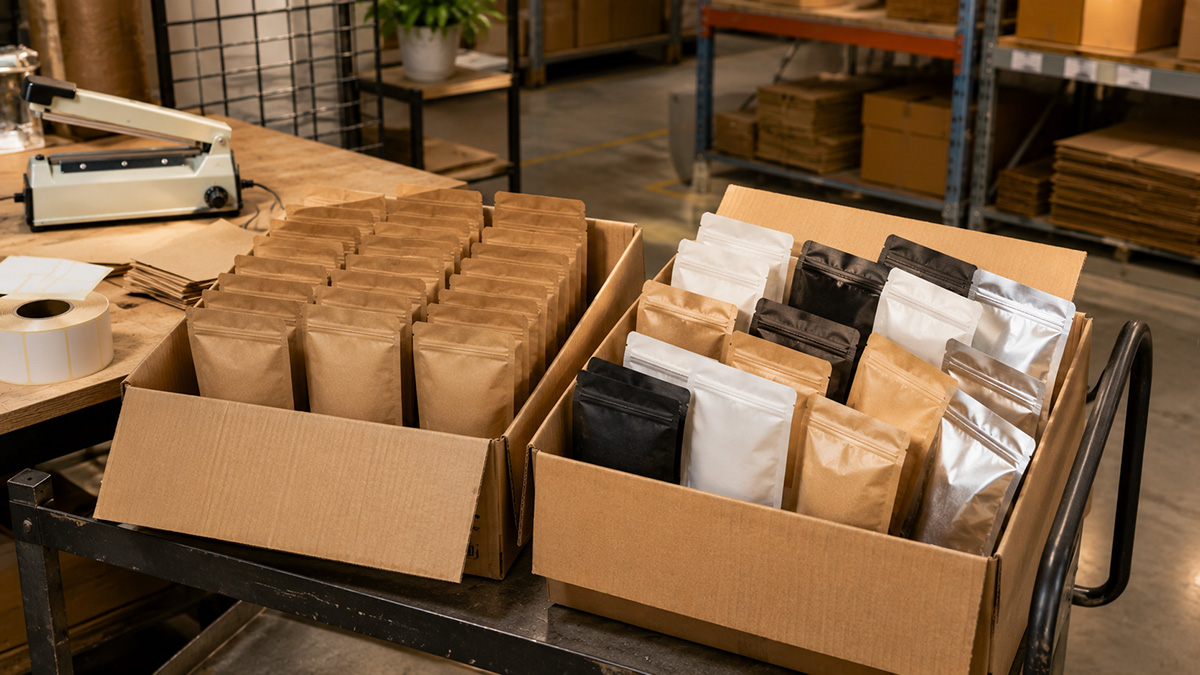
Carton packing is another practical check. Flat bottom pouches can line up neatly when the product and pouch size match well, but they may also need more shelf or carton space. Stand up pouches can be compact and flexible, but they may lean or compress if the product is heavy or uneven. Testing a filled sample is often more useful than comparing empty pouch dimensions alone.
Quick decision checklist
Use the following checklist before deciding between flat bottom pouches and stand up pouches:
- Does the product need a strong front-facing shelf display?
- Will the pouch be sold mainly through retail shelves, ecommerce orders or both?
- Does the product weight help or hurt the way the pouch stands when filled?
- Does the product settle, shift, crumble or create dust during packing?
- Is a broad front label area important for branding or product information?
- Does the product need a zipper, valve, window, foil lining or a specific finish?
- Will the pouch be heat sealed after filling?
- How neatly does the filled pouch pack into cartons or outer shipping packaging?
- Is the extra structure of a flat bottom pouch adding real value, or is a standard stand up pouch enough?
The simplest way to choose is to start with the selling environment. If the product needs a stronger retail block, broader front panel and more structured shelf presence, a flat bottom pouch may be worth testing. If the product needs a versatile, efficient and widely used flexible pack, a stand up pouch may be the better first option.
FAQ
Are flat bottom pouches better than stand up pouches?
Not always. Flat bottom pouches usually provide stronger shelf stability and a more structured retail appearance, but stand up pouches are often more versatile for a wider range of food, retail and ecommerce products.
When should I choose a flat bottom pouch?
Choose a flat bottom pouch when shelf presentation, front-facing label space, base stability or a more premium retail look are important. They are commonly considered for coffee, specialty dry goods, snacks, pet treats and other products where display matters.
When should I choose a stand up pouch?
Choose a stand up pouch when the product needs flexible, practical packaging that can stand upright without the extra structure of a flat bottom format. They are often suitable for dry foods, snacks, tea, samples, powders, supplements, pet treats and refill products.
Do both pouch types need heat sealing?
Many flat bottom pouches and stand up pouches can be heat sealed depending on the specification. Businesses should check the pouch material, available seal area and sealing process before packing products in volume.
Which pouch is better for coffee?
Both formats can be used for coffee depending on the pack style and features. Flat bottom pouches can create a more structured shelf presentation, while stand up pouches can be practical across different coffee pack sizes and retail uses. Valve, zipper and barrier considerations should be checked for coffee-specific packaging.
What is the biggest mistake when comparing these pouch formats?
The biggest mistake is choosing by appearance or stated capacity alone. The filled product, shelf environment, label area, sealing process and carton packing workflow all affect whether a pouch format is suitable.

Posts Widget
- 1

- 2

- 3

- 4

- 5


Vivo Packaging Pty Ltd
Aussie Warehouse:
4 Tasman Ct, Keysborough VIC 3173, Australia
Monday – Friday: 9.30am – 5.30pm
Visitors By Appointment Only

Copyright 2026 © VIVO PACKAGING. ALL RIGHTS RESERVED.
